Showing posts with label # Austria. Show all posts

Sunday, December 15, 2019

Austria - Japan relations


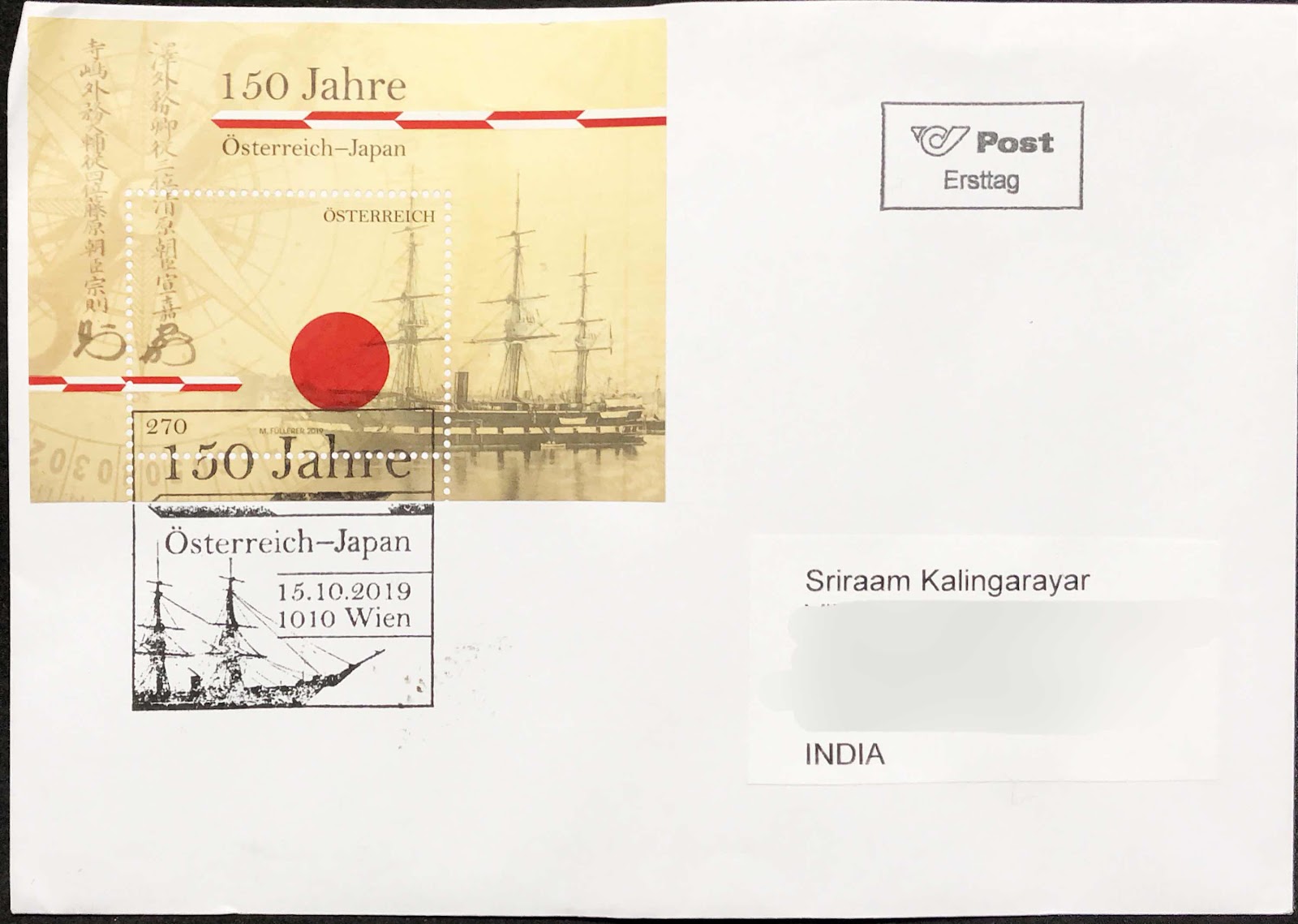
A first day cover from my good friend in Austria 🇦🇹 

150 years of Austria - Japan diplomatic relations 
Date of issue : 15-10-2019 

2019- Japan and Austria celebrate the anniversary of the assumption of diplomatic relations between the two countries 150 years ago. Austrian Post is celebrating this enduring collaboration with a beautiful mini sheet.

The path to a treaty

Under pressure from the USA, after centuries of isolation, the Japanese Empire finally began to cultivate relationships with other countries again in 1853. As one of the last countries, in 1868 an Austrian delegation led by Rear Admiral Anton von Petz travelled on the ships Donau and Erzherzog Friedrich from Trieste to eastern Asia in order to establish trading relations there. On 18th October 1869 a peace, trade and shipping treaty was finally entered into with Japan, coming into effect on 1st December 1871. Legend has it that the gift of a Bösendorf grand piano, on which Austrian classical music was played to the Japanese emperor, played a not insignificant part in bringing the negotiations to a satisfactory conclusion.

Multifaceted relations

Japan was represented at the World Fair in Vienna only shortly afterwards in 1873. Japanese art was a major topic and inspired many artists around the turn of the century, with the Vienna Secession, for example, organising an exhibition of Japanese woodcarvings in 1900. Working in the opposite direction, it was the Austrian Theodor von Lerch who introduced downhill skiing to Japan at the start of the 20th century. And even today, the many visitors from Japan continue to link Austria, and Salzburg and Vienna in particular, with enjoyment of classical music.

After the two world wars, Japan and Austria only resumed diplomatic relations in 1953. In 1957 the diplomatic legations in Tokyo and Vienna were elevated to the rank of embassies. Today the Pacific island nation is Austria's third most important overseas trading partner. Countless collaborations in the university, educational and cultural areas and around 30 partnerships between twinned towns are evidence of the good relationship between the two countries.

The attractive mini sheet to celebrate the 150th anniversary shows, among other things, the corvette SMS Erzherzog Friedrich, on which the trade delegation travelled to Japan in 1869, and a few lines from the treaty signed by Austria and Japan. 

Saturday, November 23, 2019

Postal card - 150 years


A postal stationary ( prepaid postcard ) from Austria 🇦🇹 

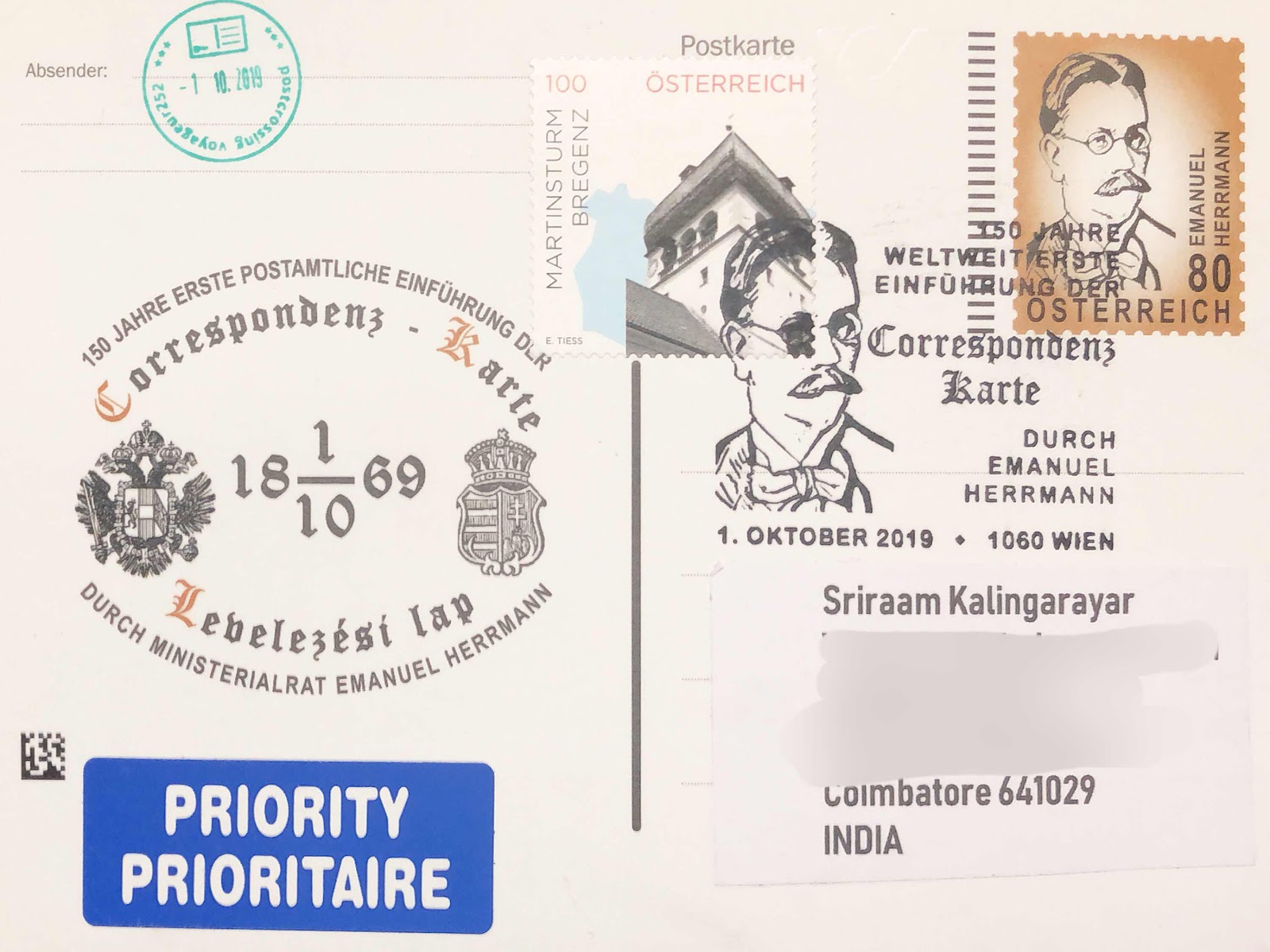
A prepaid postcard commemorating the 150 years of Postal card - with special postmark on Emmanuel Herrmann . 

Herrmann was the Austrian national economist who invented the use of a postcard .. it was called as Correspondenz Karte. It was first sent on October 1, 1869 from Vienna to Hungary. 


Several countries have commemorated the 150 years of postal card. 


A special postmark of Singapore 🇸🇬  on a postcard 


Tuesday, July 23, 2019

Traditional costumes of Austria


A postcard from Austria 🇦🇹 with a set of thematic stamps 

For some years now the “Classic traditional costumes” series has been dedicated to the attractive traditional costumes for everyday wear of the various regions of Austria.


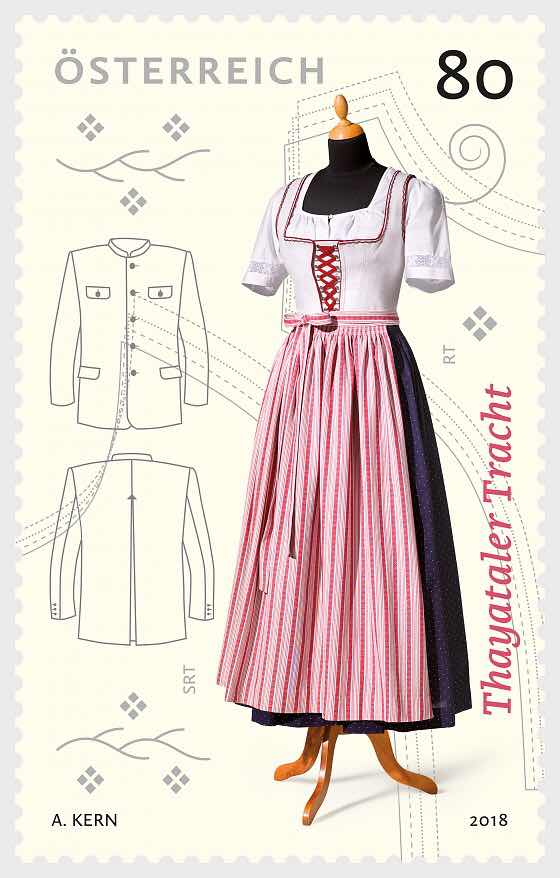
Traditional costumes of Thayatal ( Lower Austria) 
Date of issue : 08-06-2018

The traditional everyday dirndl of the Thayatal comprises a light, usually natural-coloured top which laces at the front with a red ribbon. The slightly square neckline is emphasized by means of breast gores; the bodice is edged with red piping and embellished with embroidery at the edges, while the back is plain with a rounded neckline. The skirt is usually made of blue cotton with a finely scattered pattern or of checked sheeting, whilst the red and white apron to match the skirt has a finely striped or floral pattern. The dress is worn with a simple white dirndl blouse, possibly with lace trim on the sleeves.

There is no special traditional costume for the men of the Thayatal – they wear dark-coloured trousers with the traditional jacket. Likewise, no special accessories such as hats or scarves are worn with the dirndl. The traditional costume of the Thayatal comes across as plain and practical, as is normal for traditional working garb, yet is attractive thanks to the light colours.


Traditional costumes of Pottsching ( Burgenland ) 

Date of issue : 08-05-2017

This traditional costume’s origins can be traced back to the traditional folk costumes of Burgenland and the musician from Pöttsching, Peter Zauner. Among other things, Peter Zauner was a violinist under Carl Michael Ziehrer and also a composer: he wrote the melody for the regional anthem for Burgenland. After the First World War he founded the Pöttsching brass band.

The men’s traditional costume is typical for Burgenland: black breeches and boots, a white shirt, a waistcoat with a collar, a red edging and silver buttons, the last four of which are dress fasteners. The waistcoat is either worn open or with the bottom six rows of buttons fastened. A particularly eye-catching feature is the “Firta”, a kind of apron or cloth worn around the waist by the men, one corner of which is tucked into the waistband at the hip, on the right-hand side for single men and the left for married men. In summer a black hat is added or the head left bare, whilst in winter it is worn with an Astrakhan hat – a sailor’s hat made from karakul wool – and a black jacket.

The women’s clothing comprises a black stomacher laced at the front and a white blouse. Girls wear a white skirt with scattered flowers and three blue bands at the hem; older ladies sometimes a dark blue skirt with scattered flowers. This is worn with a blue striped apron and, on cold days, a short black jacket or a shawl. The head is usually left bare. 


Traditional costumes - Tyrol

Date of issue : 02-06-2015

Tyrol holds a colorful and unique wealth of classic costumes and the interwoven traditions.

The Tuxer everyday costume is characterized by the muted colors. These are due to the fact that in the Tux costume not only for the production only natural materials such as cotton, linen or wool are used, but the fabrics are also dyed with natural colors. 

The obvious simplicity of the everyday costume is broken by fine and intricately processed details that are often perceived only at second glance. Striking is the monochrome embroidered satchel, which is decorated in the original with quill embroidery. These harnesses, which were originally worn by farmers as protection against saber strokes, are today made in a few craft workshops with real peacock feathers and great craftsmanship. 

The gentlemen's everyday garb includes coarse linen knee breeches, a woolen breast patch, white knee socks, black shoes, a white shirt with a stand-up collar and a narrow black tie. The headdress is a dark felt hat.

Today's Tux women's costumes are far more diverse than the men's. The festive dress in black, the "Röckl", stands out for its colorful apron and white cloth, the ornate and gold tasseled hat, but above all for its square neckline, in which an embroidered white silk scarf is worn. The fine fabrics and fine workmanship make this costume very expensive. A skirt made of wool or silk is tied to the skirt, which is usually set high at the waist, and the way the bow is tied reveals the marital status of its wearers.


Thanks Tom for this lovely postcard ! 

( I will upload the front side of the postcard too - which shows the traditional Burgenland costume ) 


It is also interesting that 2019 is marked with the release of stamps on the theme - Traditional costumes . The Euromed theme , ASEAN themes for 2019 are traditional costumes and India too has issued miniature sheets on its traditional costume - Saree ! 


Thursday, April 25, 2019

Maxmilian I , the Holy Roman Emperor


A prepaid postcard with updated stamps and first day postmarks from Austria 🇦🇹 

Well, it’s not a secret that I love history and thanks to my good friends, I keep getting the much needed fuel to keep this hunger going :) 


500th anniversary of the death of Emperor Maximilian I
Date of issue: 11-04-2019

The postcard is a prepaid postcard issued to commomerate the 550 birthday of the Emperor 

The other stamp is a personal stamp - showing the archducal hat , kept in the monastery of Klosterneuburg. 


Maximilian I,(born March 22, 1459, Wiener Neustadt, Austria / died January 12, 1519, Wels), archduke of Austria, German king, and Holy Roman emperor (1493–1519) who made his family, the Habsburgs, dominant in 16th-century Europe.
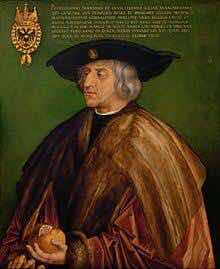

 He added vast lands to the traditional Austrian holdings, securing the Netherlands by his own marriage, Hungary and Bohemia by treaty and military pressure, and Spain and the Spanish empire by the marriage of his son Philip. He created the Landsknechte (“Servants of the Country”), a body of well-organized mercenaries, and fought a series of wars against the French, mostly in Italy. His grandson succeeded to the vast Habsburg realm and the imperial crown as Charles V.

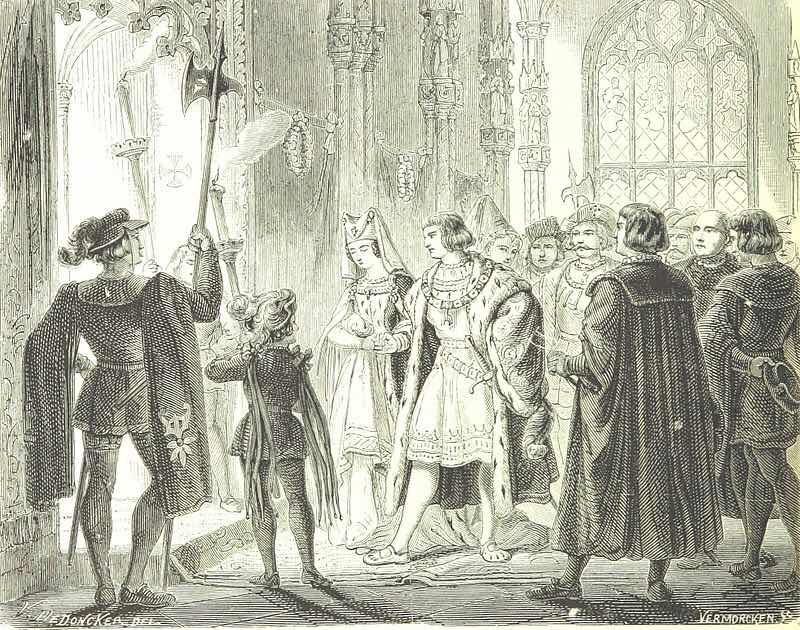
Marriage of Mary of burgundy with Maximilian I, the Holy Roman Emperor 

Maximilian was the eldest son of the emperor Frederick III and Eleanor of Portugal. By his marriage in 1477 to Mary, daughter of Charles the Bold, duke of Burgundy, Maximilian acquired the vast Burgundian possessions in the Netherlands and along the eastern frontier of France. He successfully defended his new domains against the attacks of Louis XI of France, defeating the French at the Battle of Guinegate in 1479. After Mary’s death (1482) Maximilian was forced to allow the States General(representative assembly) of the Netherlands to act as regent for his infant son Philip (later Philip I [the Handsome] of Castile), but, having defeated the States General in war, he reacquired control of the regency in 1485.
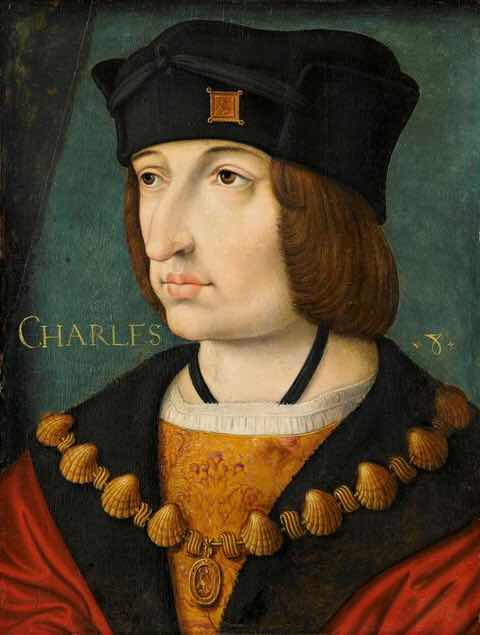

Charles VIII of France 

Meanwhile, by the Treaty of Arras (1482), Maximilian was also forced to consent to the betrothal of his daughter Margaret of Austria to Charles VIII of France. In 1486 he was elected king of the Romans (heir to his father, the emperor). With the military help of Spain, England, and Brittany, he continued his war against France. In order to surround France, Maximilian in 1490 married Duchess Anne of Brittany by proxy but could not forestall an invasion of Brittany by the French. A dramatic setback occurred when Charles VIII sent his fiancée Margaret back to her father and required Anne to sever her marriage with Maximilian and to become the queen of France.By 1490 he had regained control of most of his family’s traditional territories in Austria, which had been seized by Hungary. He then became a candidate for the vacant Hungarian throne. When Vladislas (Ulászló) II of Bohemia was elected instead, he waged a successful campaign against Vladislas. By the Treaty of Pressburg in 1491, he arranged that the succession to Bohemia and Hungary would pass to the Habsburgs if Vladislas left no male heir.


Anne of Burgundy 

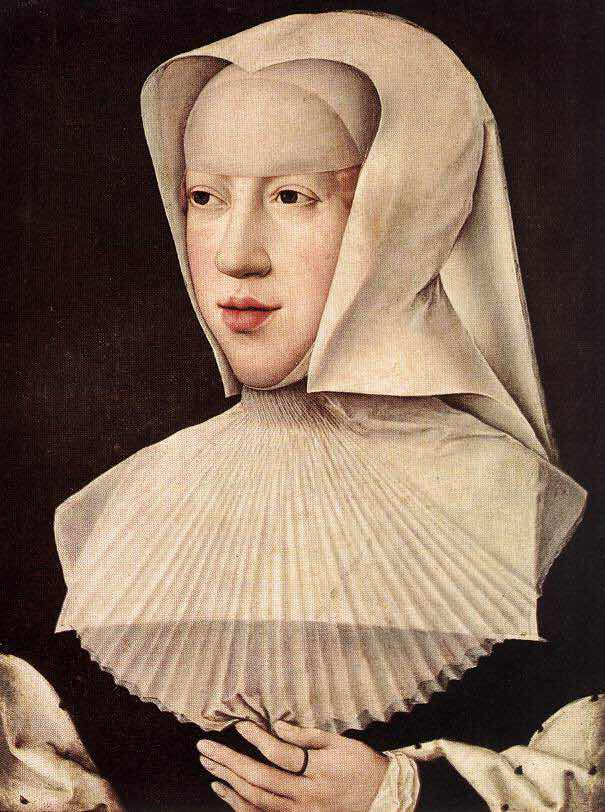
Margaret , daughter of Maximilian 

On the death of Frederick III in 1493, Maximilian became sole ruler over the German kingdom and head of the house of Habsburg. Charles VIII’s invasion of Italy (1494) upset the European balance of power. Maximilian allied himself with the pope, Spain, Venice, and Milan in the so-called Holy League (1495) to drive out the French, 
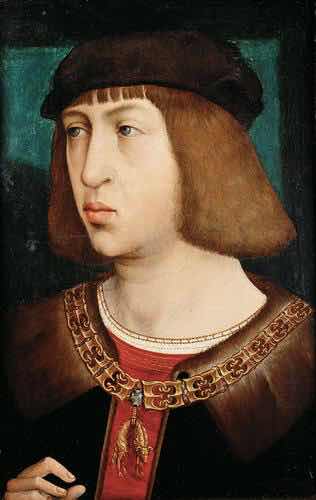
Philip the handsome, King of Castile

The marriages of his son Philip to the Spanish infanta Joan (the Mad), in the same year, and of his daughter Margaret to the Spanish crown prince, in 1497 - assured him of the succession in Spain and the control of the Spanish colonies.

In 1499 Maximilian fought an unsuccessful war against the Swiss Confederation and was forced to recognize its virtual independence by the Peace of Basel (September 22). In 1500 the imperial princes at the Reichstag in Augsburg withdrew considerable power from Maximilian and invested it in the Reichsregiment, a supreme council of 21 electors, princes, and others. They even considered deposing him, but the plan miscarried because of their own apathy and Maximilian’s effective countermeasures. He strengthened his European position by an agreement with France, and he regained prestige within the empire by victories in a dynastic war between Bavaria and the Rhenish Palatinate (1504)

Though he was the German king, he had not been crowned emperor by the pope, as was customary. Excluded from Italy by the hostile Venetians, he was unable to go to Rome for his coronation and had to content himself with the title of Roman emperor-elect that was bestowed on him with the consent of Pope Julius II on February 4, 1508.

On January 12, 1519, having spent the previous year trying to have his grandson Charles elected emperor and to raise a European coalition against the Turks, he died at Wels in Upper Austria. He was buried in Georgskirche at Wiener Neustadt. (His magnificent tomb at the Hofkirche in Innsbruck was completed later.) His plans did come to fruition when his grandson, already king of Spain, became emperor as Charles V later the same year.

Great as Maximilian’s achievements were, they did not match his ambitions; he had hoped to unite all of western Europe by reviving the empire of Charlemagne. Adhering more often to medieval patterns of thought, he was nevertheless open to new ideas, enthusiastic about promoting science as well as the arts. He not only planned a Latin autobiography but wrote two poetical allegories, Weisskunig (“White King”) and Theuerdank (both largely autobiographical), and the Geheimes Jagdbuch, a treatise on hunting, and kept a bevy of poets and artists busy with projects that glorified his reign. His military talents were considerable and led him to use war to attain his ends. He carried out meaningful administrative reforms, and his military innovations would transform Europe’s battlefields for more than a century, but he was ignorant of economics and was financially unreliable.
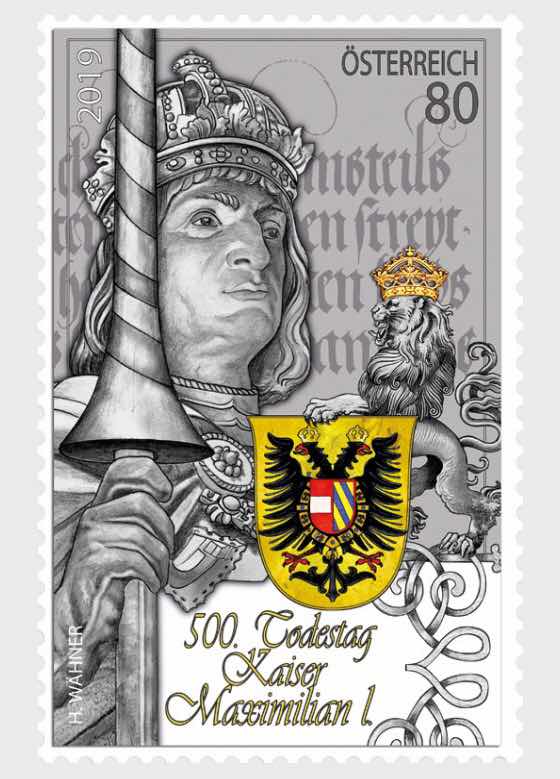


The stamp shows the motif from the special coin “Ritterlichkeit” (chivalry) which is to be issued by the Austrian Mint: a portrait of Maximilian with a lance and his coat of arms held by a crowned heraldic lion. The coat of arms with the colours of Austria and Burgundy on the shield is reminiscent of the illustration on the Golden Roof. In the background of the stamp an excerpt from “Theuerdank” can be seen.


Thank you Tom for this postcard showing one of the greatest emperors of Europe! I had so much fun reading through his history 

Saturday, April 13, 2019

Railway line - Pinkafeld to Szombathely


An envelope from my dear friend in Austria - re enacting a history 130 years later ! 

Szombathely is the oldest recorded city in Hungary. It was founded by the Romans in 45 AD under the name of Colonia Claudia Savariensum (Claudius' Colony of Savarians), and it was the capital of the Pannonia Superior province of the Roman Empire

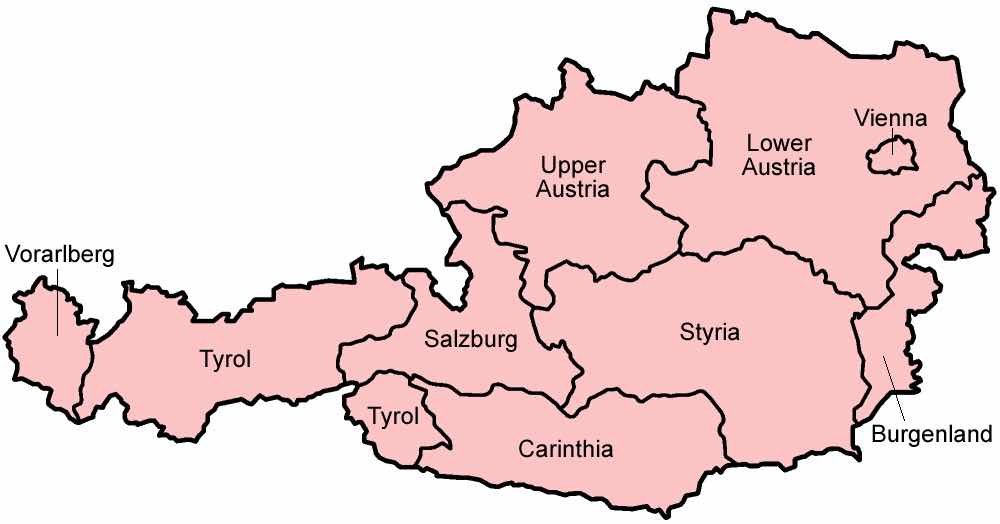
Pinkafeld is a city in Burgenland in Austria and the second largest settlement (after Oberwart) in the district Oberwart. The federal state of Burgenland is the smallest of Austria’s nine states . Until 1921 the area was part of Hungary, but was transferred to Austria as a result of WWI ( after some fighting and a plebescite in Sopron).
 
In hungarian times it was somewhat of a backwater, very rural. At the end of the 19th century, after a series of calamities claimed the lives of the people there,  the Habsburg empire decided to relocate Germans to the area, since they were good at farming and also built railways to make it easier to bring the agricultural products to the cities. 


The railway line was established towards the end of 1880s and ran from Pinkafeld till Szombathely. But after WWI, Burgenland became part of Austria, while the larger cities like Sopron or Szombathely remained in Hungary. The railway had to cross an international border. After WWII and with the communist regime in Hungary cross border travel completely stopped. Today the line isn' t used anymore, but there are some talks to re-open it.

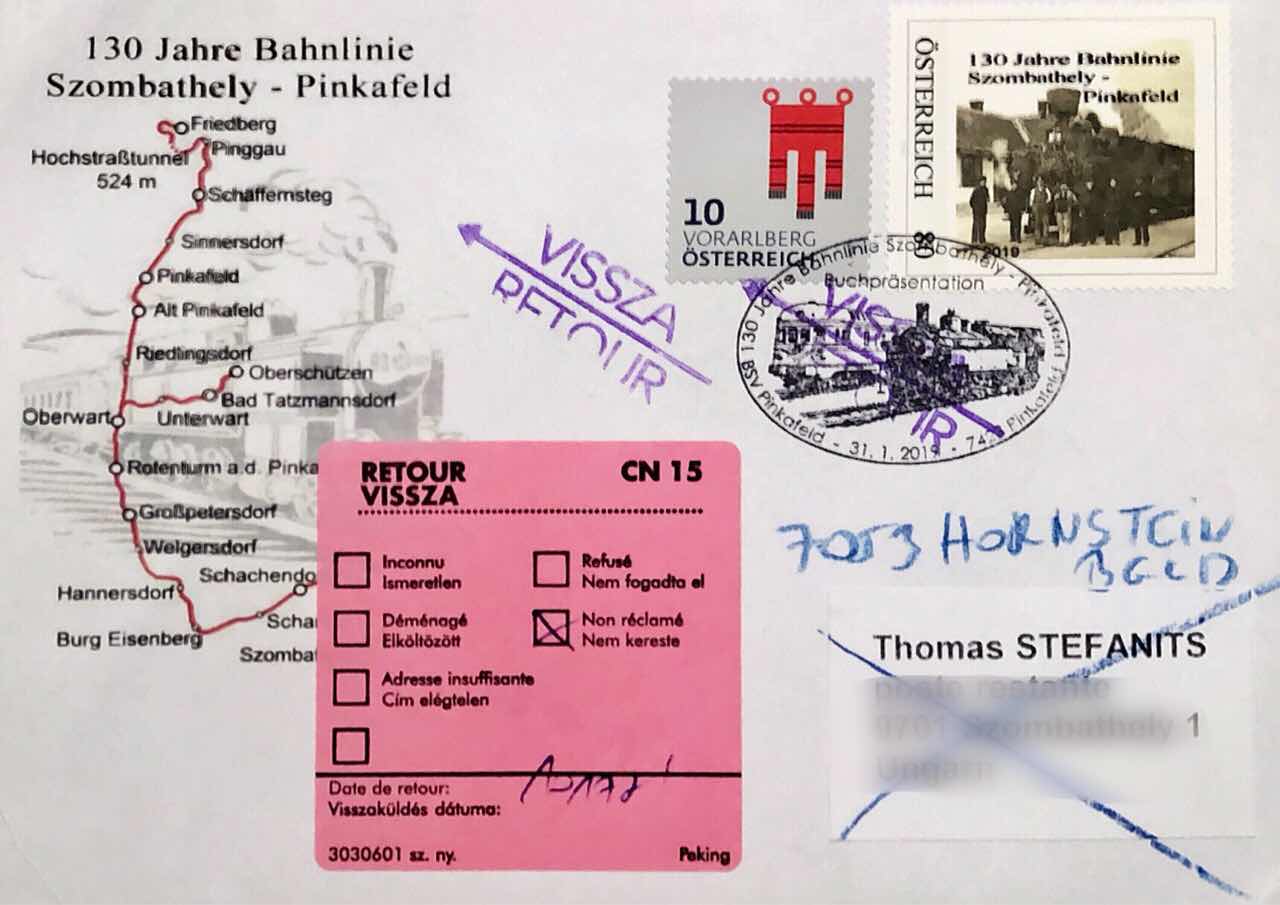
A special postmark was issued by Austria on 31-Jan-2019 commomerating the 130 years of the Szombathely Pinkafeld Railway line. The stamp is a private ( Personal Stamp ) one for the occasion. They are printed by the Austrian Post and are officially valide but are not for sale at post offices. This service is mostly used by communities or, like here , by the stamp collecting club of Pinkafeld, to commemorate a local event. The envelope was posted at Pinkafeld to Szombathely ( delivery postmark on the reverse ). It is interesting that the cover has not been claimed and resent to the sender .

Thanks Tom for this special cover :) 

Tuesday, December 25, 2018

Baby Christ market in Austria


A very beautiful cover from Austria ! 


Christkindl Market / Christ Child Market is a street marketassociated with the celebration of Christmas during the four weeks of Advent. These markets originated in Germany, but are now being held in many other countries. In Austria, Vienna's "December market" can be considered a forerunner of Christmas markets and dates back to 1298. In many towns in Germany, Switzerland, and Austria, Advent is usually ushered in with the opening of the Christmas market or "Weihnachtsmarkt". In southern Germany, Switzerland and Austria, it is called a "Christkind(e)l(s)(i)markt"

The Christmas markets in Vienna truly are an age-old tradition. The forerunners of the present-day events date back to the Middle Ages when in 1298 Albrecht I granted Vienna's citizens the privilege of holding a December Market or "Krippenmarkt". Since then, the character and prevalence of these markets has changed considerably. Nowadays, over 20 official Advent Markets sell a vast array of seasonal gifts and mouth-watering treats.


Since 1950, about two million letters and cards stamped with the special Christkindl postmark have been sent around the world each year before Christmas. The golden via Christkindl sticker ( on the left side of the cover ) - when stuck on the cover , the cover gets redirected to the Christkindl markets and a hand stamped postmark is placed on the cover . The designs of the postmark is changed every year ! 

Thanks Tom for this beautiful cover with the lovely cancellations ! 

One of the stamp honours the 200th anniversary of the most famous carol - Silent Night and the other one is the Austrian Christmas stamp of 2018 

Thursday, October 18, 2018

The post conquers the sky


A letter from Austria with a miniature sheet , cachet and three different cancellations ! 

The stamp 


Date of issue : 6 October 2018 
100 years of AirMail in Austria 

The cradle of Austrian aviation stood in Wiener Neustadt (about 50km south of Vienna). It had the first airport; the first motorized flights took place here and it was the site of the first aviation-related events. 

Towards the end of WW1, In March of 1918 the k.u.k. War Ministry, together with the two Trade Ministries (Austria and Hungary) organized a flight connection between Vienna and Kiev. Kiev was at that time the capital of the Ukraine, albeit occupied by Austrian and German troops. Ukraine had been recognized by the central powers as an independent state on February 9, 1918 and Russia ceded this area to the Ukraine in the peace treaty of Brest-Litovsk on March 3, 1918. It was expected that large scale deliveries of wheat from the 'Granary of Europe' would alleviate the hunger of the civilian population at home. This required substantial negotiations between Vienna and Kiev. The railways and telegraph lines between the two cities had been interrupted several times and were deemed inadequate for this purpose. Only airplanes could do the job.

 The military was given the responsibility of executing the plan, but the attendant mail service became the responsibility of the Trade Ministry. The only planes available were Albatros biplanes, which were no longer fit for combat duty. As the distance of 1200 km was too great for non-stop flights, the service was divided into three segments:
 Vienna —-> Krakau ——> Lemberg(Lvov) —> Kiev. 

The first experimental flight with military mail only started in Aspern on March 20, 1918. Regular mail flights began on March 30, 1918. Although the aviation aspect was organized militarily, the pilots had to conform with postal regulations as far as mail on board was concerned. 

The Airmail line functioned flawlessly until October 15 1918, although several planes had been lost for further service or had to be abandoned after making emergency landings in the Carpathian mountains. Although the flights continued to Kiev, civilian mail was not flown between Lemberg and Kiev; only official mail necessary for trade matters was allowed to be flown into the Ukraine.

The cover : 

The cover with the cachet was issued by the Austrian philatelic society , for a special flight of the replica of the original Hansa-Brandenburg CI , now at the Porsche museum. 


Wiener Neustadt is a town south of Vienna , and has a military airfield and a civilian airfield . The special flight carried the covers during its flight from the military to the civilian airfield to mark the 100 th anniversary of the AirMail in Austria. 


This flight is documented by the two cancellation prints on the bottom. The one with the plane is the departure postmark, the plain one with "2700 Wiener Neustadt" is the arrival confirmation. The souvenir sheet is cancelled with the first day postmark. 


Thanks Tom for this special cover ! 

Update : another postcard that I received from Tom in May 2018 


The cancellation on this Maxicard on the reverse is featuring the first AirMail flight from Aspern , Vienna to Kiev - the cancellation done on 14-May-2018 and also shows the route of the biplane - Aspern - Kraków- Lviv- Kiev ! 

Update 24-10-2018

Received another specially designed postcard from Tom ! 


A postcard showing the old Hansa-Brandenburg flight used in the first AirMail flights , the flugpost stamps of Austria , the new 100 anniversary stamp and the first day cancellation ! 

Update : 14-02-2019 

I received another cover from this series from Tom. It was extremely nice of him to give me this cover 


The same re-enactment cover that was flown from Neustadt to Vienna - was posted to Kiev and the cover took the entire route of the first flight in 1918 !! 

The kiev PO delivery postmark is seen on the reverse ! 

The cover has been stamped with a label - that the addresse can not be found and has been returned back to Austria! And a Kiev ( Ukraine ) postmark has been applied on the Austrian Stamp !?!?!?

I love this cover for all the postal history it has ! 


Friday, September 7, 2018

First Austrian Republic


A postcard from Austria - the proclamation of the First Austrian Republic 100 years ago , in front of the Austrian Parliament building. 


.... with the matching stamp on the reverse and a first day cancellation 


After the end of world war-1 and the fall of the Austro- Hungary Empire , the German Austrian Republic was formed in September 1918. But the Allies did not like the idea of expansion of Germany . And therefore , on 12 November 1918, a day after Emperor Charles I renounced his powers , the First Australian Republic was proclaimed in front of thousands of people who had gathered in the Ring outside the parliament building. The Treaty of Versailles forbid Austria to unite woth Germany in any ways. Theophil Hansen was the architect of the parliament building - a Neo Greek architecture built entirely with Austrian marbles brought from the village of Laas in the county of Tyrol. 


On the stamp the figure of Pallas Athena is particularly prominent, and indeed, even when the building was being constructed in 1874-1883, she was seen as a symbol of the still young parliamentarianism. Pallas Athena is the Greek goddess of wisdom, war and peace. Her resilience derives not from skill in battle, but from her clear and cool reasoning. The marble statue of Pallas Athena on the monumental fountain in front of the parliament building holds a golden globe surmounted by the goddess of victory Nike in her right hand, and a spear in her left. She is wearing a golden helmet and has a golden hide over her shoulders. The colour gold, which is particularly impressive on the stamp, was, from the earliest times, considered the colour of the gods and symbolises wealth and wisdom. The four figures lying at the foot of Athena are allegorical representations of the four most important rivers of the Austro-Hungarian Empire. They represent at the front the Danube and Inn, in the back the Elbe and Vltava (German: Moldau) rivers..

Cancellation
The first day cancellation here shows a man planting a tree - the design is an allegory and borrowed from a stamp issued in 1918 when First Austrian Republic was formed 


This postcard was privately designed by Thomas Stefanits ! ( only in 10 numbers ) 

Friday, August 10, 2018

Austrian bridge and postcrossing


This is again one of my most favourite covers - my first from Austria - from a good friend of mine now - Thanks Tom ! 

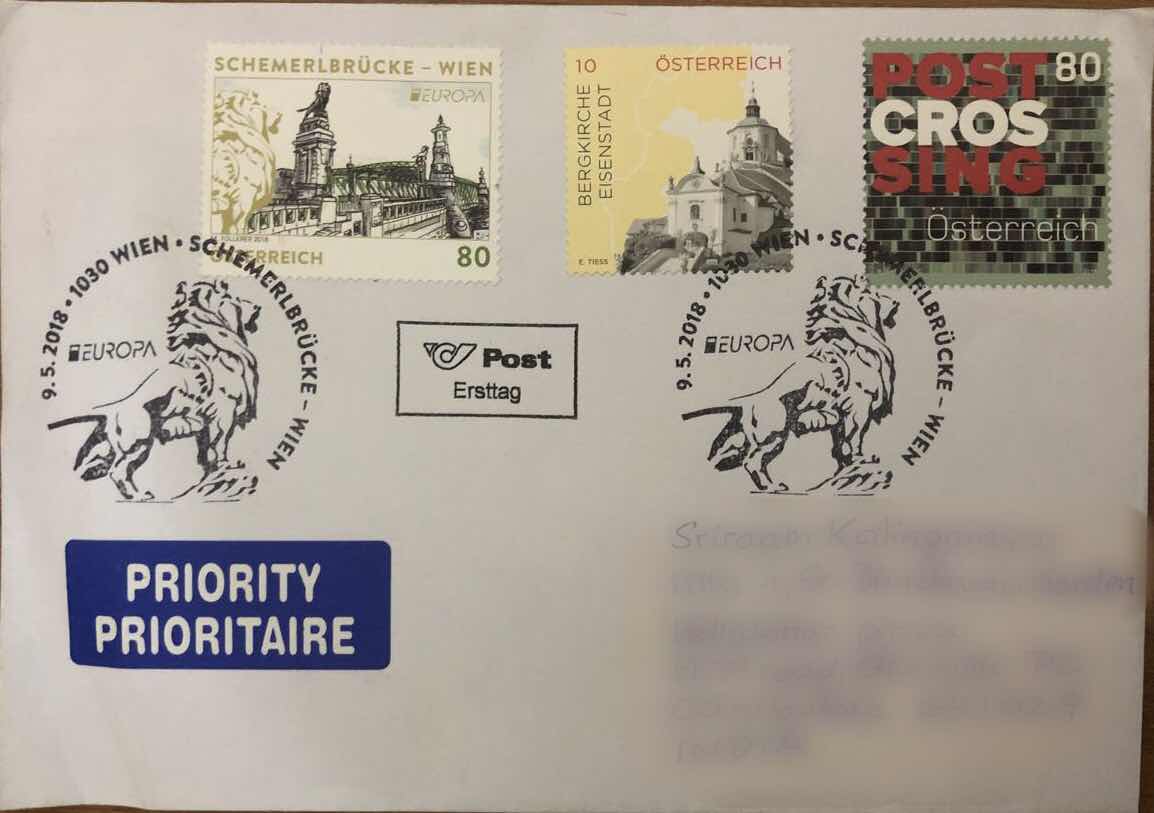
I had asked Tom for a cover with Postcrossing stamp, but I never expected he would send me a cover with the Europa 2018 bridges stamp of Austria - Schemerl bridge of Vienna with the first day cancellation postmark , and also the postcrossing stamp. And his covers always come neat !!

The Schemerl Bridge

This bridge provides a crossing for vehicular traffic, while at the same time also functioning as part of the Nussdorfer Wehr, a dam and lock system for the Danube Canal. To accommodate this unique combination of functions, the bridge has three truss lines. The middle truss line is positioned closer to the southern truss, allowing for a wider space between trusses on the northern side of the bridge. The northern side of the bridge is the deck for vehicular traffic. The narrower southern side of the bridge contains machinery related to the dam and weir system. 

This bridge has significant ornamental details, the most obvious of these being the bronze lion statues created by the noted artist Rudolf Weyr. Also noteworthy was the engineer for the bridge, the famous Otto Wagner who was responsible for much of the infrastructure in Vienna. 

Wartime damage in 1945 was repaired in 1953-1955. Another major repair took place in 1978. The bridge is in excellent condition today, with not a single spot of rust or deterioration visible on the trusses as of 2017.

The First Day cancellation shows the majestic Lion on the bridge . Date of issue - 9 May


Pic - Schemerl Bridge - Vienna 


The postcrossing stampThe stamp was designed by Robert Sabolovic and depicts a stylised “wall of postcards”, with the word POSTCROSSING in front of it, painted in the Austrian flag colours. 

Date of issue - May 2016 

The Austrian flag has three horizontal bands of red, white and red . It was adopted in 1918. 


The third stamps - shows the Bergkirshe / Haydn church in Eisenstadt ( the capital of Burgenland state in Austria ) . The pilgrim church "Visitation" was built between 1715 and 1803 according to plans drawn up by Prince Paul I. Esterházy. Unfortunately, the prince did not live to see the groundbreaking ceremony as he died from the plague in 1713. The famous musician Haydn’s mortal remains are here. 

Definitive stamp - 2015 - impressions of Austria series