A prepaid postcard - postal stationary - from Liechtenstein 🇱🇮 - issued for the 200th Anniversary of the Austrian post collection centre at Balzers. ( 200 jahre K.K Briefsammelstelle Balzers ).
Liechtenstein’s postal history begins when the mail collection station was opened in Balzers on 1 September 1817 by the Austrian postal administration.
Until the end of World War I, Liechtenstein was closely tied first to the Austrian Empire and later to Austria-Hungary; the ruling princes continued to derive much of their wealth from estates in the Habsburg territories, and spent much of their time at their two palaces in Vienna.
The Austro-Hungarian Empire established its state post in 1770 and operated all over Central Europe including Poland , Czech regions , Austria and Hungary , Italy etc .... Liechtenstein is known to have been on the mail route from Milan to Lindau in the 15th century as two postal stations were established at Balzers and Schaan to handle the volume of mails.
In 1817, Austria opened the collecting office (Postampt) in Balzers. Before 1867, the territories under the control of the Habsburg monarch in Austria used the hyphenated kaiserlich-königlich ( k.k ).
The Balzers collection centre was closed two years later because it couldn't compete with the Milan route but, in 1827, the Austrians reopened it. The new post office was integrated into the rest of the Austrian postal network so Liechtenstein was treated as a part of Austria. A second Austrian office was opened at Vaduz in 1845.
This is why the first Liechtenstein stamp that appeared in 1912 bore the inscription “K.K. Österr. Post im Fürstentum Liechtenstein”, i.e. Imperial and Royal Austrian Post in the Principality of Liechtenstein. Although eight years later the postal service became independent and was named “Fürstlich Liechtensteinische Post”, it remained under Austrian administration until 1921 when the treaty on the handling of the postal, telephone and telegraph services in Liechtenstein by Switzerland entered into force.
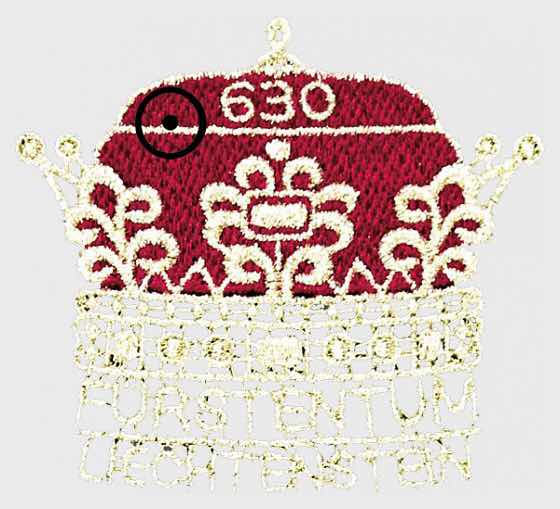
The postal horn with a value of 100 CHF has been pre printed on the postcard with an image showing the imperial emblem of Austria- Hungary Empire on the walls of the collection centre of Balzers.
The postcard has been uprated with another interesting stamp that commomerates the 100 years of diplomatic relations with Austria and Switzerland.
 The special stamp “Vienna and Bern” (face value: CHF 2.20) focuses on the theme of the diplomatic missions of Liechtenstein set up in Switzerland and Austria in 1919 for the first time
Issue date: - 04-03-2019
Lawyer Emil Beck (1888-1973) was the representative at the Liechtenstein legation in Bern until 1933. He played a part in various state treaty negotiations between both countries. According to parliamentary records, the closure of the diplomatic mission in Switzerland was attributed to the country’s financial situation. At the request of Liechtenstein's government in 1919, Switzerland safeguards Liechtenstein's interests and citizens abroad. The two form a common economic and monetary area (Liechtenstein has used the Swiss franc (since 1920) and has had a customs union (since 1924) with Switzerland with open borders (though both are now also party to the Schengen Agreement). The countries also have a common patent system. Switzerland is empowered to enter into treaties on Liechtenstein's behalf if Liechtenstein is not represented at the treaty negotiations; this power has most often been exercised with treaties involving customs duties or procedures.
Prince Eduard of Liechtenstein (1872-1951) was also a legal scholar and represented Liechtenstein’s interests from 1919 to 1921 as an envoy in Vienna. At the time, the aim was to get Liechtenstein out of the difficult situation it found itself in as a result of the First World War and to ensure that the country was recognised as being neutral and independent.
Today, Liechtenstein- the fourth smallest landlocked country in the world , sharing boundaries with two countries - has a very harmonious relationship with both its neighbours. The principality which was completely under the influence of Austria till the end of WW1, aligned itself with Switzerland after 1919. Inspite of the economic disaster post WW2 , the principality has managed to emerge as the country with the highest GDP per person in the world.
Also - Austria has been a major player in the development of postal services all over Central Europe.
The postmark :

The postmark on the postcard is the pictorial postmark from Balzers !! And on the first day of issue of the stamp ;)
 Balzers
Thanks Tom for this beautiful postcard ! Your postcards teach me more history than any history book :)
And yes, the Balzers postmark makes the postcard more special than a first day postmark of the stamp would !!!