Showing posts with label # Croatia. Show all posts

Tuesday, July 2, 2019

Croatian Bats


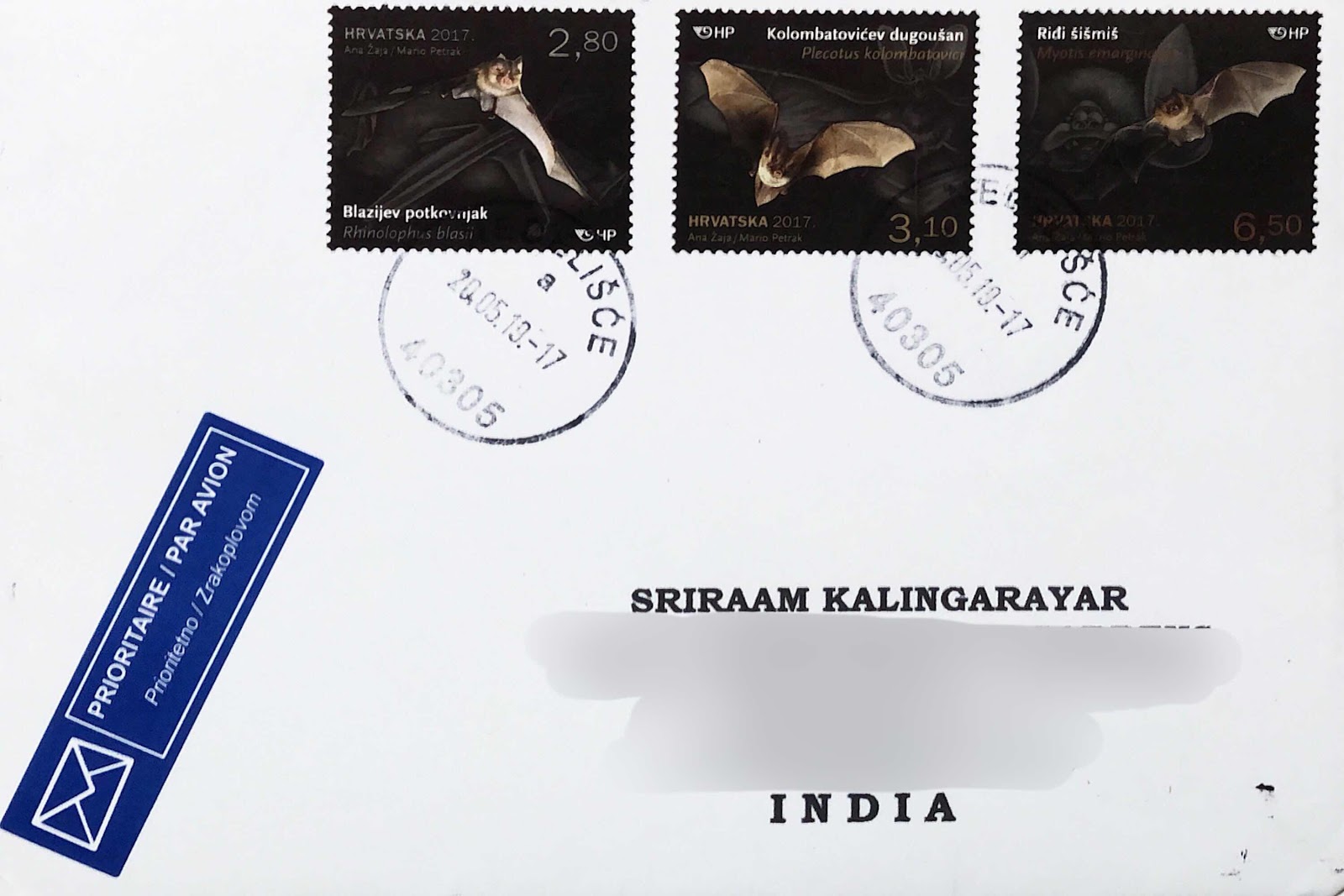
A cover from Croatia 🇭🇷 


Croatian Fauna - Bats 
Date of issue : 21-03-2017
Postmark : Nedilisce, Croatia - 20/April/2019

Blasius's horseshoe bat, Rhinolophus blasii 

A bat from the horseshoe bat family (Rhinolophidae) which all have a characteristic skin growths that distinguish them from other families and each other. Blasius's horseshoe bat is the rarest species of horseshoe bat in Croatia. In addition to the findings on the islands of Cres, Krk and Rab, it is limited to underground shelters (caves and pits) in the interior of the Mediterranean region. As the species is considered extinct in Slovenia and Italy, findings in Croatia represent the northern border of this widespread but rare species. Specific echolocating high frequency signals are clear determining feature of the species and are used for orientation and hunting of insects. It hunts in undergrowth (shrubs) and forests, whose destruction, along with the disturbance and destruction of underground shelters threatens this species. In order to preserve the species it is of utmost importance to protect their hunting habitat as well as the underground facilities in which its winter and summer colonies reside.

Mediterranean long-eared bat, Plecotus kolombatovici

Mediterranean long-eared bat is the smallest of the four species of this genus in Croatia. It was described and discovered by Batrica Đulić, Ph. D., professor who named it after the famous bat explorer professor Juraj Kolombatović. The characteristic of this bat genus are extremely large ears which are used for orientation and listening for prey. It is spread only on the coast, and on the Adriatic islands it is the only species of long-eared bats. Summer colonies are found in the towers of churches and the largest known is the one in the Boljun church in Istria. Its wintering grounds are unknown. At night it hunts mostly within forest stands, often flying low at the edge of the garrigues and hedges. The hunting habitats are generally placed within 3 km from the shelters. The relatively small populations on the islands, rare findings located on the coast and dependence on anthropogenic shelters (attics of churches and houses) are the reasons why Mediterranean long-eared bat is endangered species.

Geoffroy bat, Myotis emarginatus 

A typical representative of murine bats (family Vespertilionidae) that distinguishes from other species with its distinctly reddish fur on its back and the characteristic ear notch. The species is widespread but prefers warmer regions. Hence, the largest colonies in Croatia are found in caves and under roofs on the coast, and according to current information, it is one of most numerous populations of this species in Europe. Geoffroy bats often occupy only a dusky or even well illuminated parts of cave entrances, and are very sensitive to disturbance. In the continental Croatia, only smaller colonies are known to be living in the roofs of buildings. In the winter only individual appearances were recorded in caves. Geoffroy bat is the forest resident and it takes a variety of invertebrates off the twigs and leaves of trees and shrubs. The species is endangered by disturbance and destruction of maternity shelters in houses and caves and by hunting habitat fragmentation.

Thursday, March 7, 2019

Reintegration Of Medimurje with Croatia


A postal stationary from Croatia 🇭🇷 

A prepaid postcard was issued in January 2019 commomerating the 100th anniversary of the reintegration Of Medimurje with The Kimgdom Of SHS. 

Međimurje County is a triangle-shaped county in the northernmost part of Croatia, roughly corresponding to the historical and geographical region of Međimurje. Despite being the smallest Croatian county by size, it is the most densely populated one (not including the City of Zagreb). The county seat is Čakovec, which is also the largest city of the county.

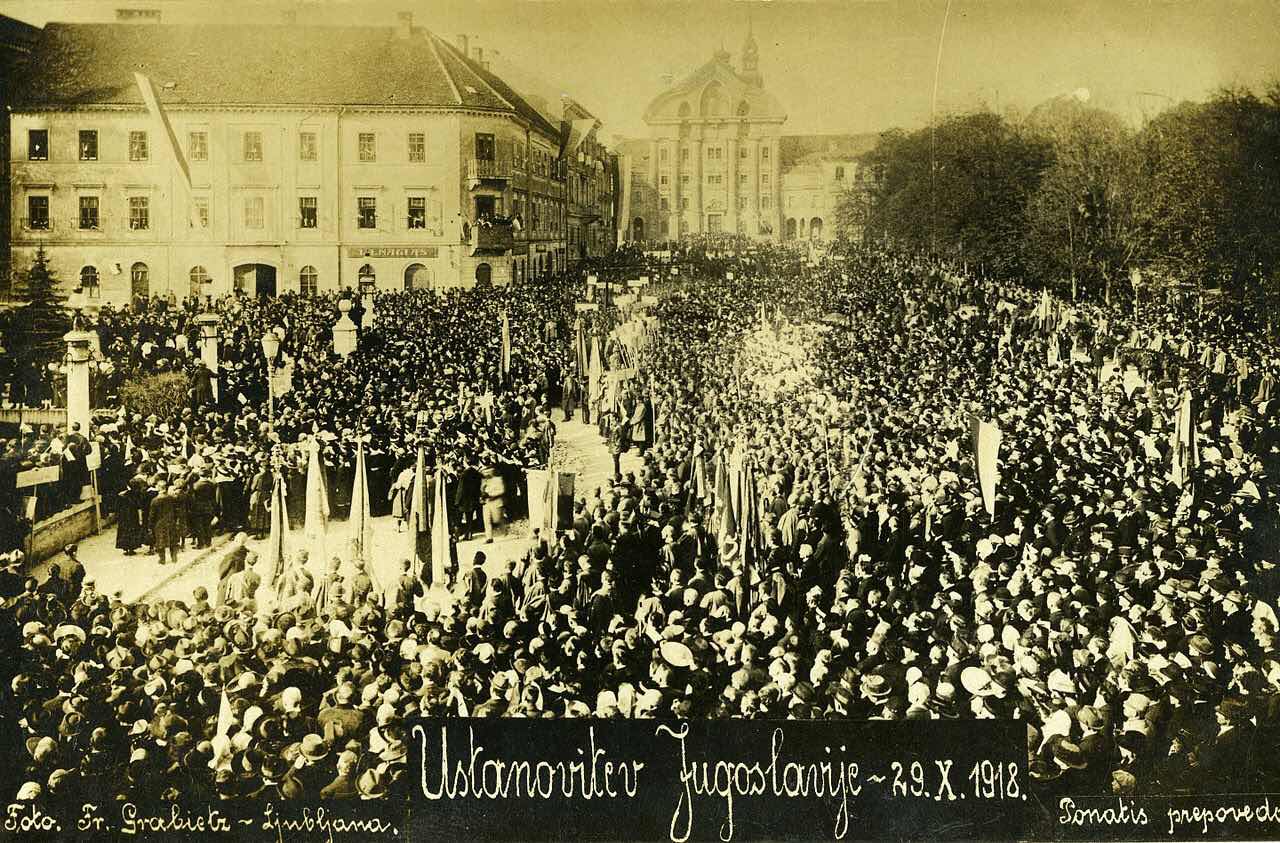
On 9 January 1919, an assembly of local deputies decided to secede Međimurje from Hungary and the decision was made in the presence of 10,000 people who gathered in the Franciscan Square in Čakovec on that occasion.

The region joined the Kingdom of Serbs, Croats and Slovenes ( kingdom of SHS ) which was later called Yugoslavia. Upon the adoption of the resolution on secession, the Croatian language was introduced in schools and the public life in the area mainly populated by Croats.

Kingdom of SHS 

The State of Slovenes, Croats and Serbs was a political entity that was constituted in October 1918, at the end of World War I, by Slovenes, Croats and Serbs resident in what were the southernmost parts of the Austro-Hungarian Empire. Although internationally unrecognized, this was the first incarnation of a Yugoslav state founded on the Pan-Slavic ideology. Thirty-three days after it was proclaimed, the State joined the Kingdom of Serbia to form the Kingdom of Serbs, Croats and Slovenes.


The postcard has been posted at Cakovec! The preprinted stamp shows the map of Medimurje county during 1919 when it seceded to kingdom of SHS .. and the stamps of Hungary post overprinted with SHS can be seen printed on the left side of the postcard. The postcard has been uprated for international postage with another Croatian stamp - commomerating the 100 th anniversary of the first stamp of Croatia. 


Thanks Tom for this special postcard - and for finding a postcard that tells a World War One history from Croatia ! 

Monday, January 28, 2019

Adriatic Islands and lighthouses


A cover from Croatia 

Croatia's islands are numerous (at least 1185 depending on which size rock counts as an island!) and spectacular. From remote fishing outposts to harbours dotted with massive yachts, Croatian islands display nearly every style you can imagine and some you haven't yet imagined. With all those islands in Croatia, it may surprise you to know that only 66 islands are inhabited.

Although the islands stretch from Istria to Dubrovnik, most islands are clustered in central and southern Dalmatia. Istria has few islands. Central Dalmatian islands tend to be dry and rocky, carpeted with brush and olive trees while southern islands are green and forested. For geological reasons, Croatian islands tend to be long and narrow, running from northwest to southeast and parallel to the coastal mountains.

As the Adriatic sea sits atop the African plate, its seabed is getting squeezed which will cause new islands to pop up. But not that soon. If all proceeds as expected, Italy will edge ever closer to Croatia and in about 50 to 70 million years all of the islands will get smushed together in one landmass.

Palagruža is a small, remote Croatian archipelago in the middle of the Adriatic Sea. Palagruža is closer to Italy than to the Croatian mainland, being some 42 km (26 mi) from Monte Gargano.After Italy's entry into World War I, the country's armed forces occupied the island. The Italian Navy submarine Nereide was sunk there on the 5th of August 1915 by the Austro-Hungarian Navy's submarine U-5.
In the time when the lighthouse was built, in 1875, first archaeological remains were found suggesting that Palagruža was inhabited far back in the Neolithic. The building of the lighthouse lasted two years and about two hundred workers worked on it. The light of a range of 25 nautical miles was lit for the first time in 1876.
  • Date of issue:
  • 30.05.2014.


At a distance of less than two nautical miles to the west of Cape Pernat and the coast of the island of Cres, there is a bare islet of Zaglav. Already at the auction for building a new lighthouse in 1874 it became obvious it was by no means just an ordinary location. It was only during the fourth auction that the maritime authorities managed to find a constructor who was going to build the facility.
    • Date of issue:
    • 12.09.2008.

      Croatia issues stamps every year with lighthouse series !!