Showing posts with label # Germany. Show all posts

Tuesday, June 2, 2020

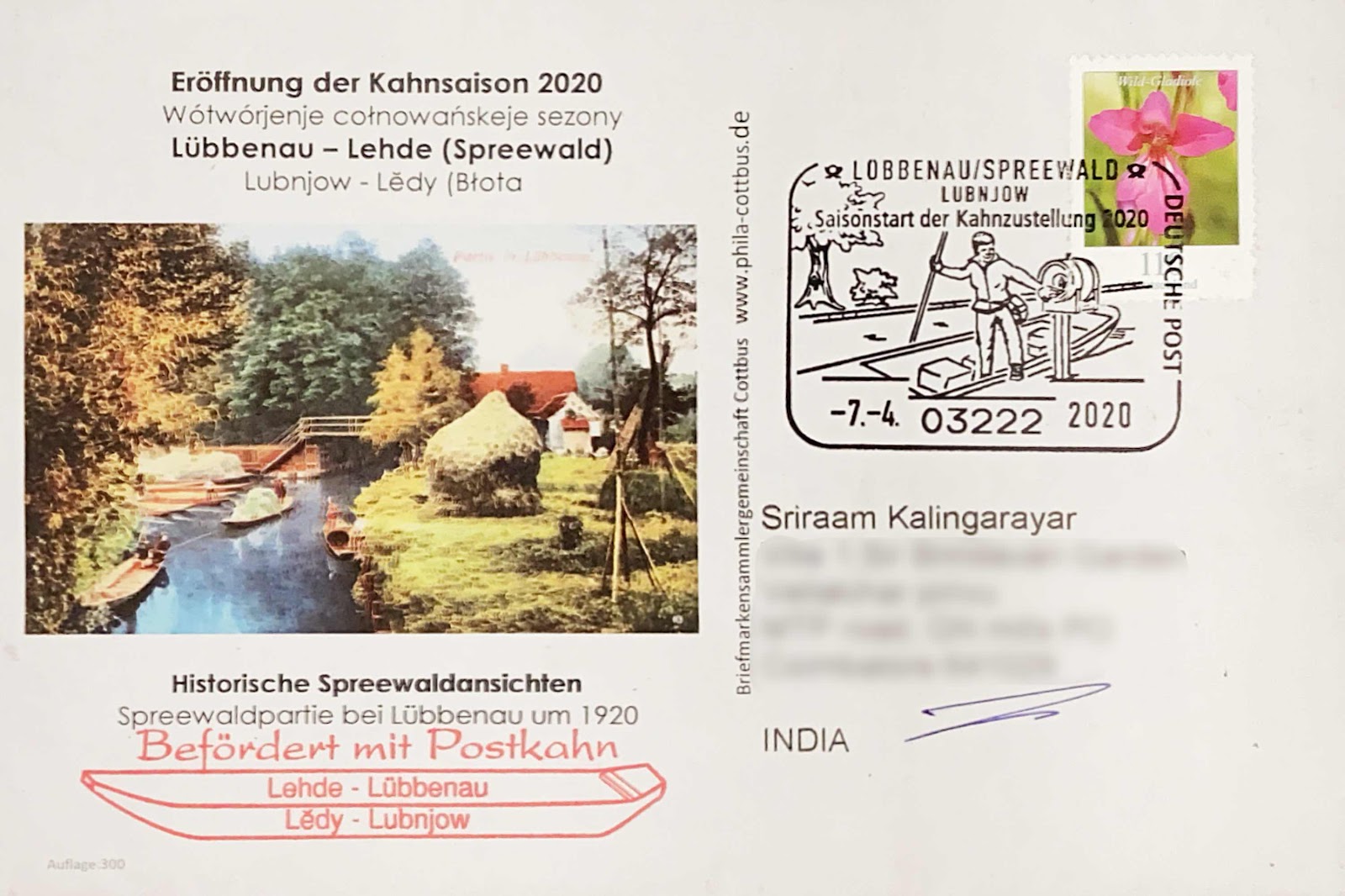
Spreewald postkahn

A cover from Germany 🇩🇪 

I received this cover from my good friend Tom of Austria, who had posted it before the lockdown! And this is one of the first covers I received after the long drawn lockdown.. my mailbox has been empty and bees have made it their home .. I am really happy to receive mails again. And I hope to give another new life to this blog ! 

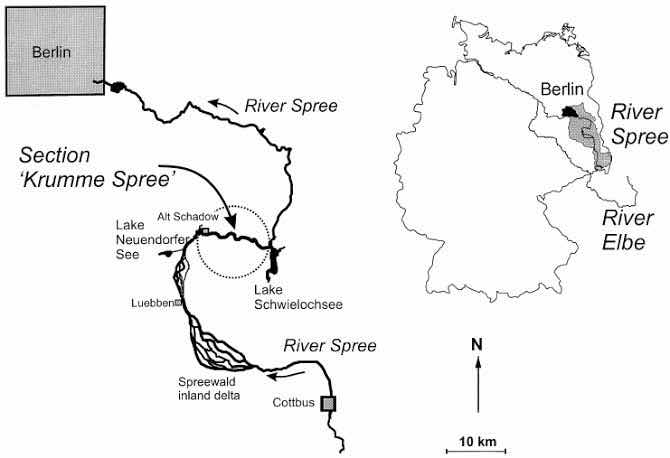
The Spree is a river that flows through the Saxony, Brandenburg and Berlin states of Germany, and in the Ústí nad Labem region of the Czech Republic. Approximately 400 kilometres in length, it is a left bank tributary of the River Havel, which itself flows into the Elbe and then the North Sea. It is the river on which the original centre of Berlin was built.


The Spreewald is a section of the German state of Brandenburg located about 100 km south-east of Berlin. It was the center of the Battle of Halbe at the end of World War II, which included the last major land conflicts between German and Soviet forces. Spreewald was designated a biosphere reserve by UNESCO in 1991. It is known for its traditional irrigation system, consisting of more than 200 small canals within the 484-square-kilometre area.


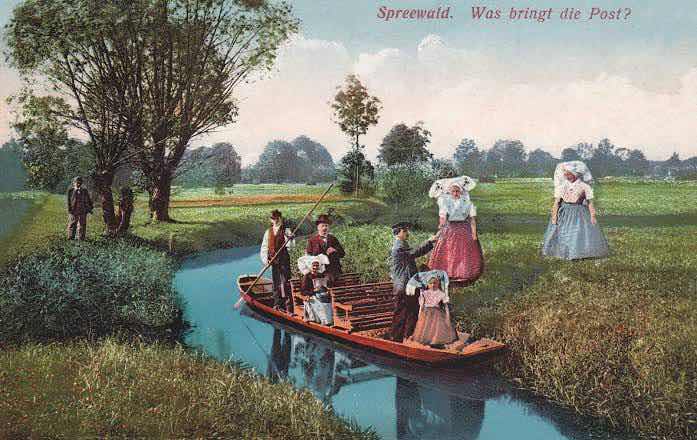
Spreewaldkahn is the name for a shallow boat that can be moved with a pack, which is often found in the rivers and canals of the Spreewald and was used there for a long time as the main means of transport. While the original Spreewald barges are made of wood, sheet steel and aluminum have been used more and more recently. The lifespan of a wooden barge is only about 15 years due to the ban on various wood preservatives, while barges made of sheet steel or aluminum last at least 50 years, with lower acquisition costs. The Spreewald is a biosphere reserve and therefore a general driving ban applies. Residents can use Spreewald barges without a driving machine for non-commercial purposes.


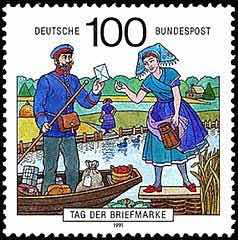
In  Spreewald, district of Lübbenau-Lehde, the post is also delivered with a Spreewald barge - at least in the ice-free period. During the warmer months, mail is delivered in this unique way on the waterways of this bi-lingual area. Every year the german post issues a special postmark at the beginning of the season. The red stamp at the bottom is a confirmation, that the cover was carried on one of this post boats.


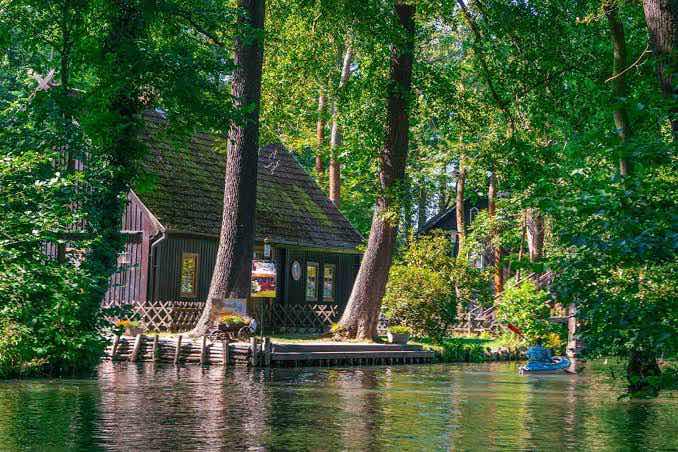
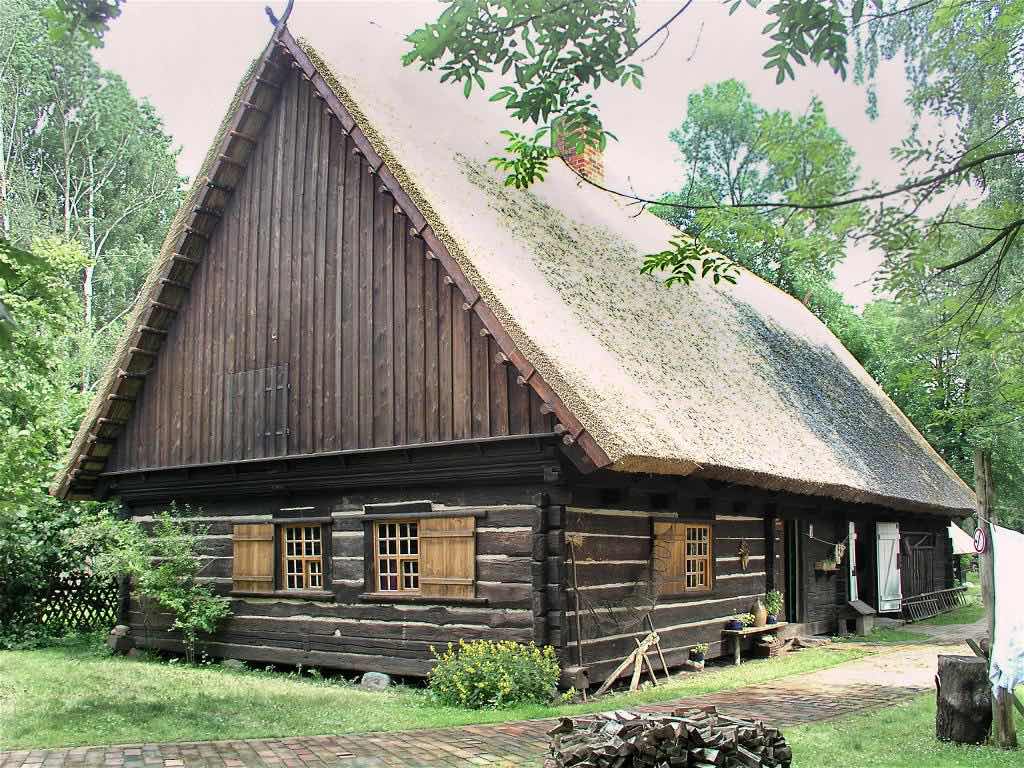
The pictures of Spreewald looks really enticing, and I wish to visit this part of the world someday ! I also want to search for previous years’ Spreewald postkahn postmarks ... the cover makes a great addition to my collection of covers sent through a postoffice on water. 


Saturday, June 22, 2019

Private posts of Germany


Postcard No. 1 

A postcard from Germany 🇩🇪 via Saariva post 

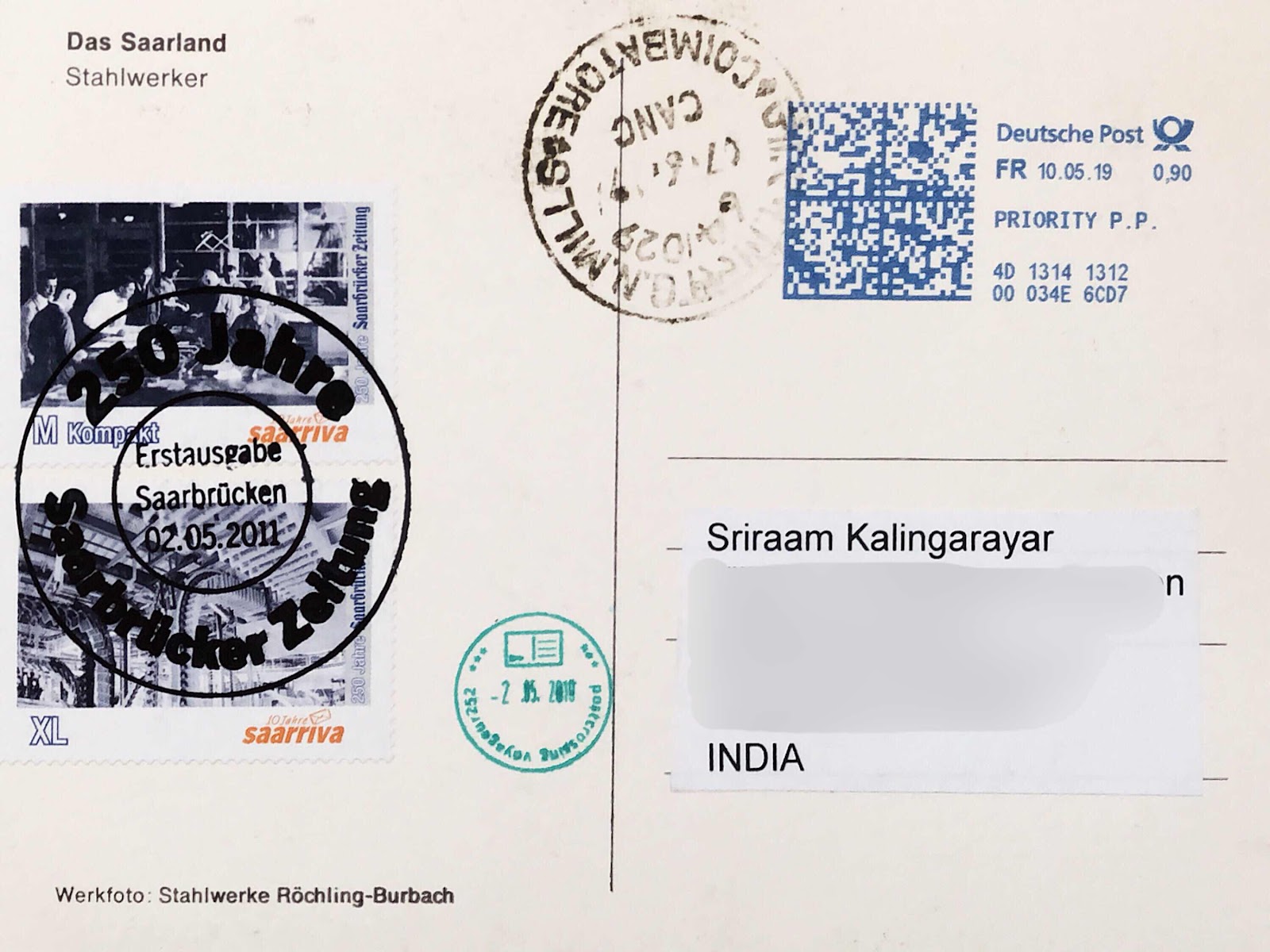
Saarriva is - as the name implies - a Saarland-based company based in Saarbrücken and a subsidiary of Saarbrücker Zeitung and Postcon, a business postal service provider from NRW (formerly TNT Post). The main delivery area is in the Saarland, but also in many other regions, post can be sent via Saarriva. The way there and the delivery is then again taken over by cooperation partners as in this case , the postcard has been sent by airmail to India by Deutsche Post ( with a meter cancellation on the top ) 


250 years of Saarbrücker Zeitung 
Date of issue : 02-05-2011

The Saarbrücker Zeitung (SZ) is a daily (except Sundays) newspaper published in Saarland, Germany. It was first published as a weekly journal in 1761 under the title Nassau-Saarbrückisches Wochenblatt (Nassau-Saarbrücken Weekly). After several changes in name and frequency, it appeared since 1861 under its current title. After the Saar Treaty in 1956, the Saarland state became its owner. It was privatized in 1969; the paper's major owner (56.1%) is the Holtzbrinck Publishing Group.

On the occasion of the 250th anniversary of the Saarbrücker Zeitung, saarriva launched its 3rd saarriva stamp collection with the name "250 Jahre Saarbrücker Zeitung" with its first day 02.05.2011. The motifs, all from the field of newspaper production, take the viewer on a breathtaking journey through the history of newspaper printing.


Postcard No. 2 

A postcard from Germany via CityMail Regensburg post ! 

The Deutsche Post has applied labels over the CityMail stamps and postmark when they sent the postcard via their system overseas ! So I deceived to carefully peel the label and look at the postmark ( I am not sure if it’s a good philatelic practice though ) 


CityMail Regensburg is a private mail service operating in Southern Germany- Bavaria.  Founded in 1999, the company has been a wholly owned subsidiary of M Das Medienhaus since 2002. More than 120 employees process about 30 million shipments per year, mainly from business customers in the region such as public authorities, companies from SMEs to corporations or healthcare organizations.


1175 years of City Roding 

Roding is a town in the district of Cham, in Bavaria, Germany, near the Czech border.

The postcard has been sent by airmail to India by Deutsche Post ( with a meter cancellation on the top ) 


I had earlier received a postcard via PostModern post of Dresden , Saxony -which uses Post NL for their international mail service ! http://travellingenvelopes.blogspot.com/2019/03/postmodern-dresden.html?m=0


A postcard from Germany via Nordbrief Kiel post ! 

Thanks Tom for these very interesting postcards showing an important aspect of German Postal system !! 


Saturday, June 8, 2019

German Airmail and Airlift anniversaries


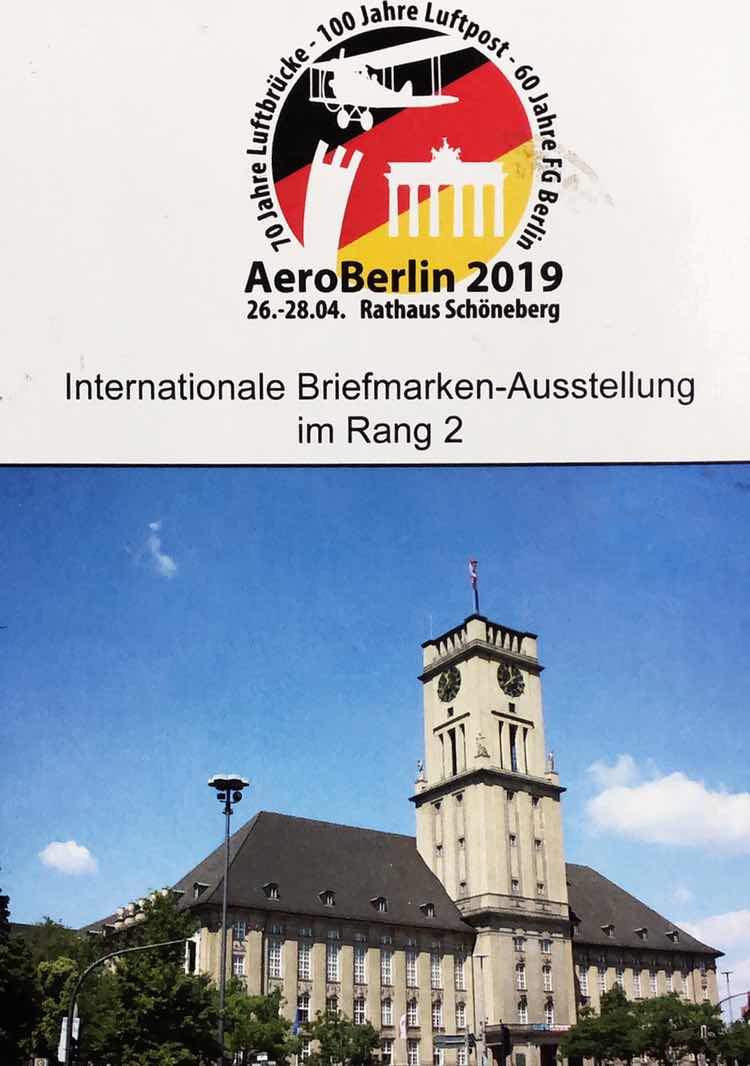
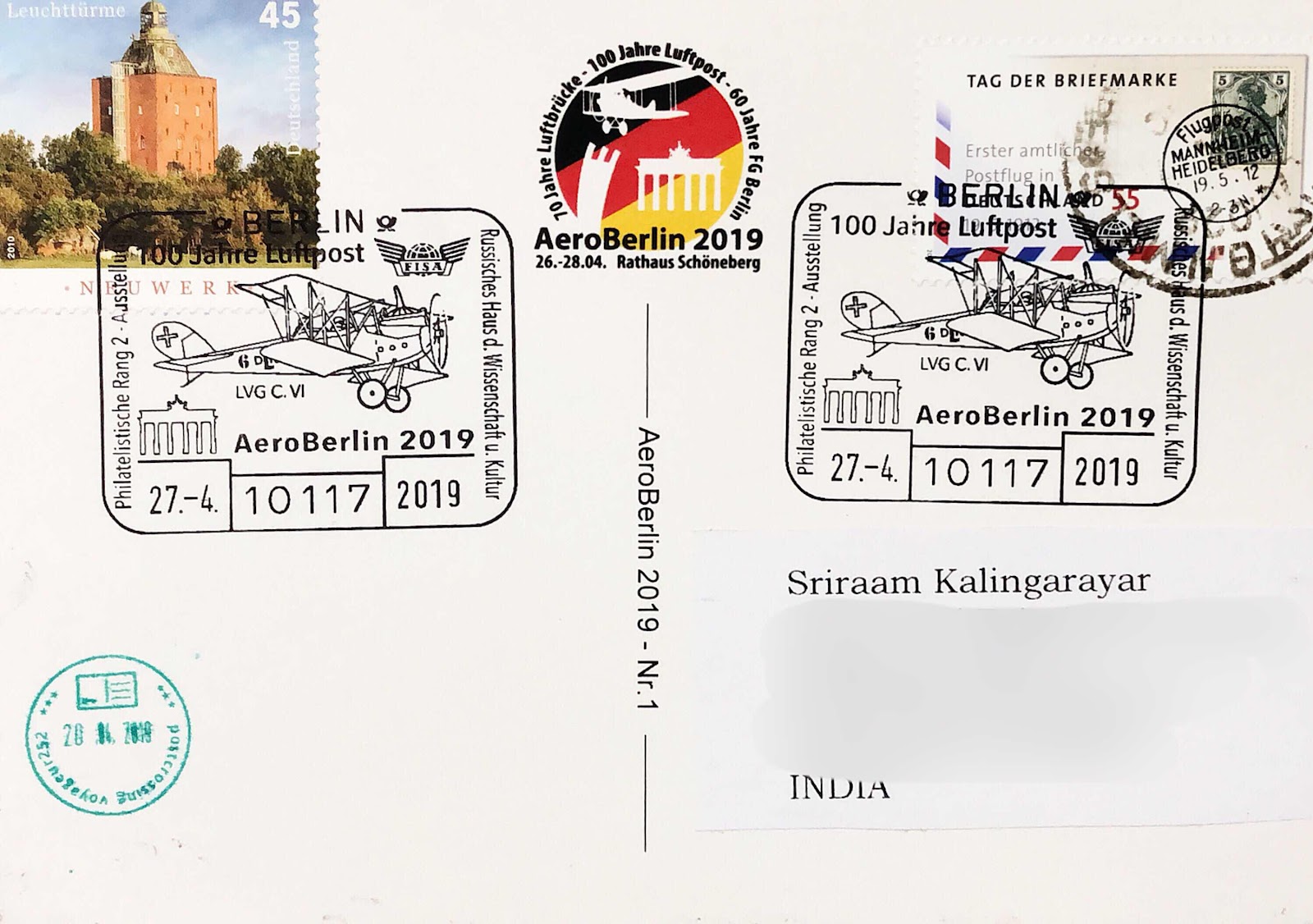
A postcard from Berlin , Germany 🇩🇪 sent during the AeroBerlin 2019 - April 26-28,2019

The International Stamp exhibition was planned and organised in the Schöneberg ( Berlin ) Town Hall during April 26-28, 2019. Since the hall was undergoing major renovations, the event was organised at the Russian House of Science and Culture. 

The event was organized by the German air postal associations ( AeroBerlin) and was timed to coincide with several anniversary events 

100 years of the first official air mail; 
70 years to the Berlin air bridge;
60 years to the research community of Berlin; 
100 years of Lake Constance airmail; 
100 years of SCADTA; 
50 years of landing on the moon (space mail); 
50 years of "Concord" (Concorde) 

- thematic expositions of which were presented at the exhibition

This postcard has a postmark honouring the 100 years of the first official air mail in Germany! 

I have already received few covers and postcards commomerating this centenary from my good friends Tom and Dustin ! 
http://travellingenvelopes.blogspot.com/2019/05/germany-airmail-centenary.html?m=0

http://travellingenvelopes.blogspot.com/2019/03/100-years-german-republic-and-german.html?m=0

This postcard shows a different postmark from the previous one - showing one of the iconic planes of those times that was used for the transport of Airmails. 


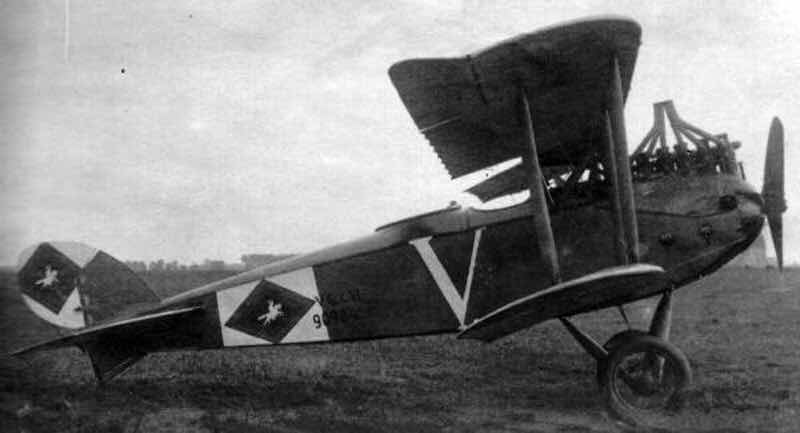
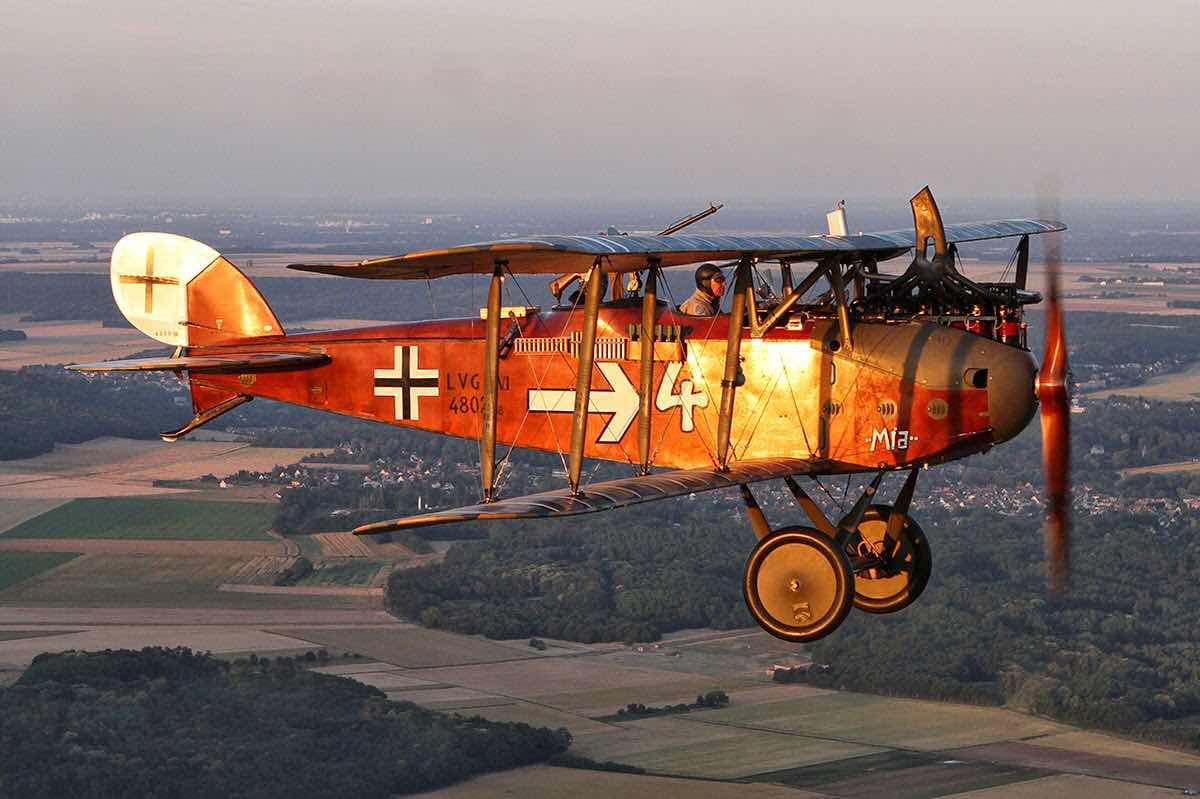
The LVG C.VI was a German two-seat reconnaissance and artillery spotting aircraft used during World War I.

The aircraft was designed by Willy Sabersky-Müssigbrodt and developed by Luft-Verkehrs-Gesellschaft (LVG) in 1917. The C.VI was a further development of the C.V, which Sabersky-Müssigbrodt had made for his former employer DFW. It was lighter, smaller and aerodynamically refined, although its fuselage seemed more bulky. It was a biplane of mixed, mostly wooden construction. It featured a semi-monocoque fuselage, plywood covered.


Straight uncovered engine in the fuselage nose, with a chimney-like exhaust pipe. Two-blade Benz wooden propeller, 2.88 m (9.45 ft) diameter. Flat water radiator in central section of upper wing. Fixed conventional landing gear, with a straight common axle and a rear skid. Aircraft were equipped with a radio (morse code only); transmissions were by means of an antenna which could be lowered below the aircraft when needed. The crew had parachutes and heated flying suits. A total of 1,100 aircraft of the type were manufactured.

Today, there are three surviving C.VIs. One is currently being restaured at the RAF Museumin Cosford, one is on display at the Royal Museum of the Armed Forces and Military History in Belgium and the third one is at the Musée de l'Air et de l'Espace in Paris.

Thanks Tom for this beautiful postcard showing the Town Hall of Schöneberg ! All these postcards have been a great learning experience of the way the Airmails developed across the world :) 

Monday, May 20, 2019

Grand Duchess of Luxemburg


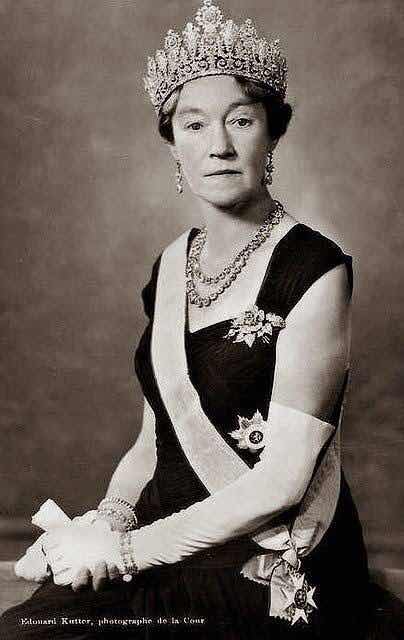
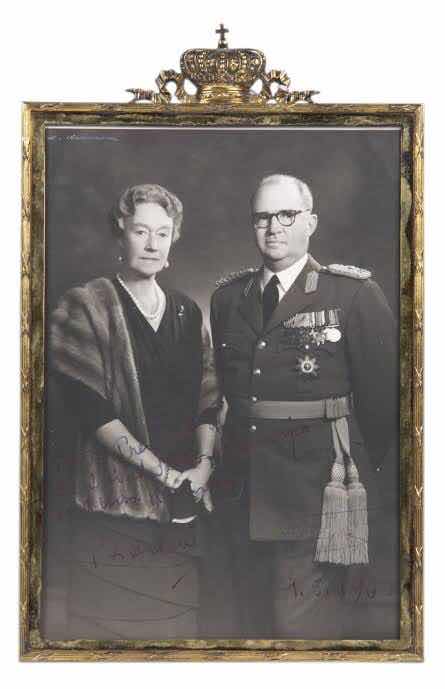
A cover from Germany 🇩🇪 with a commomerative postamrk on the 100th anniversary of ascension of the Grand Duchess Charlotte of Luxemburg. 


Born in Berg Castle, Charlotte of Nassau-Weilburg, Princess of Luxembourg, was the second daughter of Grand Duke William IV and his wife, Marie Anne of Portugal.


When her older sister, Marie-Adélaide, who had succeeded their father, was forced to abdicate on 14 January 1919, Charlotte became the one who had to deal with the revolutionary tendencies in the country. Unlike her sister, she chose not to interfere in its politics.

In a referendum about the new constitution on 28 September 1919, 77.8% of the Luxembourgish people voted for the continuation of a Grand Ducal monarchy with Charlotte as head of state. In this constitution, the power of the monarch was severely restricted.

During the German occupation of Luxembourg in World War II, Charlotte, exiled in London, became an important symbol of national unity. During the Second World War the grand ducal family left Luxembourg shortly before the arrival of Nazi troops. The Duchess along with her ministers decided to place themselves under the protection of France, described by the Grand Duchess as a difficult but necessary decision. But the rapid advance of the German forces into France followed by French capitulation the next month caused the French government to refuse any guarantee of security to the exiled Luxembourg government. 


The Germans proposed to restore the Grand Duchess to her functions, but Charlotte refused, mindful of her sister's experiences of remaining in Luxembourg under German occupation during the First World War - which proved her loyalty to her people and one of the reasons the people have an unshakeable loyalty to the Royalty even today. 

Charlotte's younger sister Antonia and brother-in-law Rupprecht, Crown Prince of Bavaria, were exiled from Germany in 1939. In 1944, living now in Hungary, Crown Princess Antonia was captured when the Germans invaded Hungary and found herself deported to the concentration camp at Dachau, being later transferred to Flossenbürg where she survived torture but only with her health badly impaired. Meanwhile, from 1942 Grand Duchess Charlotte's eldest son, Jean, served as a volunteer in the Irish Guards.

In the years after the war, Charlotte showed a lot of public activity which contributed to raising Luxembourg's profile on the international stage, by hosting visits from foreign heads of state and other dignitaries. 


On 12 November 1964, she abdicated in favour of her son Jean, who then reigned until his abdication in 2000.


Thanks Dustin for this nice cover ! 

Saturday, May 11, 2019

Germany airmail centenary


A wonderful cover from Tom ! - a re enactment of the flight 100 years later in Germany 🇩🇪 - the first passesnget airline flight in the world !! 


On February 18, 1912, the first official delivery of airmail by an airplane was made in Germany when pilot Hermann Pentz flew a monoplane made by German aviation pioneer Hans Grade from the German city of Bork to Brück. Germany came out with its first airmail stamps in 1919. 

On 9 November 1918, two days before the Armistice was signed, a senior politician named Muller had lunch at his Berlin club. Berlin at the time was an uneasy place. Violence and revolution were in the air and on the streets. The Army's rigid control seemed to be slipping. A week earlier, sailors of the German Navy had refused to take out the fleet for a final pointless set-piece battle with the Royal Navy. They deserted in large numbers. Soldiers too were throwing their rifles in the river and setting off home. 

The government was now in the hands of the Social Democratic Party, led by Ebert and Scheidemann, who must have felt that their hour had come at last. The current Chancellor in Berlin was aware that the situation was getting rapidly out of hand. So that morning the Chancellor took matters into his own hands. He announced to the world that the Kaiser had, in fact, abdicated. Then he resigned, and formally handed over his office to Ebert, the leader of the majority party and a respected conservative politician.

When Scheidemann learned what the Chancellor had done, he jumped onto a chair and yelled to the small crowd, "Long live the German Republic!" Ebert, though , was not pleased to have become Chancellor in the middle of a revolution. An election was held in January 1919. When the votes were counted, the Social Democratic Party had won more votes than any other, but the number was well short of the majority they needed to form a government. The Catholic Centre party had come second. The left-wing workers' parties were a poor third. Ebert's only sensible option was a coalition of the right and centre. Scheidemann took over as Chancellor, and Ebert became the new republic's first President. 

But volatile Berlin was not a safe place for a government instinctively opposed to any major reforms. Instead, they chose to meet at Weimar, a quiet country town near Leipzig, 150 miles to the south. The town's theatre served as the parliamentary building.

However, being so isolated from the capital meant that communications were difficult. With strikes on the railways and coal in short supply, it took four or five days even for an express letter from Berlin to reach Weimar. The Berlin newspapers were out of date by the time the politicians in Weimar could read them. The government had no real idea what the people were doing. 

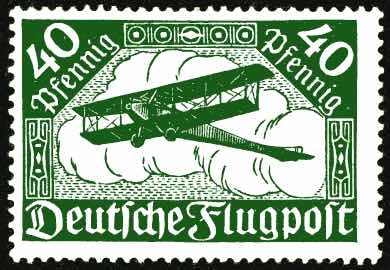
The solution to the problem was air transport. There were plenty of serviceable aircraft around, though most of them had been designed to carry just one passenger. A company named DLR (Deutsche Luft Reederei) was given the contract to fly a daily schedule between Berlin and Weimar. Its first cargo, on 5-February 1919, was 4,000 copies of the Berlin morning newspaper. The new government was so proud of their new airline that a special stamp was issued to stick on the letters it carried. 


The first airmail stamp of Germany - a personal stamp with the image of this stamp is pasted on the re- enactment cover ! 

Air travellers in 1919 was very cold, and often dangerous. Still, there were a few who made the trip, usually officials putting duty before comfort. But DLR's aircraft regularly carried the mail, whatever the weather.


The Re- Enactment flight : 

The Re-enactment of the first official airmail in Germany was organised by Aero Berlin 2019 

The re - enactment was some using a Rockwell Commander 114B flight on 31-March-2019


The flight plan - take off from Eberswalde - Finow Airport ( 60 kms NE Berlin ) with stops at Berlin , Leipzig and finally land at Erfurt Weimar Airport ( Weimar ) 

The Rockwell Commander 114B are single-engine four-seat light touring aircraft with retractable landing gear produced by the US-American manufacturer North American Rockwell, later Rockwell International and later by Commander Aircraft Corporation


Stamps : 

A personal stamp with the image of the first German Airmail stamp of 1919


100 years of the first voting rights for women 

Postmark : 

100 years of the first official German airmail flight 

A technical snag : 


“ due to technical problems no landing in Weimar “ 

The re- enactment flight  had a technical problem and could not be landed in the Weimar-Umpferstedt airport which had a smaller runway and was landed safely at the more commercial airport - Erfurt Weimar. 

The cachet of the Erurt Weimar airport and the date of marking ( 31-03-2019 ) 

Thank you Tom for this wonderful cover !!
Sunday, May 5, 2019

Krupp - The German Steel Empire


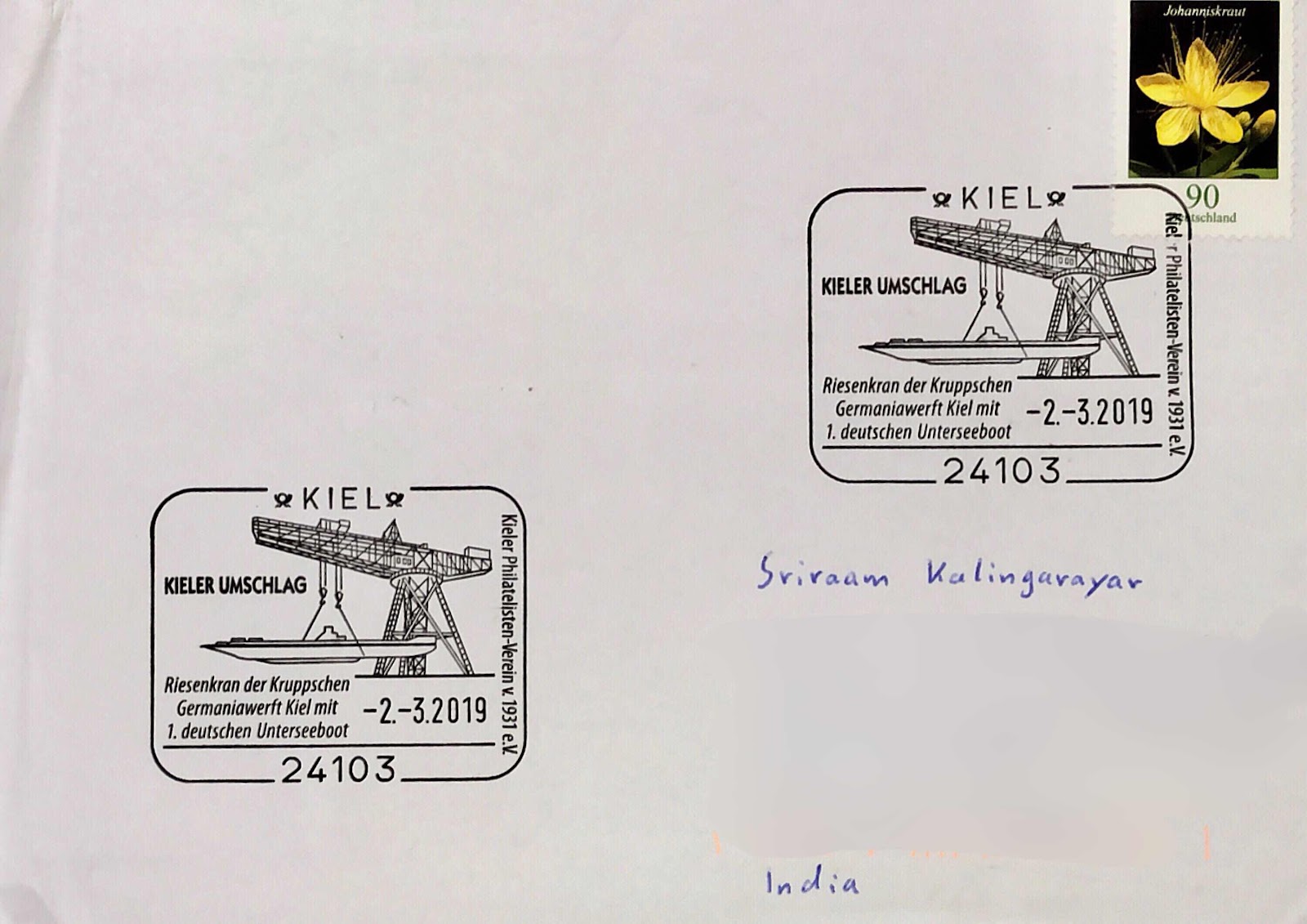
A cover from Germany 🇩🇪 with a very interesting postmark ! 


Friedrich Krupp Germaniawerft (often just called Germaniawerft, "Germania shipyard") was a German shipbuilding company, located in the harbour at Kiel, and one of the largest and most important builders of U-boats for the Kaiserliche Marine in World War I and the Kriegsmarine in World War II. The original company was founded in 1867 but went bankrupt and was bought out by Friedrich Krupp. Krupp was very interested in building warships and in the time before the First World War built a number of battleships for the Kaiserliche Marine, including SMS Posen, SMS Prinzregent Luitpold, SMS Kronprinz, and SMS Sachsen. A total of 84 U-boats were built in the shipyard during the war. After the war it returned to the normal production of yachts and transports.

After the war, the partially ruined shipyard was one of the first facilities dismantled by the victorious Allies. The population of heavily bombed Kiel protested furiously this decision, but to no avail. The site was broken up and not rebuilt. In the late 1960s, the grounds were purchased by Howaldtswerke-Deutsche Werft as a submarine-building shipyard. As of 2015, submarines are being built at the site.

The Krupp family - a prominent 400-year-old German dynasty from Essen, is famous for their production of steel, artillery, ammunition and other armaments. The family business, known as Friedrich Krupp AG, was the largest company in Europe at the beginning of the 20th century, and was important to weapons development and production in both world wars. One of the most powerful dynasties in European history, Krupp flourished for 400 years as the premier weapons manufacturer of Germany. From the Thirty Years' War until the end of the Second World War, it produced battleshipsU-boatstankshowitzersguns, utilities, and hundreds of other commodities.

Thanks Dustin for this beautiful cover :) 

Monday, April 8, 2019

Celestial events of Germany


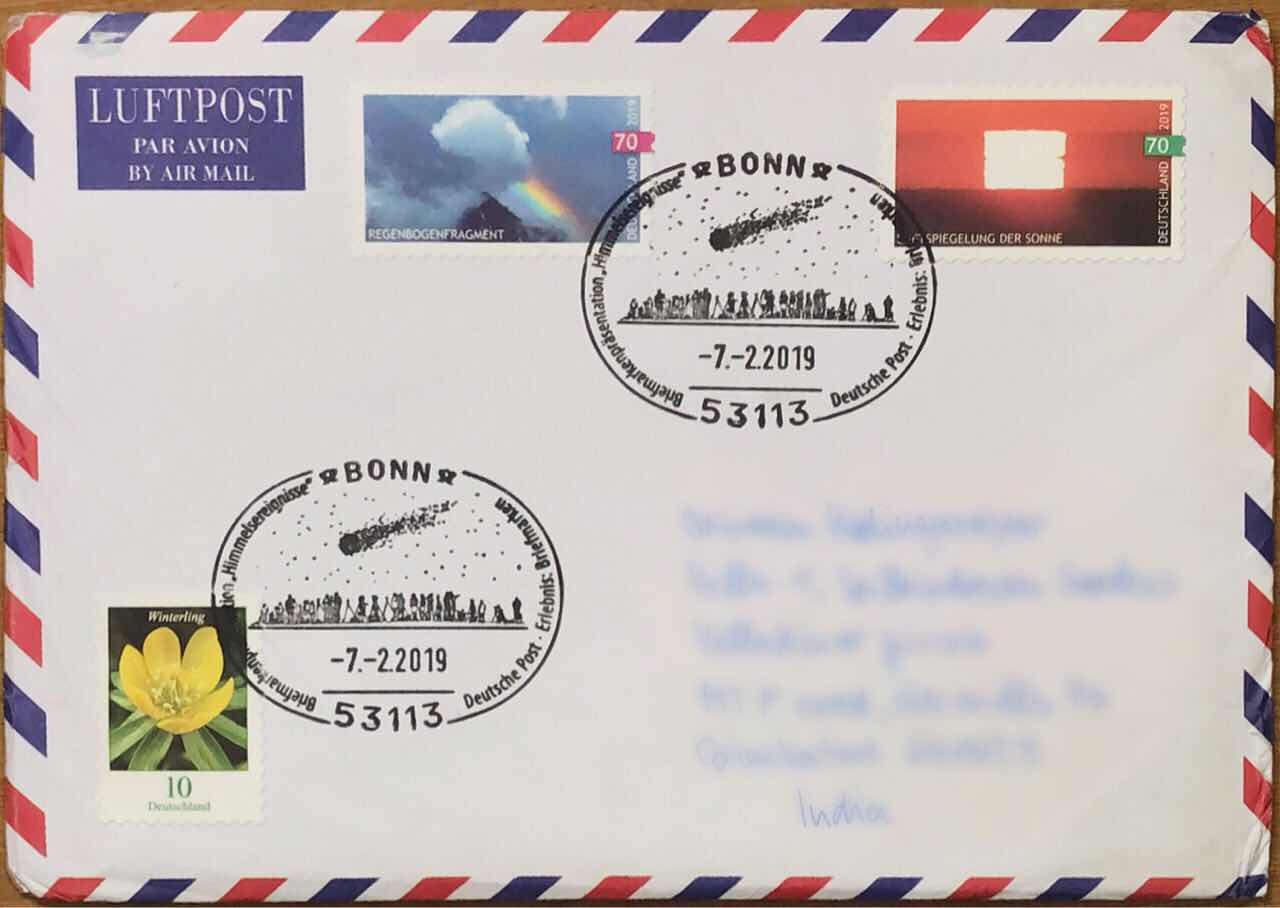
A cover from Germany 🇩🇪 with stamps showing celestial events in the sky with the first day postmark 


On 2nd February, Germany released two new €0.70 postage stamps from its Celestial Events series. One stamp shows a part of a rainbow. Bettina Walter designed the stamp and it’s based on a photo taken by Claudia Hinz. The original photo depicts the rainbow fragment, dark clouds and one of Germany’s highest mountains, Hochwanner. 


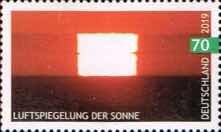
The other stamp depicts a distorted rectangle-shaped image of the Sun over the North Atlantic. The original photo shown in the stamp design was taken by Melia Ritzal near Bordeaux, France.


The postmark also shows a meteorite passing along the skyline with people seen below ! 


From calamities of rare species and their characteristics, nature has unusual ways of surprising us. Some of these celestial events are commonly seen while others could simply be an illusion for the human eye. To choose such an interesting theme for stamp design is truly amazing. 


Thursday, April 4, 2019

Neumayer Station III - The end of the World


A cover that I had sent to Neumayer Station III - a German research base in South Atlantic Ocean in Antarctica . 

The Alfred Wegener Institute, Helmholtz Centre for Polar and Marine Research is located in Bremerhaven, Germany, and a member of the Helmholtz Association of German Research Centres. It conducts research in the Arctic, the Antarctic, and the high and mid latitude oceans. Additional research topics are: North Sea research, marine biological monitoring, and technical marine developments. The institute was founded in 1980 and is named after meteorologistclimatologist, and geologist Alfred Wegener.

The institute has three major departments: 

  • Climate System Department, which studies oceans, ice and atmosphere as physical and chemical systems.
  • Biosciences Department, which studies the biological processes in marine and coastal ecosystems.
  • Geoscientific Department, which studies climate development, especially as revealed by sediments.


The Neumayer-Station III located at  about 5 kilometres (3.1 mi) away from the previous station, Neumayer II which is now abandoned and covered by a thick ice cover. The new station is a futuristic-looking combined platform above the snow surface offering space for research, operations, and living since 2009. The station stands on 16 hydraulic posts which are used to adjust the building to the growing snow cover. Below the station PistenBullys and other equipment are stored an underground garage. In summer, the station can host up to 40 people. The station contains several laboratories, has a weather balloon launching facility, and a hospital with telemedical equipment.


One cannot send philatelic mail directly to Neumayer III. Instead one needs to send it to the Alfred-Wegner Institute in Bremerhaven with a note requesting that the cover be sent back to you from Neumayer III. The cover will be brought to Neurmayer where they apply their base stamp and then returned to Bremerhaven where the stamp is postmarked and the cover placed in the mail stream.


Every expedition prepares a unique logo for themeselves - this one has been stamped on my envelope !! 


Sunday, March 24, 2019

PostModern Dresden


A postcard from On- Board , the steamboat in Leipzig posted through PostModern Dresden. 

PostModern is one of the postal companies in Germany that issue their own, mainly self-adhesive stamps. PostModern also regularly issues special stamp editions accompanying regional events in Dresden and Saxony..


I had received a cover earlier with the stamp showing the panorama of Dresden across the Elbe river. The state of Saxony is a landlocked federal state of Germany, bordering the federal states of Brandenburg, Saxony Anhalt, Thuringia, and Bavaria, as well as the countries of Poland and the Czech Republic. Its capital is Dresden, and its largest city is Leipzig.


Since 1999, the Media Logistics GmbH from Dresden as a local mail service provider in the greater Dresden area. The enterprise is a joint venture of the Dresdner pressure and publishing house GmbH & CO. KG and the Fiege logistics AG. The focus of business activities is on the distribution logistics for newspapers and postal services. 


Since 2006, the private mail service of Media Logistik GmbH in Saxony has been operating under the PostModern brand. PostModern collects the mail from business customers, franks it and delivers it the next day. Private individuals can also use this service provider via their red mailboxes. The delivery of letters and parcels is possible for private individuals since 1 January 2011 throughout Germany. For business customers, it continues to be restricted to the ZIP codes 0 and 1 as well as 38, 39, 98 and 99. This covers almost the entire territory of the new Länder and Berlin. One of the cooperation partners is Ostsächsische Sparkasse Dresden, which sells stamps and mailboxes from PostModern are installed at their branches.
In fiscal 2012, Media Logistik GmbH employed 154 people, generated revenues of 43.8 million euros and a net income of 3.0 million euros


On July 8, 1836, King Frederick Augustus II of Saxony granted the newly founded company privilege for steamship transport in the Kingdom of Saxony. 180 years later, steamboat shipping in the Elbe Valley is still in full steam and PostModern Dresden honored the anniversary with a special stamp.


The other stamp depicts the Lighthouse of Moritzburg. The lighthouse in Moritzburg is an inland lighthouse in Saxony. The staffage building (Folly) was built in the late 18th century as part of a backdrop for trailing naval battles (Naumachie). It is the only lighthouse built in Germany for this purpose and at the same time one of the oldest internal lighthouses in the Federal Republic.


The historical background, however, was the Battle of the Dardanelles of 1770 between the fleet of Russian Tzarina Catharine the Great and the Turkish fleet, which ended in victory for the Russians over the »arch enemy«, which was honoured throughout Europe.When the sea battle was enacted, the two-masted frigate of the royal society, the pier as well as the so-called Dardanelles between the Great Lake and the Canal were armed with little canons which could fire fireworks-like ammunition.


Thanks Tom for this nice postcard showing the steamboat on Elbe - and the on-board postmark , the private post stamps and postmarks ! 

It is also interesting that the international Mail posted through PostModern Dresden is handled by PostNL ( Netherlands ) and you can find the meter cancellation of PostNL at the top !!