Showing posts with label # Ireland. Show all posts

Tuesday, May 28, 2019

Brave lady of Ireland


A cover from Ireland 🇮🇪 

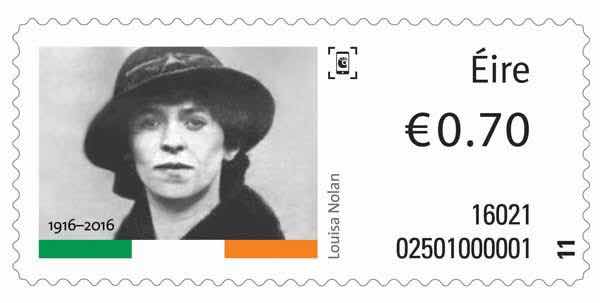
Louisa Nolan - Eighth definitive series - Easter week 
Date of issue : January 2016

LOUISA NOLAN was just 18 years old when she was awarded the Military Medal by the British Monarchy for her actions during the 1916 Easter Rising in Dublin. The daughter of the former head constable of the Royal Irish Constabulary (Ireland’s police force before 1922), the Ringsend teenager was a chorus girl at the Gaiety Theatre.

On 24 February 1917, King George honoured her with the medal for heroism during Easter Week, 1916. She tended to “wounded officers and men” during a battle on Mount Street Bridge. “Miss Nolan went calmly through a hail of bullets and carried water and other comforts to the wounded men,” the publication notes. Her story made it across the Atlantic, where a Chicago newspaper dubbed her ‘Ireland’s Bravest Colleen’ on 20 March.

In January, 2016 An Post will introduce 1916-2016, the Eighth Definitive Stamps Series based on the Centenary of the Easter Rising. This set of stamps will commemorate a hugely significant event in the history of our country which ultimately led to the founding of the modern Irish Republic. 

 The stamps will feature Augmented Reality, and when scanned by a smartphone with the CEE Explorer App installed, will give internet access to gpowitnesshistory.ie and background information on the Rising.

These stamps have been grouped into four categories: Leaders and Icons; Participants; Easter Week; and The Aftermath. Although each image represents an individual subject, the themes also reflect a chronological progression from the lead-up to the Rising through to its aftermath. The stamps have been devised as a coherent collection rather than sixteen individual images. 

Organ donation 

Date of issue - 21-03-2019

The stamp features an hourglass timer that represents the precious nature of time and the gift of life passing from one person to another . The stamps can be scanned by smartphone that will automatically open a website that helps one become a donor !! 


Wednesday, January 9, 2019

RMS Lusitania- the ship with short life and a long history


A cover from Ireland with a minisheet showing an important event in World War One! 


RMS Lusitania was a British ocean liner and briefly the world's largest passenger ship. The ship was sunk on 7 May 1915 by a German U-boat 11 mi (18 km) off the southern coast of Ireland. The sinking presaged the United States declaration of war on Germany in 1917.


Lusitania was a holder of the Blue Ribandappellation for the fastest Atlantic crossing, and was briefly the world's largest passenger ship until the completion of her sister ship Mauretania, three months later. The Cunard Linelaunched Lusitania in 1906, at a time of fierce competition for the North Atlantic trade. She sank on her 202nd trans-Atlantic crossing.

Both Lusitania and Mauretania were fitted with revolutionary new turbine engines that enabled them to maintain a service speed of 25 knots(46 km/h; 29 mph). Germany was the main contender for the North Atlantic trade and Germany also relied upon her northern sea route for her food supplies since her other borders were at warfare ! 

The Royal Navy had blockaded Germany at the start of the First World War. The UK declared the entire North Sea a war zone in the autumn of 1914, and mined the approaches; in the spring of 1915 all food imports for Germany were declared contraband. When RMS Lusitania left New York for Britain on 1 May 1915, German submarine warfare was intensifying in the Atlantic. Germany had declared the seas around the United Kingdom a war zone, and the German embassy in the United States had placed newspaper advertisements warning people of the dangers of sailing on Lusitania.

On the afternoon of 7 May, a German U-boat torpedoed Lusitania 11 mi (18 km) off the southern coast of Ireland and inside the declared war zone. A second, unexplained, internal explosion, probably that of munitions she was carrying, sent her to the seabed in 18 minutes, with the deaths of 1,198 passengers and crew.

The Germans justified treating Lusitania as a naval vessel because she was carrying hundreds of tons of war munitions, therefore making her a legitimate military target, and argued that British merchant ships had violated the Cruiser Rules from the very beginning of the war.

The sinking caused a storm of protest in the United States because 128 American citizens were among the dead. The sinking helped shift public opinion in the United States against Germany and was a factor in the United States' declaration of war nearly two years later.

Thanks Fabio for this cover with these stamps ! 

Sunday, November 18, 2018

Armistice in Ireland


An FDC from Ireland 


Ireland issued two stamps for 100th Anniversary Of Armistice day on 11-11-2018

November 11, 1918 is known as Armistice Day – the day when an agreement was signed between the Allied forces and Germany in a train carriage at Compiègne in northern France, which marked the end of World War I. 

The date has huge significance for many Irish people as over 200,00 Irishmen served as part of the British Forces during World War I and we are issuing two stamps to mark this historic event.


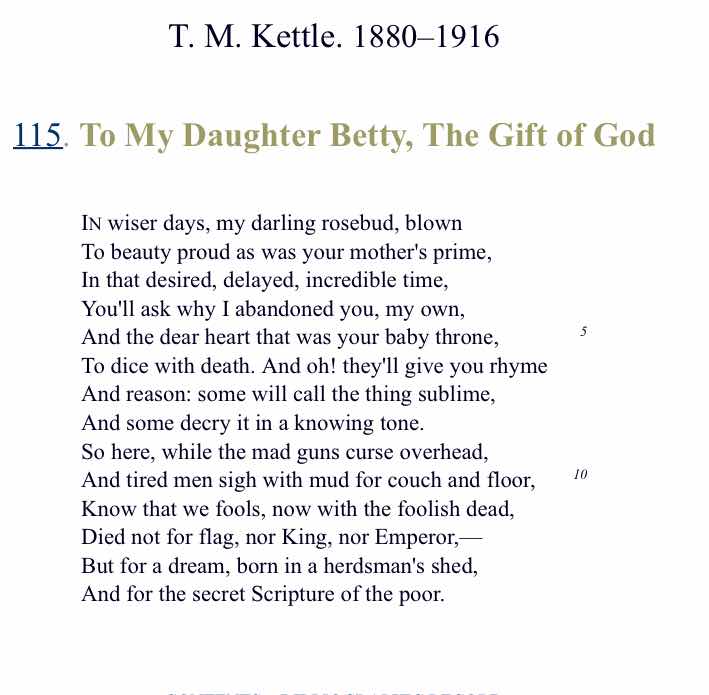
Beautiful lines of poetry are featured on both stamps which are also embossed with the formal date and time of the end of the war, 11.11.11. One features the poignant closing lines of To my Daughter Betty, the Gift of God by Thomas Kettle on a green background. The second, lines from the memorable wartime poem In Flanders Fields by John McCrae on a striking red background.

In Flanders field 


To My Daughter Betty 


WWI lasted four years, was fought on multiple battle fronts on land, sea and air across continents.  It was a harsh and bloody conflict resulting in approximately nine million soldiers’ dead and 21 million wounded. The war ended formally on November 11, 1918, the 11th hour of the 11th day of the 11th month.

Thanks Fabio for this great FDC ! 

Tuesday, October 30, 2018

A ship sinks ..


An Irish envelope with a sinking ship ! 

10-10-1918

The U-boat campaign failed to win the war for Germany; indeed, by bringing the United States into the war, the U-boats have brought defeat to Germany’s door. Yet the U-boat campaign continues, with the submarines attacking Allied shipping wherever they can. The adoption of convoys has made attacks on trans-Atlantic shipping difficult, so now the U-boats are more frequently targeting ships plying coastal routes between British ports or crossing between Britain and Ireland; ships making these short journeys tend not to travel in convoys, leaving them more vulnerable to submarine attack.

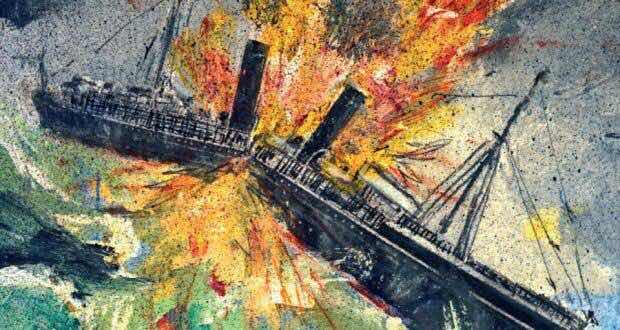
The RMS Leinstertravels backwards and forwards between Holyhead in Wales and Kingstown, just south of Dublin. As well as passengers, she carries post for the Royal Mail, a lucrative contract for her owners. But today, shortly after leaving Kingstown, the Leinster is spotted by the German submarine UB-123. Three torpedoes are fired. The first misses but the second and third hit, the last causing a huge explosion.

The ship sinks quickly in heavy seas. There are survivors but 565 of the people onboard lose their lives. Many of these are military personnel but the dead also include civilian passengers and postal workers who were sorting the mail.


An post issued a stamp on 10 October 2018 , to mark the centenary of the sinking of the RMS Leinster by the German U boats. 

Thanks Fabio for this cover ! 

Monday, October 1, 2018

General Post Office, Ireland


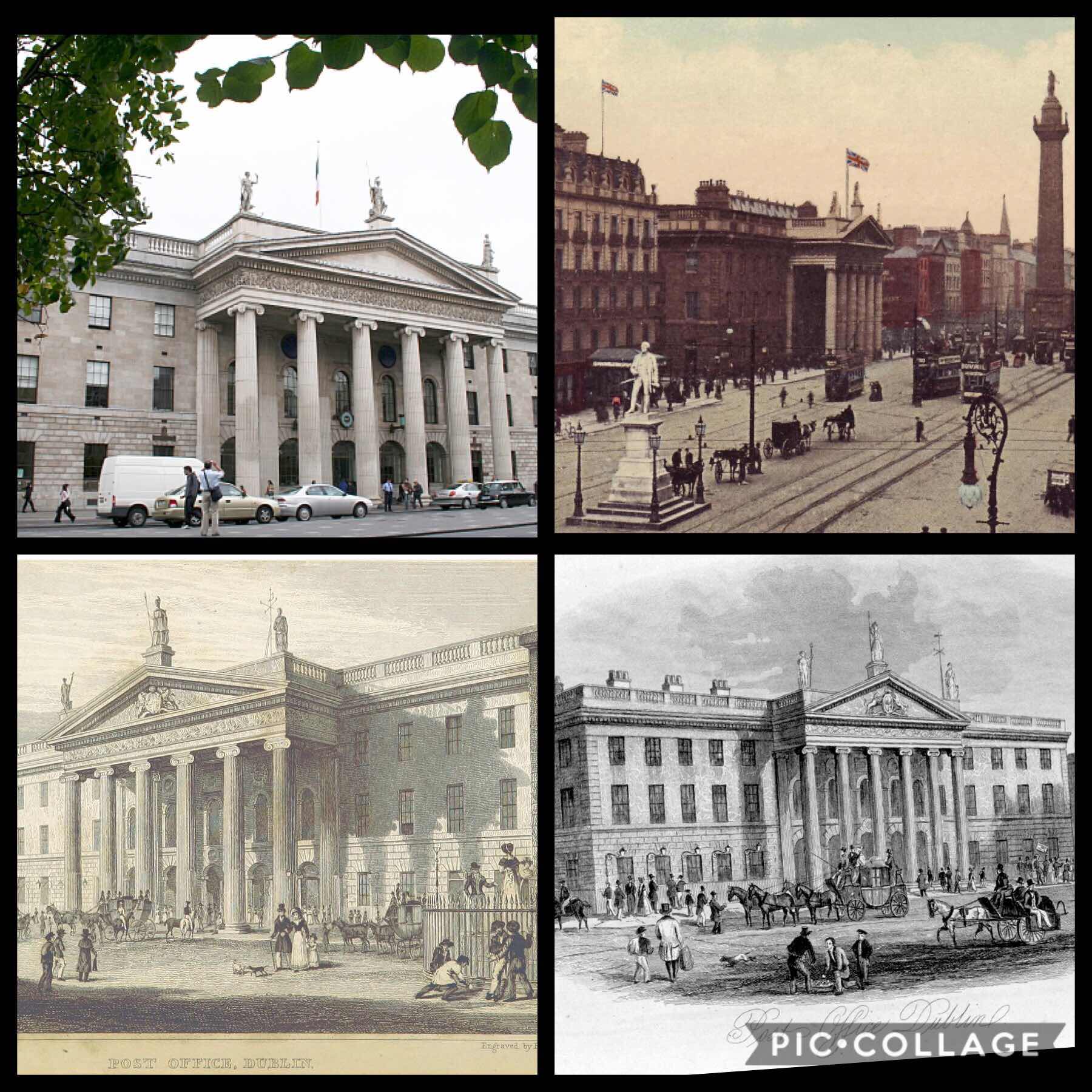
A postcard from Ireland - showing the magnificent GPO , Dublin . Thanks Fabio ! 

The General post office in Dublin is the headquarters of the An Post , Ireland. It is one of Ireland’s iconic buildings and carries with it remarkable history. 2018 marks the bicentennial anniversary of this historic monument. 


A stamp comommerating the 200th anniversary of the opening of the GPO was issued recently - thanks Fabio for this postcard and a matching stamp ! 

The stamp and the postcard shows the beautiful architecture in its full glory 


The GPO, though opened in 1818, was thrown into limelight in 1914 during the Easter Revolution ! 
The Irish citizen army under the leadership of Pearse , a school teacher and leader of the Irish Republicans staged a rebellion during the Easter week against the British rule. The British who were engaged in the First World War , was caught unawares , but still tried to suppress the rebellion . The GPO served as the headquarters of all the rebel activities during the week , when the Irish tricolour and a green flag with the inscription - Irish Republic were flown on top of the GPO building . 

Pearse read out the proclamation of the Irish Republic from the steps of the GPO! The GPO has a museum dedicated to the Easter Revolution ! 


Update - 04-10-2018

Today I received more covers and postcards from Fabio ! 


The postcard shows the bicentenary of the opening of the GPO stamp , but what’s more interesting is the fact that AnPost celebrates culture night on 21 September and offers postcards with free postage ! Thanks again Fabio for remembering me , while sending :) 


And one more fantastic cover with the GPO stamp ;) 

The definitives Of this cover are 
1. Irish Orchid - about which I have already written in a previous post http://travellingenvelopes.blogspot.com/2018/09/ireland-postcrossing.html

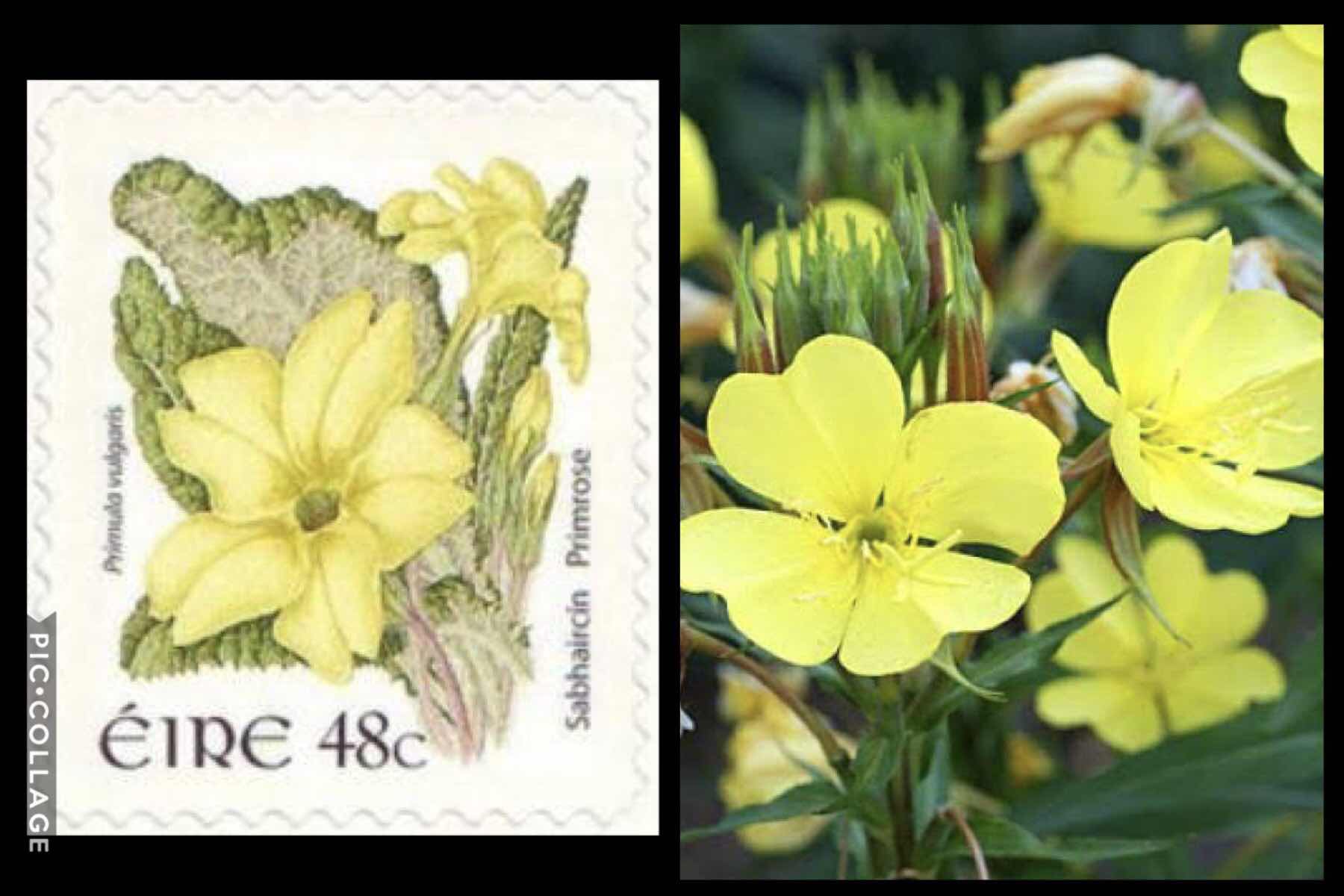
2. Primrose - 


A part of the wild flowers - definitives of 2004 
Primrose or Primula vulgaris- Our little 'Sabhaircín' generally flowers from April to May when its pale yellow 2-3cm flowers with their deep yellow centres decorate grassy banks, woodlands and roadsides. Each flower has its own leafless stalk. Primrose has quite large, crinkled leaves – up to 12cm long – which taper gradually into the stalk. Like Primula veris, the Primrose has two types of flower on each plant – thrum-eyed and pin-eyed.  Thrum-eyed means that the stigma is shorter than the anthers, pin-eyed means the stigma is longer than the anthers and projects like a little pin.  This means that cross-fertilisation is far more likely to take place.  Visiting insects have the pollentransferred onto different parts of their bodies depending on which type of flower they visit and then they in turn transfer that pollen to the other type of flower.  This plant belongs to the family Primulaceae.


Monday, September 17, 2018

Irish patriotism


A surprise cover - and I didn’t definitely expect this stamp ! 

The stamp shows a poster of the world war-1 times calling men for war and also depicts the patriotism of the Irish men to defend their country. 


WWI recruiting poster depicting the "real Irish spirit", presumably as opposed to the unseemly urge for Home Rule agitation that was abroad in Ireland at this time? The recruitment poster shows a uniformed and armed British soldier on a lakeshore being accosted by a "traditionally-dressed" Irishman who tells the soldier of his intention to volunteer. Irish ecclesiastical ruins evident in the background. 

7,500 of these posters were issued by the Central Council for the Organisation of Recruiting in Ireland.


AN POST  launched two commemorative new stamps to mark the centenary of World War One in 2014.The two stamps ( €1 and 68c ) feature recruitment posters issued by the Central Council for the Organisation of Recruiting in Ireland that aimed to encourage Irish men to join the British war effort in Europe.

The stamps were designed by Irish designer Ger Garland.


Some of the British recruitment posters that were printed during the war times - while the entire Ireland was nearing a civil war , crying for independence - Britain was trying to recruit Irish men for war and also propagating for a unified nation ! 


Black legged kittiwake - Summer visitor to steep coastal cliffs along all Irish coasts. Disperses to the open ocean in winter and less frequently seen.

A small gull, slightly larger than Black-headed Gull, which is basically grey above and white below. Adults are easily told apart from other gull species by the solid black wing tips, showing no 'mirrors' (white at the wing tip), and two toned grey upperwing. Adult birds have a yellow bill and dark legs. Adults show white heads in the summer and a dark patch behind the eye in the winter. Juvenile and first year birds have a bold dark 'W-pattern' across the wing and a dark tail band, although these features can be much faded by the first summer/second winter. Second year birds are similar to adult birds but can show black fringes to outer primaries, black on the bill or winter head patterning in the summer months.

Thanks Fabio for the nice cover ! 

Update : 

The cancellation on the cover says - Remember to use your EIRCODE - what’s an EIRCODE ? 

The Eircode system means every single house in the country will have its own seven-digit code. The purpose of the system is to enable people and businesses to find every address in Ireland, as more than 35% of addresses in the old system were shared with at least one other property. The system was launched in 2015. 

Wednesday, September 5, 2018

Ireland Postcrossing


An envelope with the Postcrossing stamp from Ireland 


The Ireland Postcrossing stamp was issued in October 2017 . The international rate stamp depicts the basic process of Postcrossing - sending a postcard to someone and receiving a postcard from another person in the world ! The stamp was designed by Design HQ using an illustration from artist Cathy Dineen featuring a colourful display of postcards being passed from person to person around the world. 

The other four stamps are definitives from Ireland . 

Wild flowers are one of the definitive series of Ireland 

Seven stamps, designed by the botanical artist Susan Sex, featuring flowers native to the woodlands and hedgerows of Ireland came on sale on 9 September 2004. They were; 4c dog violet, 5c dandelion, 48c primrose, 60c hawthorn, 65c bluebell, €2 lords and ladies and €5 dog rose,  48c daisy- only available in booklets, self-adhesive booklets or self-adhesive rolls.

Five more designs were added on 12 April 2005, the 1c bloody crane's-bill, 2c Irish orchid, 7c fly orchid, 10c mountain avens and €10 spring gentian.

Another five on 20 February 2006: 12c autumn gorse, 25c common knapweed, 75c navelwort, 90c viper's buglossand €1 foxglove.

With four more on 1 March 2007: 3c yellow flag, 55c large-flowered butterwort, 78c black bog-rush and the 95c purple loosestrife.

 And a final 3 on 3 March 2008 a 20c thrift, 50c biting stonecrop and 82c sea aster


1. Bloody crane bill - Geranium sanguineum
     This species forms a bushy mound of fine-textured green foliage, bearing a bright display of magenta-pink flowers in late spring, well into the summer. Plants stand up well to a wide range of soil and climate conditions, including hot, humid weather. 


2. Common dog-violet / Viola riviniana
    The unscented, blue-violet flower is always solitaryon the stem, and is open with five petals, the lower of which has a stout, blunt, pale, curved spur which is notched at the tip.  The mouth of the flower is absolutely wonderful to view through a hand-lens or magnifying glass.  It has a pattern of deep purple lines which run into the throat over a paler violet patch, becoming white. The upper petals have a fringe which is over the opening.  The dark-green, heart-shaped leaves are on long, slender stalks. The Irish name is Fanaigse and is a native plant of Ireland. 


3. Magairlain glas Irish orchid / Neotinea maculata
    It is a self-pollinating orchid with a tightly-packed spike (2–6 cm long) of ten to thirty pale, creamy flowers – sometimes with a pinkish cast. Each of these seem to be almost closed over with only the lower, forked lipprotruding from the hood formed by the sepals and upper petals. The erect stem, which reaches 20 cm, arises from two or three basal, lanceolateand, occasionally, spotted leaves. Smaller leaves hug the stem


4. Fly orchid / Ophrys insectifera
     The Fly Orchid is one of the small group of Orchids which mimic insects in order to attract visitors. 'Pollination by pseudocopulation' is the scientific term for this pretence whereby a plant emits the scent and has the appearance of an insect. By this impersonation, an insect is drawn to the orchid and while trying to mate with the flower, pollen is gathered onto its body to be distributed onto the next orchid. Fly Orchid is quite distinctive with its yellow-green sepals and the long, divided, red-brown lower lip of the flower. This velvety lip (or labellum) has a shiny, silvery-white band across it, just below the lip's two little lobes. It also has two tiny little red-brown upper petals projecting like tiny goat's horns. These flowers are carried in a loose spike of four to ten with long bracts curving upward behind each flower. There are usually three shiny oval leaves from which the stem arises, reaching about 45–50 cm.

Cancellations: a nice round cancellation from one of the Dublin county and also a wave cancellation on the postcrossing stamp . I initially thought the wave cancellation was the An Post logo , but the An Post logo has only 4 waves 


Thanks Fabio ! - for the beautiful cover :) 

Thursday, August 30, 2018

Bridges of Ireland


A cover from Ireland with 2018 Europa stamp - Bridges 

The €1 stamp features the dramatic footbridge at Mizen Head in County Cork. The bridge was constructed in 2011 and is a near-replica of the original Victorian steel structure which was completed in 1909 crossing a sea gorge.The new Mizen Head Footbridge is a reinforced concrete through-arch structure that spans 50m across a sea gorge to connect the island of Cloghán, at the tip of Mizen Head, with the mainland in South-west Cork, Republic of Ireland. RPS Consulting Engineers Ltd. used LUSAS Bridge analysis software to structurally assess an ageing bridge that stood at the same location and to assist with the design and assessment of the effects of constructing a visually identical new replacement structure in stages around the original bridge at the same time as it was being sequentially demolished.


New Mizen Head Footbridge opened to the public on St Patrick’s Day, 17th March 2011. It was delivered safely, within budget and stands as testimony to a very successful collaboration between the client, Cork County Council, the contractor, Carillion Irishenco Ltd, RB International - the contractor's construction engineer, and RPS Consulting Engineers Ltd.


The €1.50 stamp features the Boyne Viaduct in County Louth. Opened in 1855, the viaduct is a 30-metre-high railway bridge that crosses the River Boyne in Drogheda and carries the main Dublin–Belfast railway line. At the time of opening, it was only the seventh bridge of its kind in the world and was considered one of the wonders of the age. The viaduct is listed as a heritage structure by the National Inventory of Architectural Heritage.
During World War II, the viaduct was identified by the British as being of great strategic importance as part of the British plans for a counter-attack following a German invasion of Ireland.

Thanks Fabio for the nice cover !