Showing posts with label # Vietnam. Show all posts

Tuesday, August 27, 2019

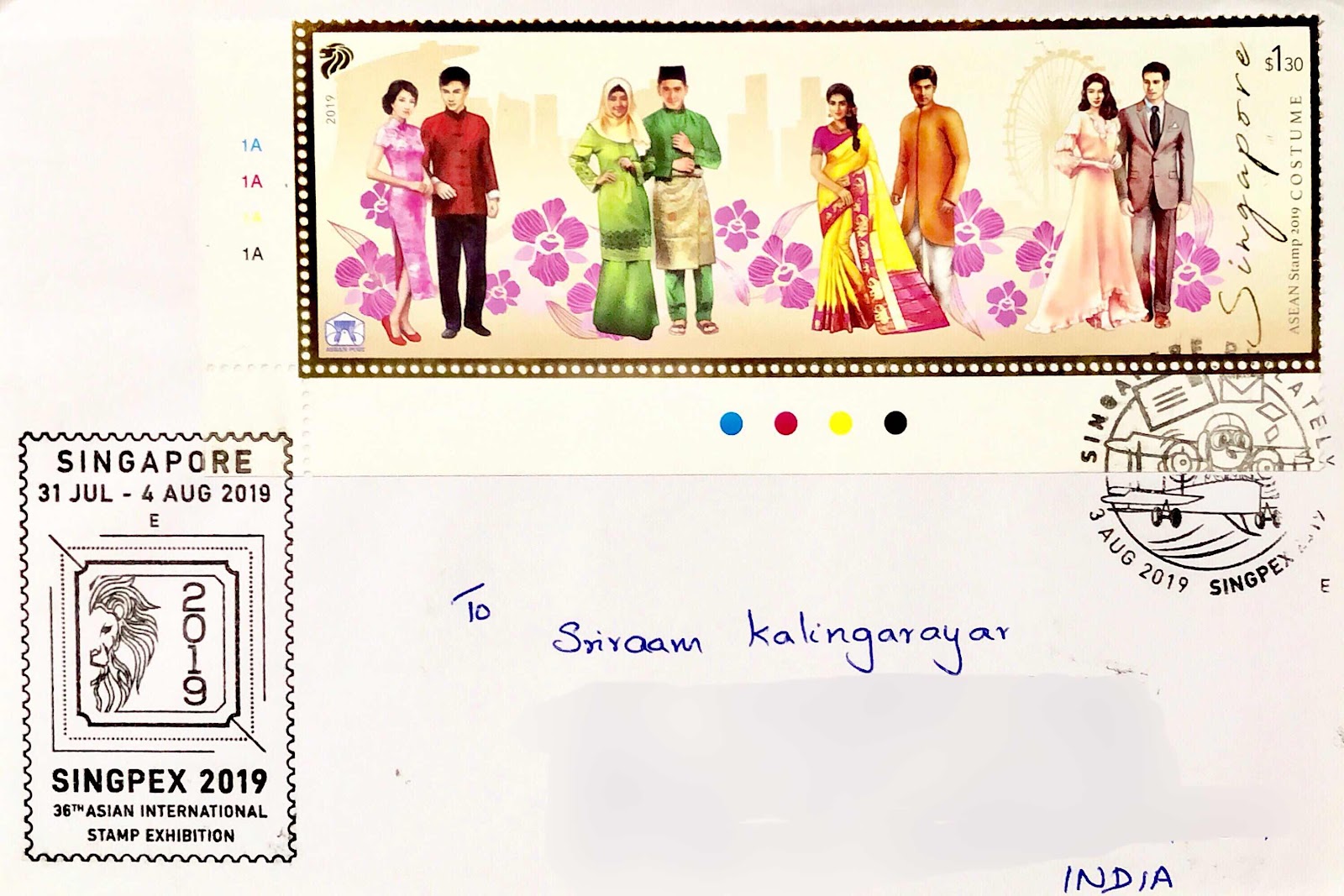
Traditional costumes of South East Asia


Singapore 🇸🇬 
Date of issue : 01-08-2019

The stamp features the traditional costumes of four different ethnicities of Singapore - Malay , Tamil , Chinese and English 


Vietnam 🇻🇳 
Date of issue : 08-08-2019


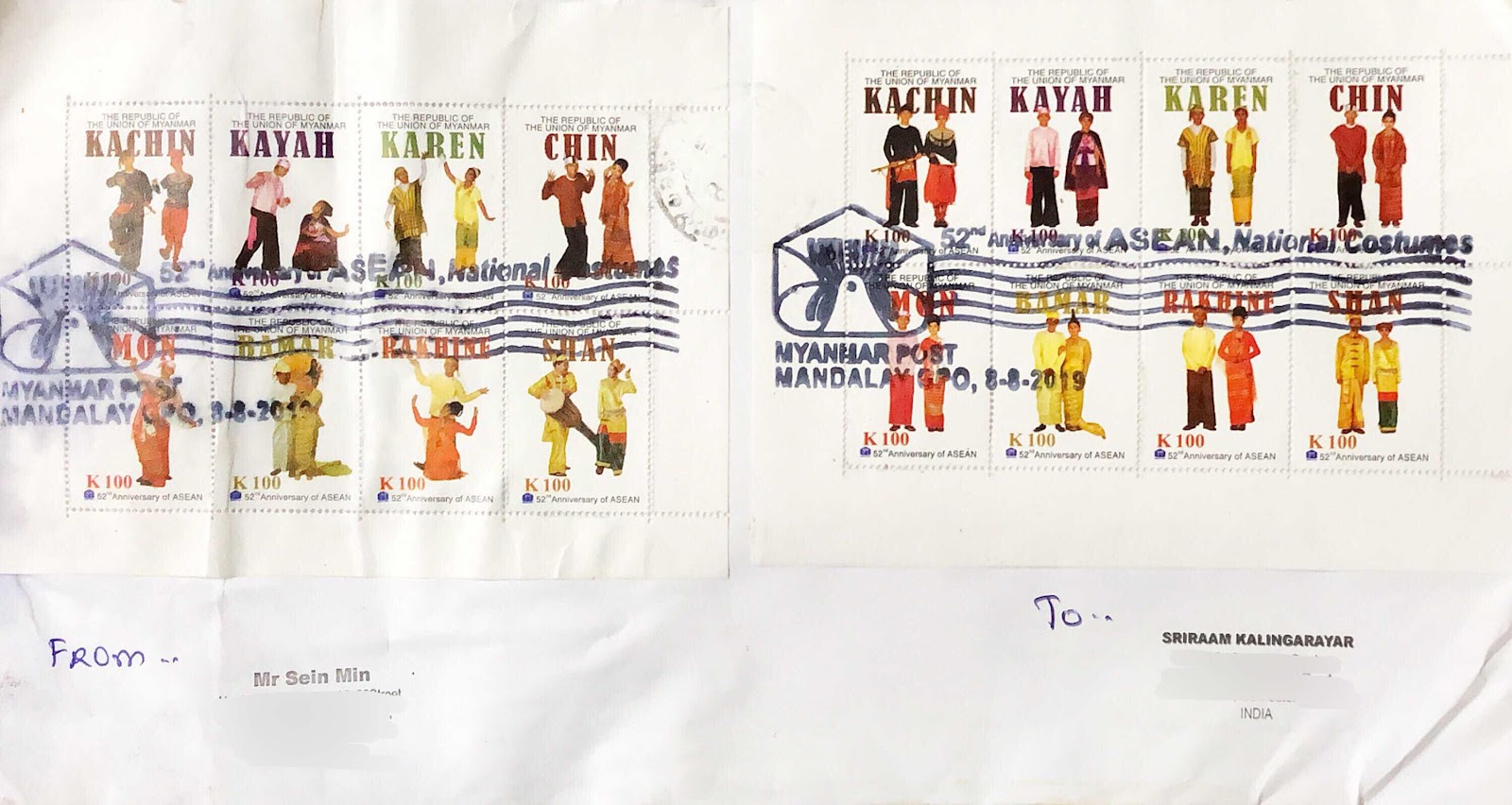
Myanmar 
Date of issue : 08-08-2019


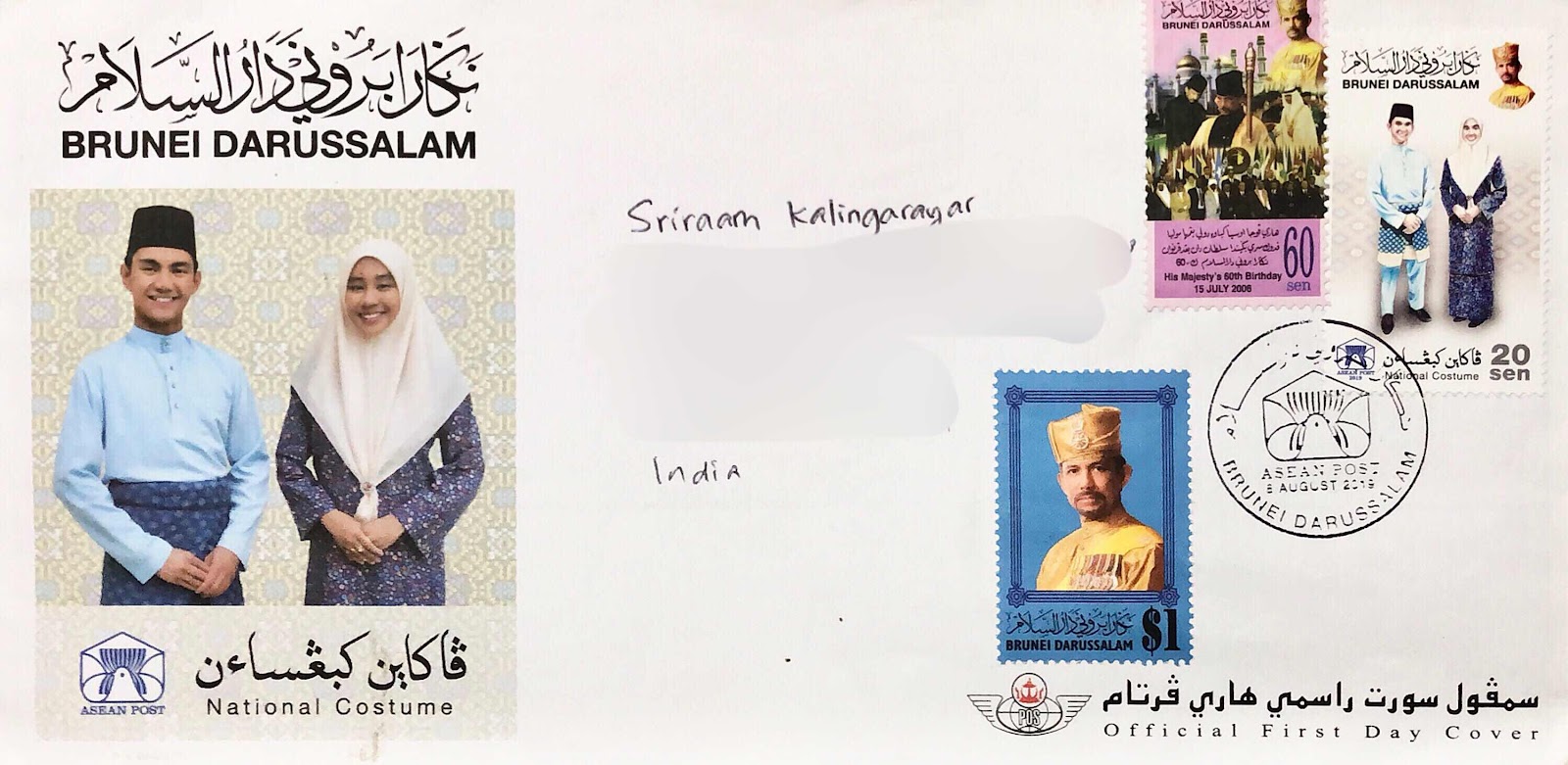
Sultanate of Brunei 🇧🇳 
Date of issue : 08-08-2019


Thailand 🇹🇭 
Date of issue : 8-8-2019


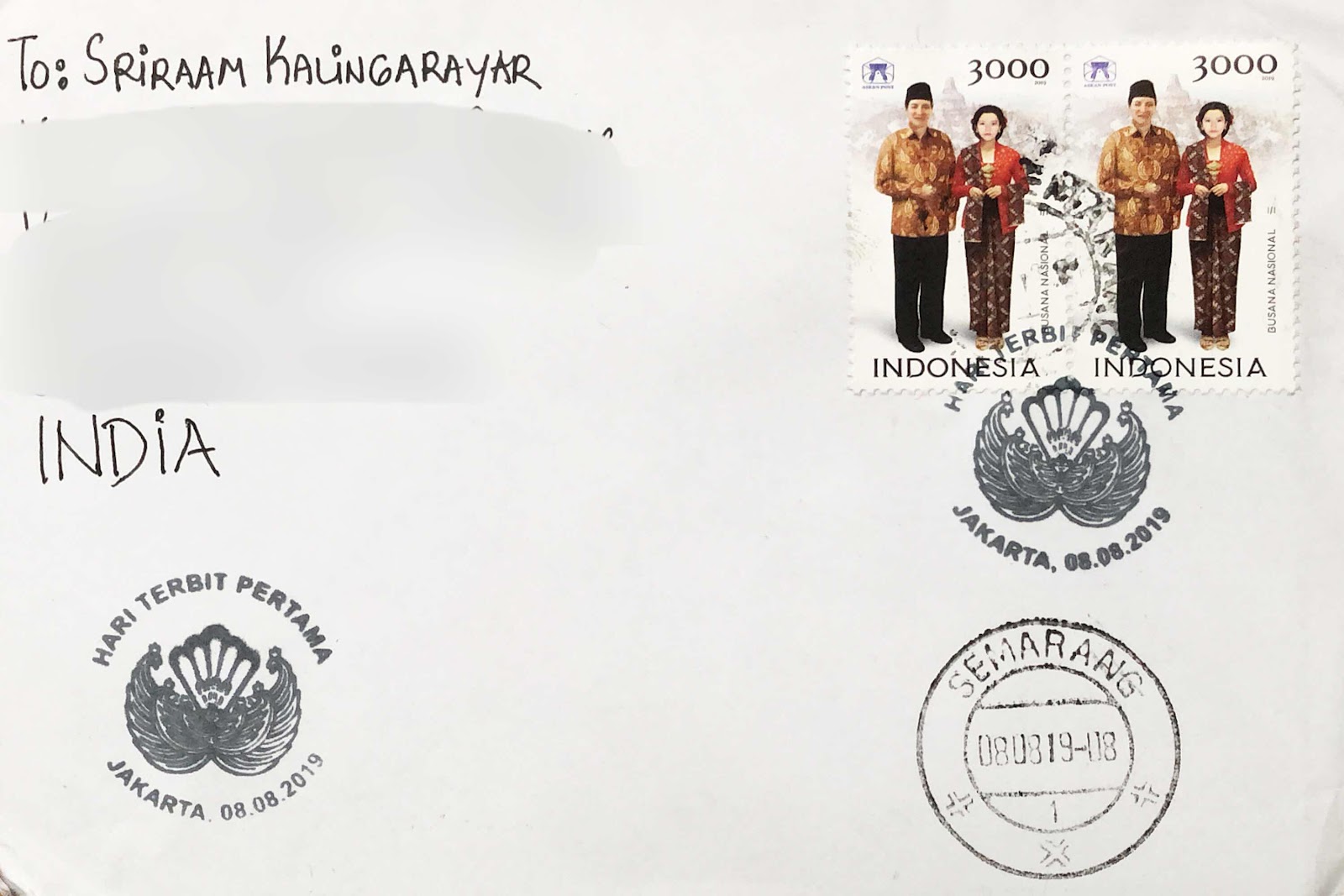
Indonesia 🇮🇩 
Date of issue : 8-8-2019


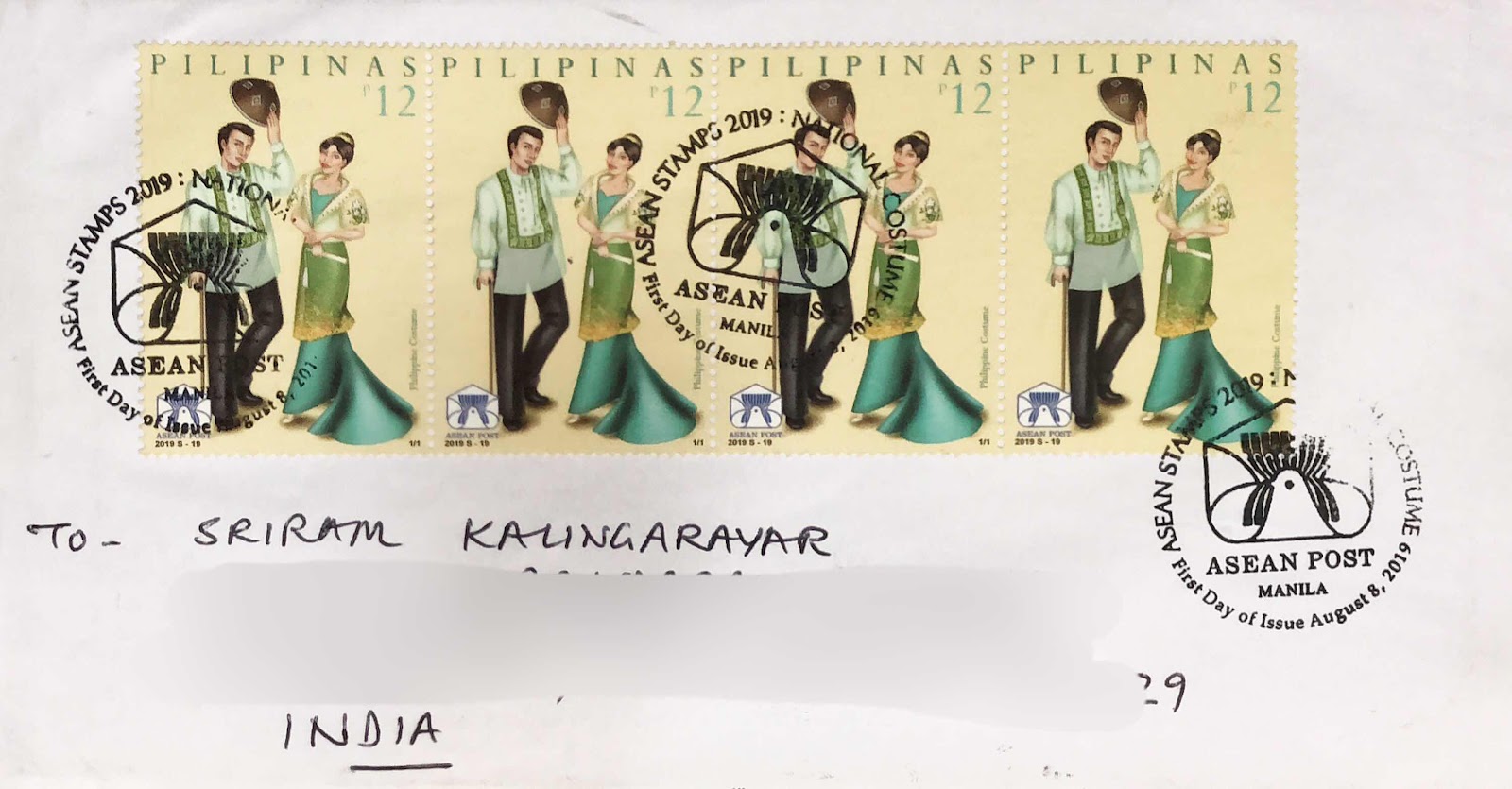
Philippines 🇵🇭 
Date of issue : 8-8-19

Cambodia 🇰🇭 
Laos 🇱🇦 


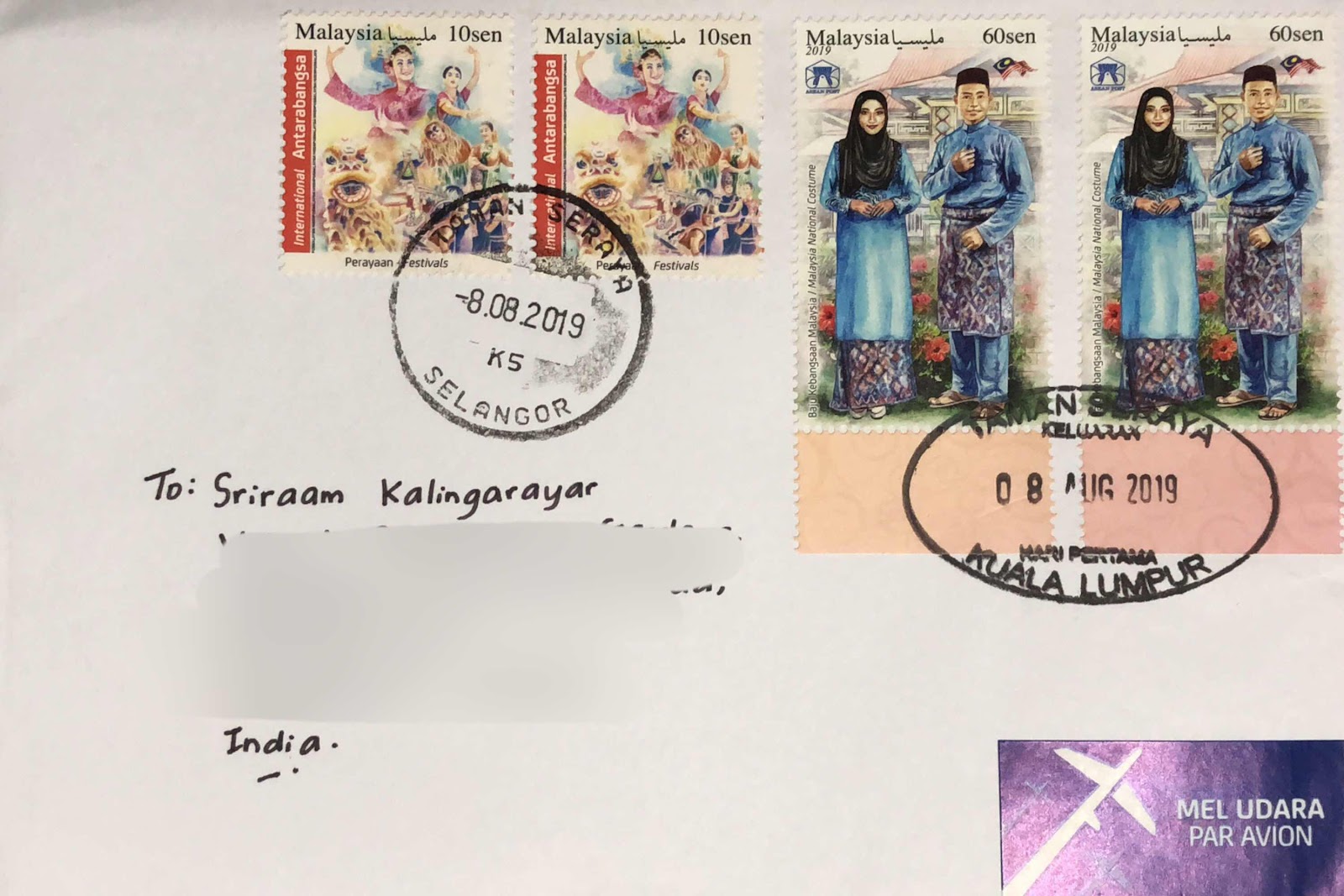
Malaysia 🇲🇾 
Date of issue : 8-8-19

Only 2 more countries !! 

Sunday, July 21, 2019

Vietnamese markets


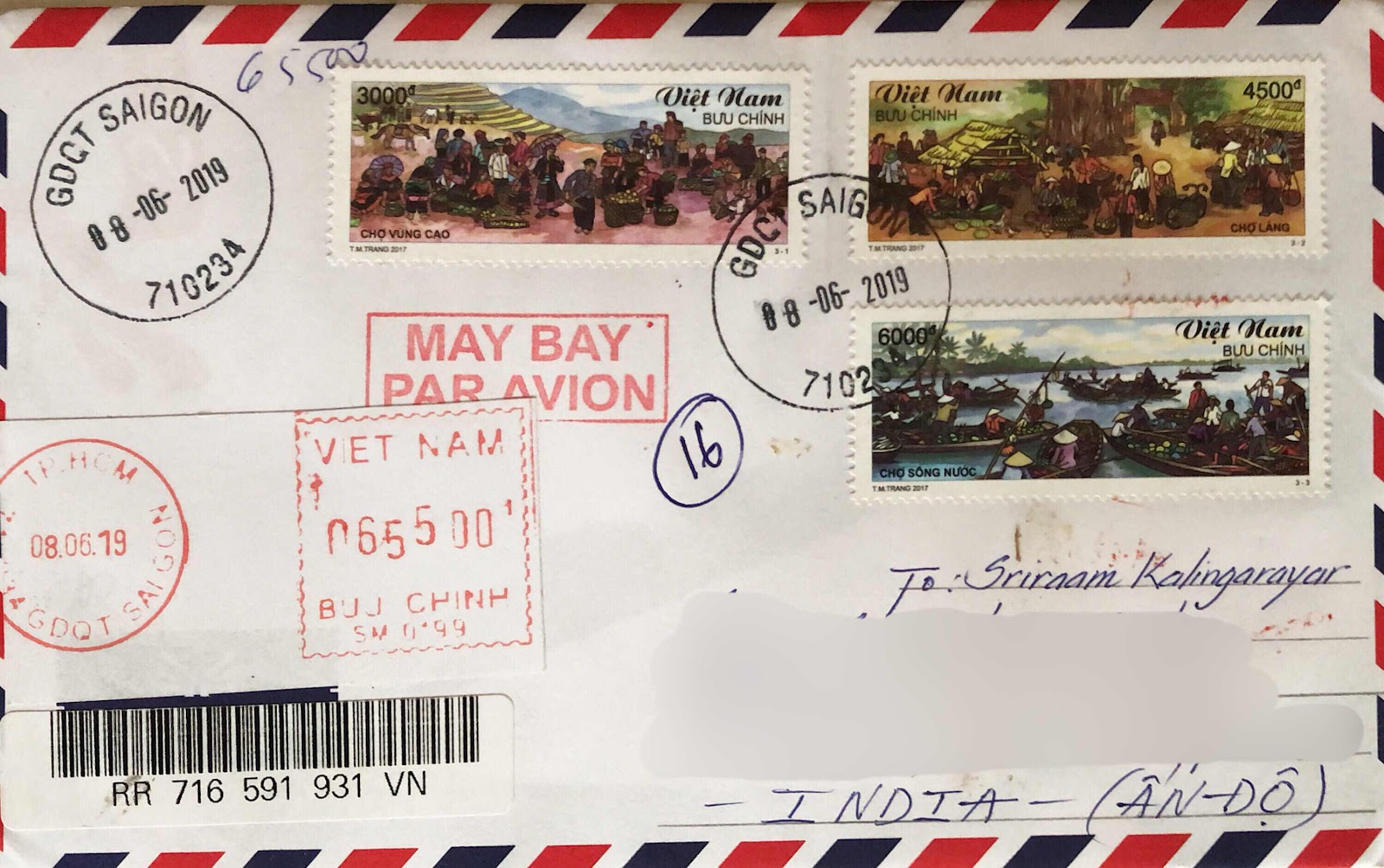
A registered cover from Saigon, Vietnam 🇻🇳 ( I am totally impressed with the quality of the Vietnamese Post postamrks - they are so clean ) 

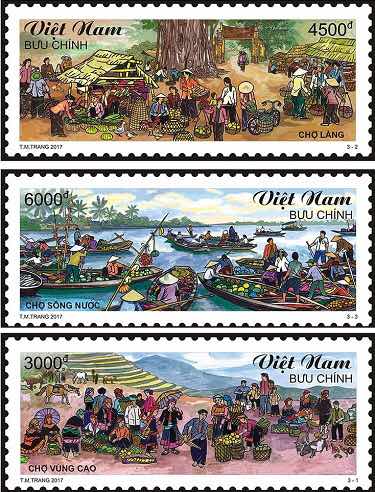
Traditional Vietnamese Markets 
Date of issue: 01-03-2017
Designer : To Minh Trang 

The set features three market types of Vietnam, including a mountain market, a village market and a floating market.

For a very long time, the weekly markets of ethnic minority groups in Vietnam have become an indispensable activity in the life of ethnic peoples. Besides trading the market is also a cultural activity for the ethnic groups.

Almost every district has a market day on a specified date of the month (on the lunar calendar). Each time when the market day comes the streams of people from villages in the mountains and valleys flock to the market and make it a bustling place. The markets in the highlands have become the lifestyle of local people.


A mountain market 

Coming to a village market, visitors would feel the special of each market, such as the colorful brocade clothes of H'mong people in Ha Giang, the iron knives and agricultural tools in Cao Bang markets or the buffaloes and dogs in Si Ma Cai. Joining the market-goers one would feel the beauty and attractions hidden behind, it's not prominent and sophisticated but simple and rustic.


Village street market 

Floating markets have existed in Vietnam for hundreds of years and have become crucial part of daily life in the Mekong Delata. The boats here are packed with socialities from the nearby farms and villages such as vegetables, coconut, banana, watermelon, grapefruit and dragon fruit. As well as produce the market offers products that would be found in any other conventual market such as clothes, cosmetic supplies, mobile cards and motorbike repair parts.


Floating markets of Mekong Delta 

As the quality of life improves, the weekend markets also change, but the traditional beauty, the cultural identity of all ethnic groups are still very well preserved in the markets.

Wednesday, July 17, 2019

United Nations day of Vesak


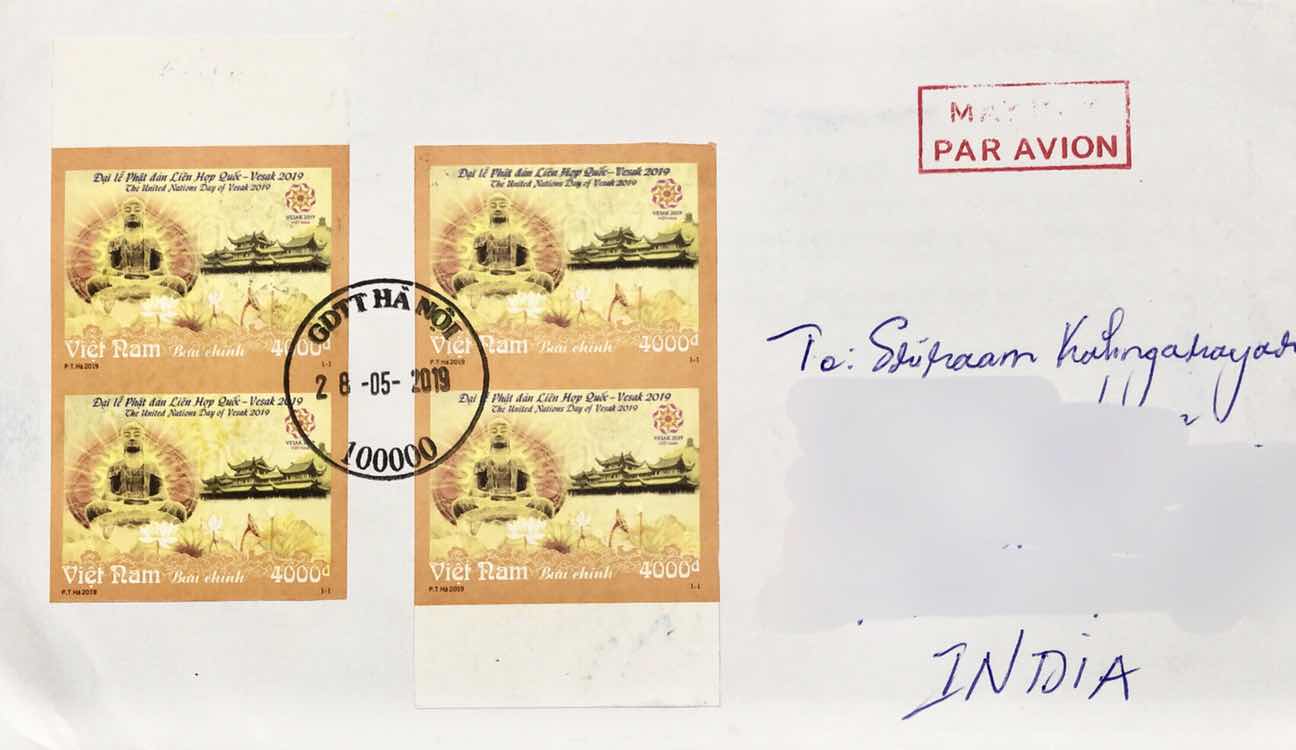
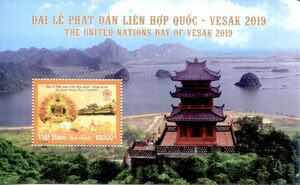
Two covers from Vietnam 🇻🇳 with imperforate stamps and an imperforate MS 

United Nations day of Vesak 2019
Date of issue : 11-05-2019
Postmark : Hanoi PO date postmark 

The stamp, with the face value of 4,000 VND, depicts a majestic Buddha statute with a shining Bodhi leaf at its back, implying that Buddhism brings a well-off and happy life to mankind. Next to it is the images of Tam Chuc Pagoda, where the Vesak celebration is being held, and the dragon of the Ly Dynasty, when Buddhism was at its peak in Vietnam.

Below these images, the stamp features lotus, sky and cloud representing the intersection of sky and earth, which means a peaceful life.

The stamp conveys a multi-dimensional message that honours the traditional values of Vietnamese Buddhism, which has accompanied the country for millennia and contributed to national development.

The Vesak 2019 celebration, held at the Tam Chuc Buddhist Cultural Complex in the northern province of Ha Nam, is themed “Buddhist Approach to Global Leadership and Shared Responsibilities for Sustainable Societies”. 

It will be the third time the UN’s commemoration of Vesak is held in Vietnam. Previously, it took place in Hanoi in 2008 and the northern province of Ninh Binh in 2014.

The UN General Assembly on December 15, 1999 recognised the Day of Vesak to celebrate the thrice-sacred event of the life of the Buddha Gautama (birth, enlightenment and death) and to acknowledge the contributions of Buddhism, one of the oldest religions in the world, has made to humanity.

The UN Day of Vesak was first celebrated in 2001.


Tuesday, July 2, 2019

Bridges of South East Asia & the World


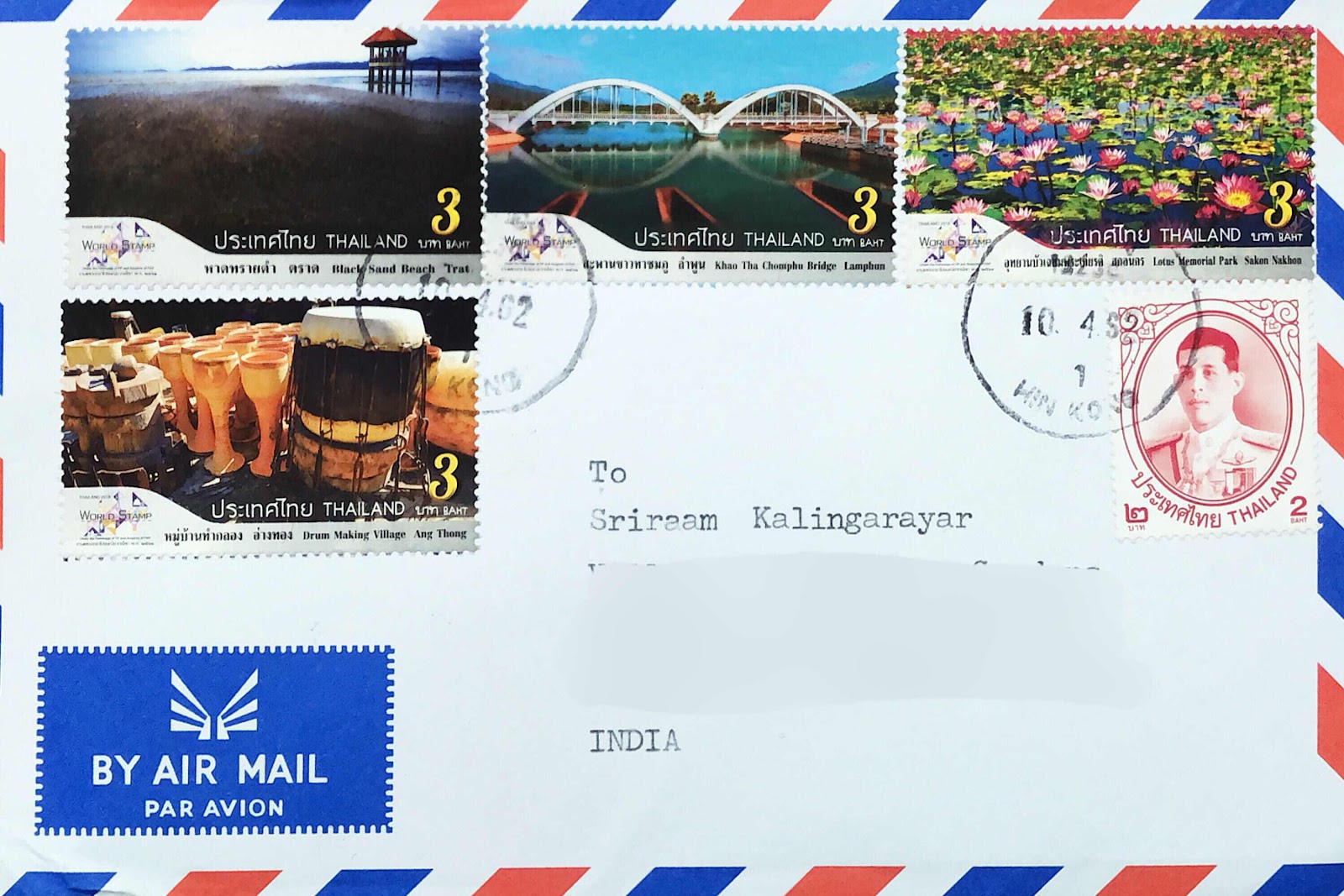
Thailand 🇹🇭 
World stamp exhibition 2018 - Tourist destinations 
Date of issue : 28-November-2018
Postmark : Hin Kong, Ratchaburi, Thailand 

Khao Tha Chomphu White Bridge: The Railway Bridge is situated at Ban Tha Chomphu, Lamphun Province. It was between Khun Tan railway station and The Chomphu railway station. It has become a historic bridge now. The bridge construction began in 1919 and was completed in 1920. It has been used as part of the railway from Lampang to Chiang Mai.
  A fascinating story arose related to the bridge during WWII that the allied forces thought of bombing it to destroy the Japanese railway route. The scheme prodded the villagers to paint the bridge black to camouflage it from the allied forces. They managed to save the bridge from the bombs.


Indonesia 🇮🇩 
Bridges of Indonesia 
Date of issue : 03-12-2017
Postmark : Bogor , Indonesia / 06-03-2019

Jembatan Merah Putih is a cable stayed bridge in the  Ambon Bay Of Ambon island connecting Rumah Tiga village with Hative Kecil village. Construction began in 2011 and the bridge was inaugurated in 2016, making it the longest bridge in the eastern side of Indonesia. The bridge is named after the flag of Indonesia - Bendarah Merah Putih

Jembatan Tayan is a Truss Arch Bridge and the longest bridge in West Borneo which crosses Kapuas River in Sanggau, West Kalimantan, Indonesia. The bridge construction was started in 2012 and ended in 2016. The construction of the bridge is divided into two parts. The first part is a 300 meters bridge from Tayan town to Tayan Island, and the second part is a 1,140 meters bridge from Tayan Island to Piasak.

Jembatan Soekarno is a bridge connecting the old and new parts of Manoda city in North Sulawesi. The bridge was stalled for 15 years due to technical reasons and finally opened in 2016. 


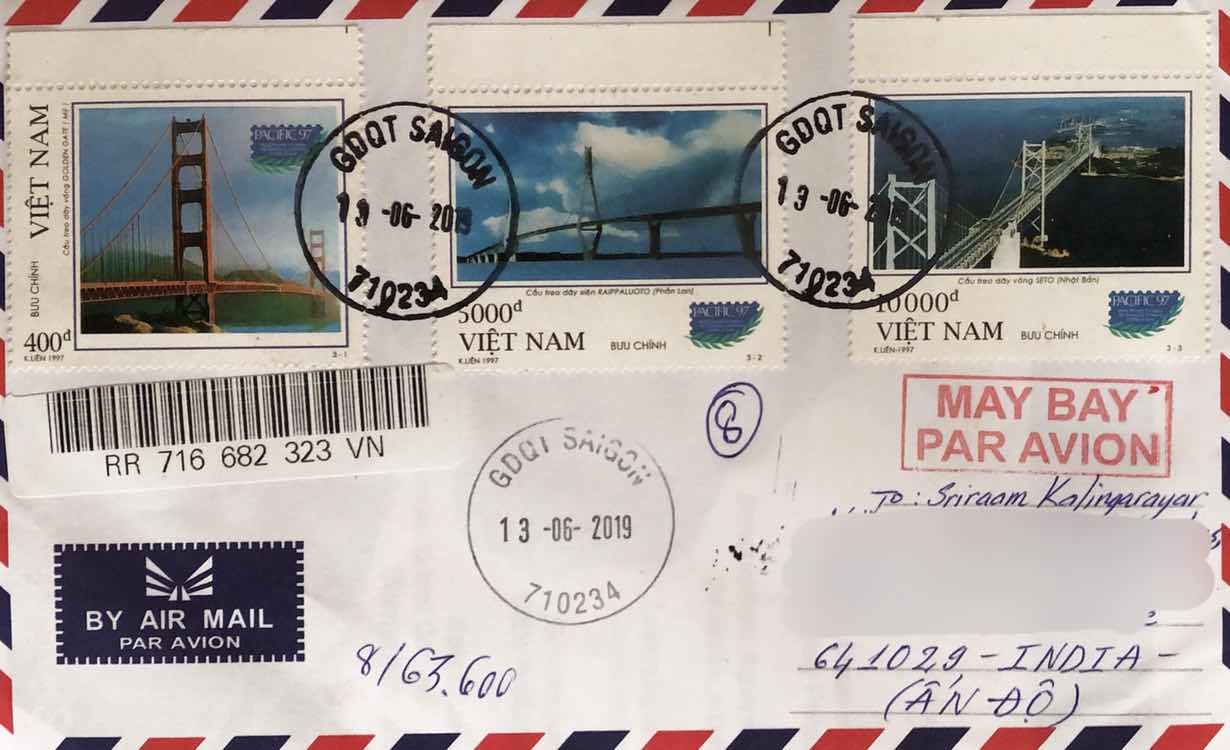
Vietnam 🇻🇳 
International stamp exhibition - Pacific 97- SanFrancisco USA -modern suspension bridges of the world 
Date of issue : 12-06-1997
Postmark : Saigon , 13-06-2019

Golden Gate Bridge ( USA )  is a suspension bridge connecting San Francisco with Marin County, California. It was inaugurated in 1937. 

Raippaluota Bridge ( Finland ) is a cable-stayed tuftform bridge connecting the island of Replot with the mainland in Korsholm, near Vaasa, Finland. It is 1,045 metres (3,428 ft) long and the longest bridge of Finland. It was inaugurated in 1997. 

The Great Seto Bridge ( Japan )  is a series of double deck bridges connecting Okayama and Kagawa prefectures in Japan across a series of five small islands in the Seto Inland Sea. Built over the period 1978–88, it is one of the three routes of the Honshū–Shikoku Bridge Project connecting Honshū and Shikoku islands, and the only one with railroad connections included. At 13.1 kilometers (8.1 mi), it ranks as the world's longest two-tiered bridge system.


Thursday, June 27, 2019

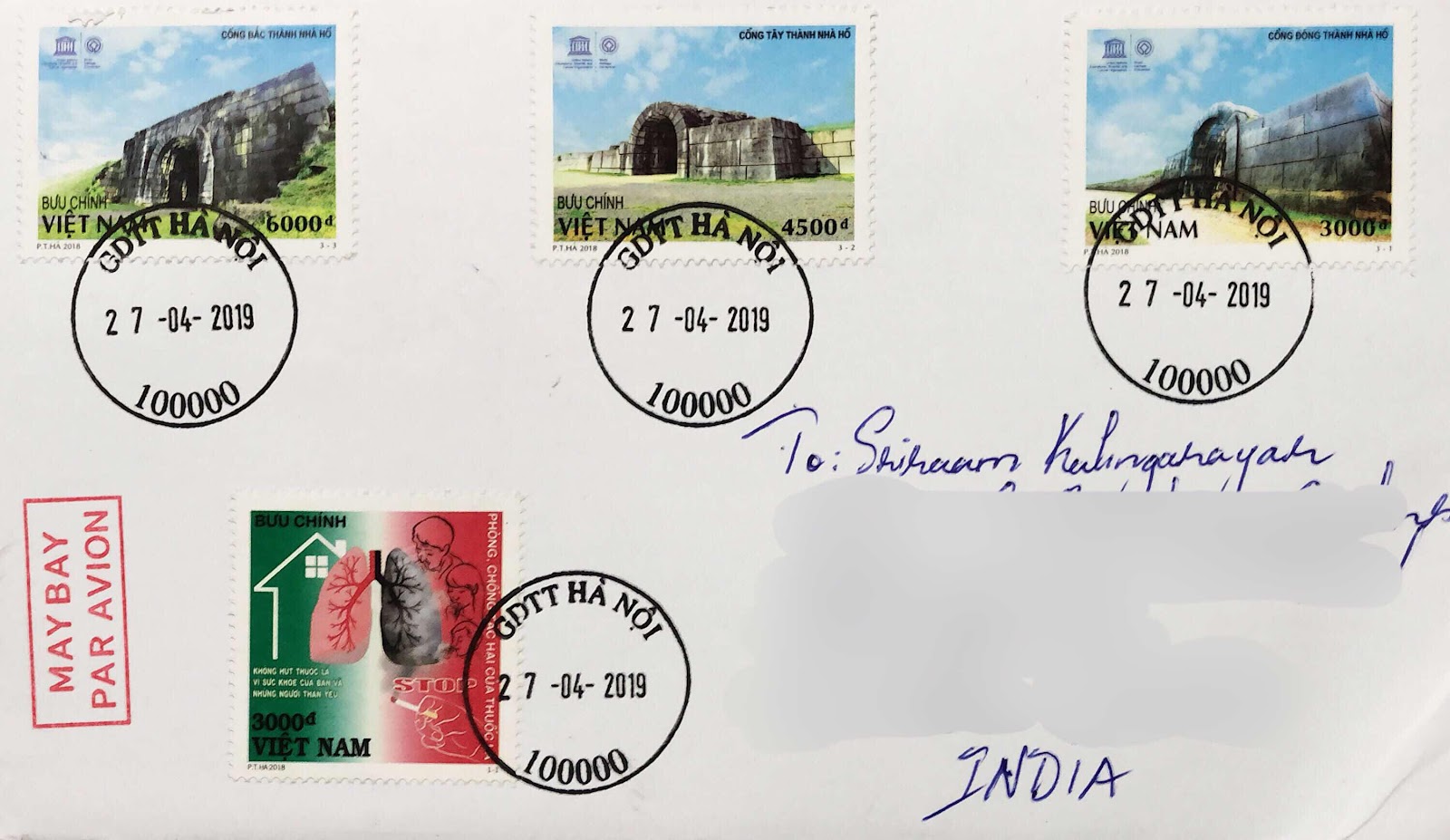
Citadel of Ho Dynasty


Two covers from Vietnam with the set of stamps and minisheet on a UNESCO whs site of Vietnam 🇻🇳 


Citadel of Ho Dynasty - UNESCO whs
Date of issue : 27-June -2018

Situated in a remote backwater of Thanh Hoa province, around 150 kilometers from Ha Noi to the south and 45 kilometers northwest of Thanh Hoa city, the citadel of Ho dynasty is the only stone citadel remaining in Southeast Asian. It was the capital city of Vietnam from 1398 to 1407. The Citadel was nominated as World Cultural Heritage site by UNESCO in June 2011.

Hi Quy Lu

This unique stonework was built for 3 months in 1937 by Ho Quy Ly who was the highest-ranking mandarin of Tran Dynasty. The Citadel of Ho Dynasty also is known as Tay Do castle. It was the political, economic and cultural center of Viet Nam from 1936 to 1407.

In the late 14th century, the Tran Dynasty was in disarray, and Ho Quy Ly laid plans to usurp the throne of King Tran Thuan Tong. In 1937, after the citadel was finished, Ho Quy Ly forced the King to move the capital from the citadel of Thang Long (Hanoi) to Thanh Hoa province. No longer after that few years, in 1400, Ho Quy Ly crowned himself  to replace King Tran and renamed the country as Dai Ngu. The Citadel of the Ho Dynasty official became the capital citadel until 1407 with the name of Tay Do castle. 

The Citadel of Ho Dynasty constructed of large limestone blocks. It is a magnificent combination of the Vietnamese architecture and the unique building techniques of Southeast Asia and Eastern Asia. This construction represents a new development of architectural technology and adaption of the geomantic city. It also states the skillful use of architectural elements in terms of space management and decoration. The complex structure demonstrates a concept of royal power and the adoption of Confucian philosophy within the predominantly Buddhist culture.

The Citadel composed of the Inner Citadel, La Thanh Outer Wall and the Nam Giao Altar (for worshipping the Heaven) covers 155.5 ha, surrounded by a buffer zone of 5078.5 ha. The Citadel is located in a landscape of great scenic beauty between the Ma and Buoi rivers in Vinh Loc district Thanh Hoa province of Viet Nam.


Thanks Do Xo Mo Manh for this beautiful cover ! 

Tuesday, June 11, 2019

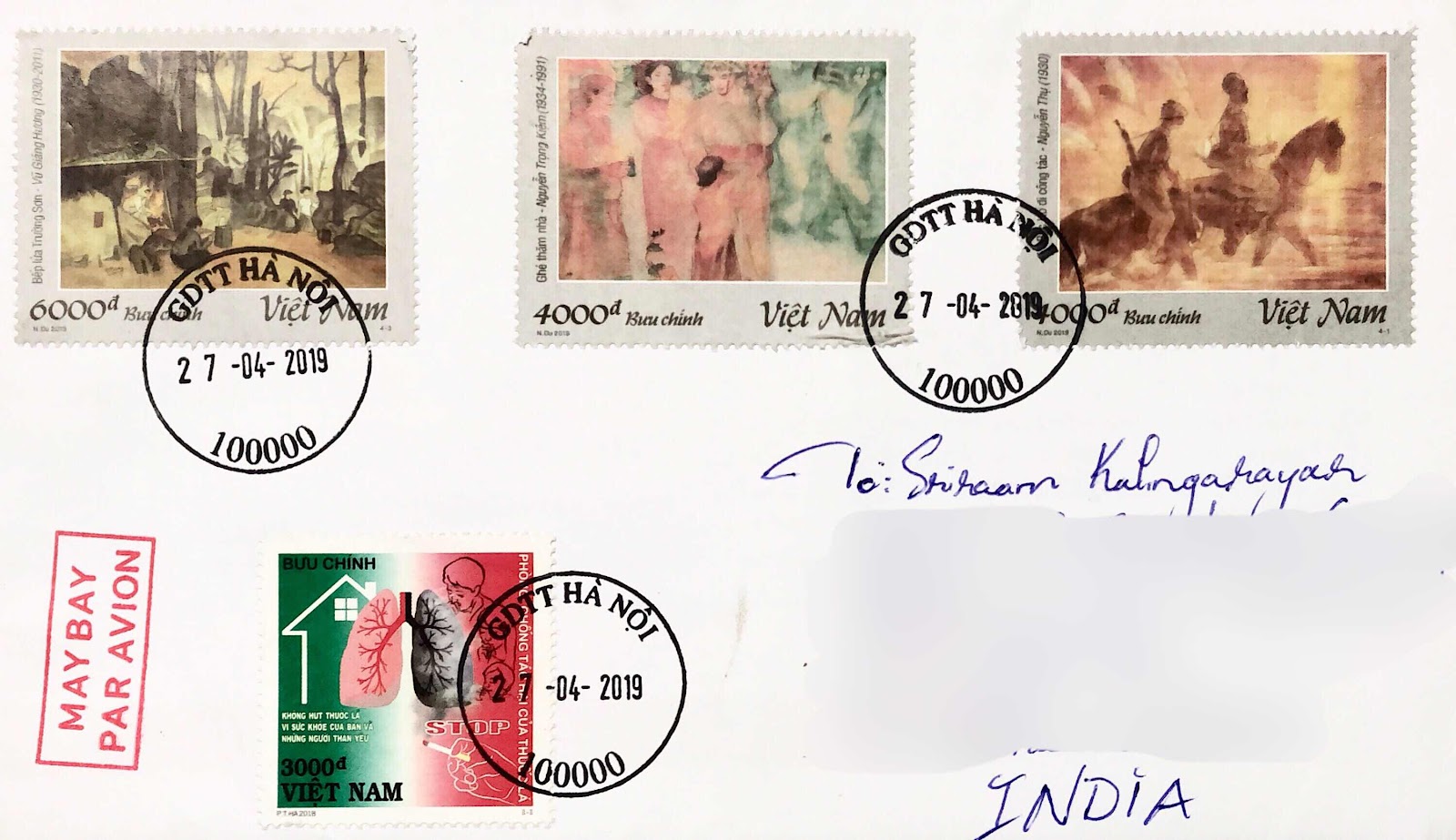
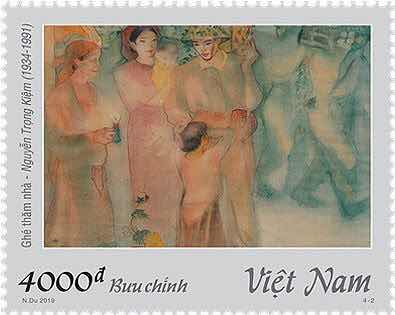
Vietnamese Silk Paintings


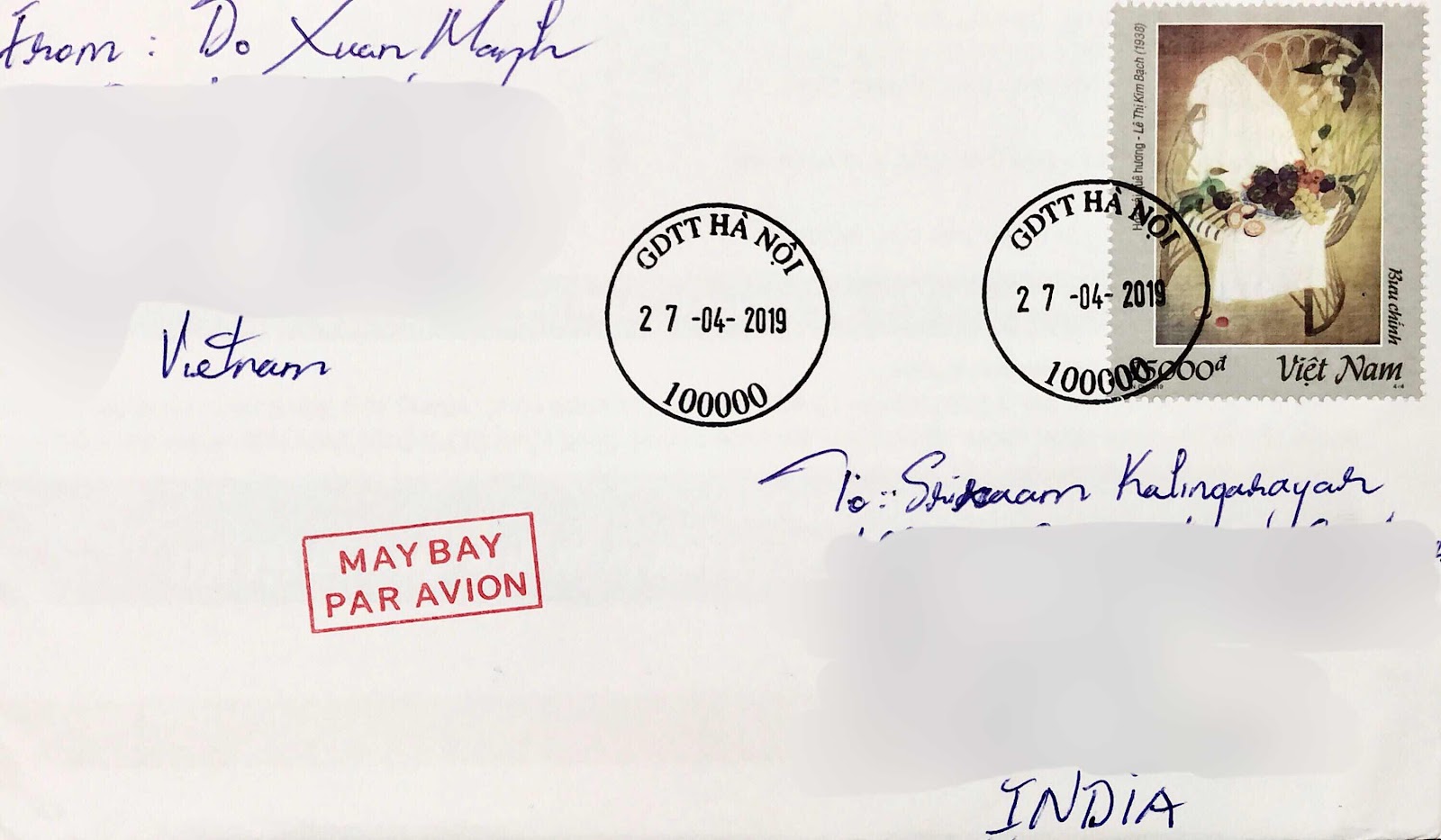
A cover from Vietnam 🇻🇳 with stamps showing the beautiful Vietnamese silk paintings ! 


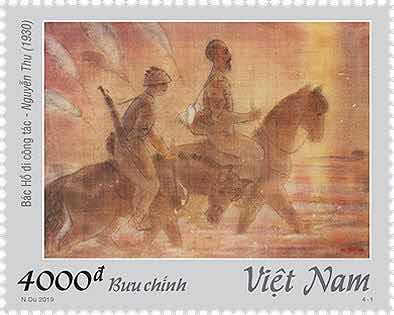
Mr. Ho on business trip - Nguyen Thu (1930) 


visit the house - nguyen trong save (1934-1991)


Truong Son Fire Kitchen - Vu Christmas Huong (1930-2011)


hometown flower - le thi Kim Bach (1938)

Vietnamese Silk Paintings 
Date of issue : 01-04-2019


 Silk Painting is a unique type of painting, which is a unique type of Asian culture in general, Vietnamese culture in particular. 

It was born from the 30 s of the last century and is the pride of the Vietnamese Fine Arts with a lot of art stored in museums, private collection in the country and in international museums. 

After the August Revolution, the silk painting line has been developed by a generation of artist s' heritage and development - which is mainly focused on exploiting the subject of fighting life, labour of the people with many digging. , creative in the express way, palette and French pen.

Differently with other kinds of paintings, the silk canvas are usually not painted. The Vietnamese traditional silk painting style tends to use the silk canvas directly as the background of the painting. The colors are used delicately with the canvas to make Vietnamese silk paintings. The delicate white color found in the sky, water, or human portrait, is the color of silk. The color of silk is well known to describe human figure in the paintings of many famous Vietnamese artists. Delicate color and silk background give the paintings such an harmony with the nature. Whatever style they follow, silk painters must have an intimate knowledge of the material and fully exploit its shininess and its attractiveness. Painting silk is full of changing and unexpected characteristics, and a wrong stroke of the brush is irreversible.

These paintings are made by the Vietnamese artists in Hue, central of Vietnam (110km from North of Da Nang.) These paintings are about the beauty of Hue, the most splendid royal capital of Vietnam, and of other famous provinces of Vietnam. This is an interesting collection that reflects the beauty of Vietnam via various landscapes and Vietnamese daily activities. The bamboo scroll silk paintings are made in the north of Vietnam. The oriental bamboo scrolls are perfect frames for the paintings.


Thanks Do Xuan Manh for this lovely set of covers and stamps ! 


Tuesday, May 28, 2019

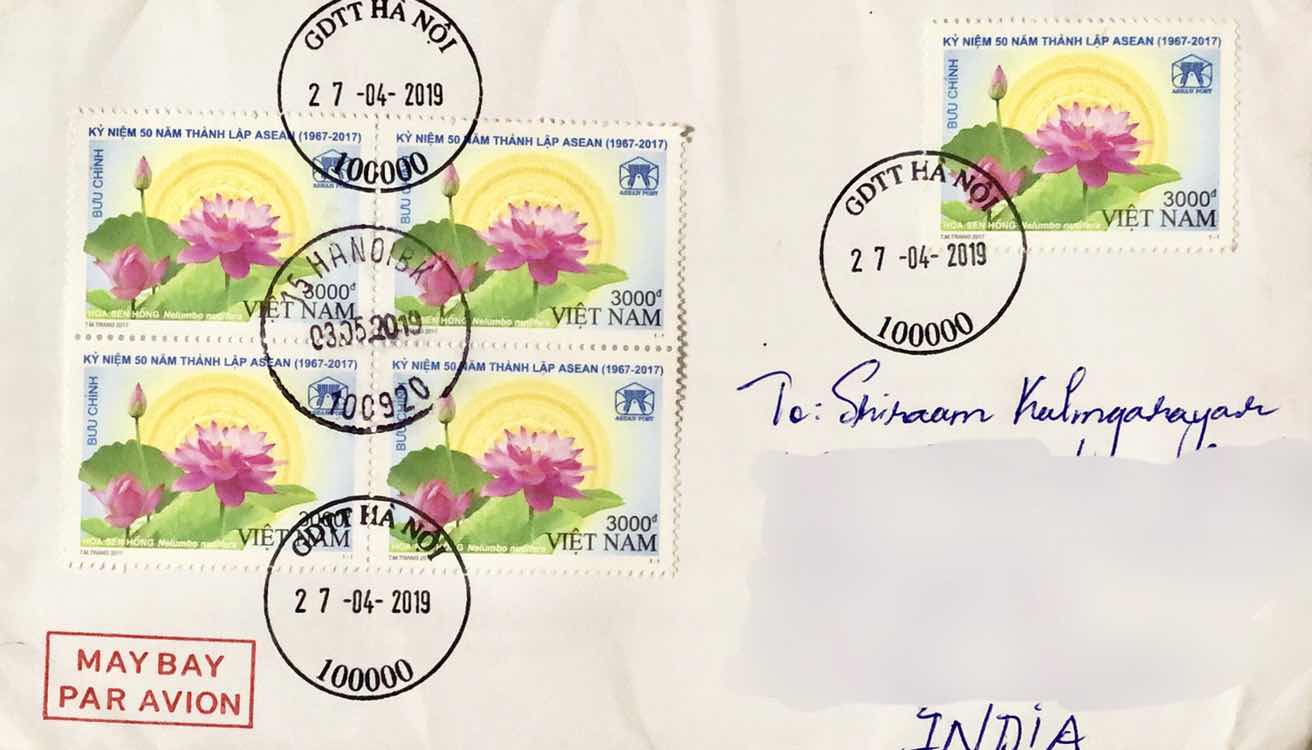
Vietnamese Lotus


A cover from Vietnam 🇻🇳 
50th anniversary of ASEAN 
Date of issue : 08-08-2017


Vietnam and other members of the Association of Southeast Asian Nations (ASEAN) have issued postage stamps themed "National Flower" to mark ASEAN's 50th founding anniversary, the Vietnam Posts and Telecommunications Group said on Wednesday. 

The Vietnamese stamp features pink lotus which shows the culture, characteristics and spirit of the Vietnamese people, the group said, adding that the stamp also includes "ASEAN Post," the logo designed by a Vietnamese painter and used by ASEAN countries in their joint stamp sets. 


Established on Aug. 8, 1967, ASEAN groups Brunei, Cambodia, Indonesia, Laos, Malaysia, Myanmar, the Philippines, Singapore, Thailand and Vietnam.

Thursday, May 23, 2019

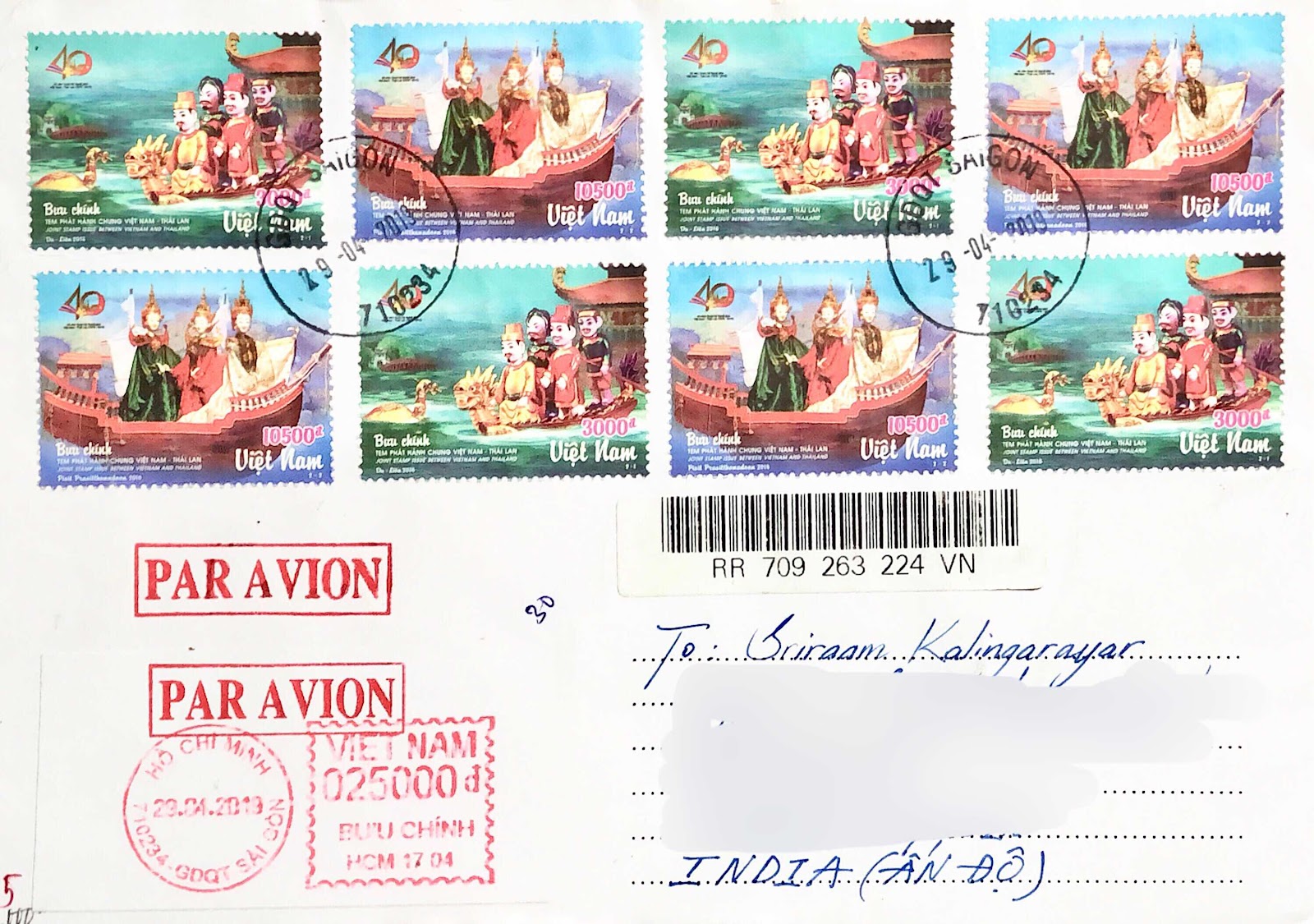
Puppetry in Vietnam and Thailand


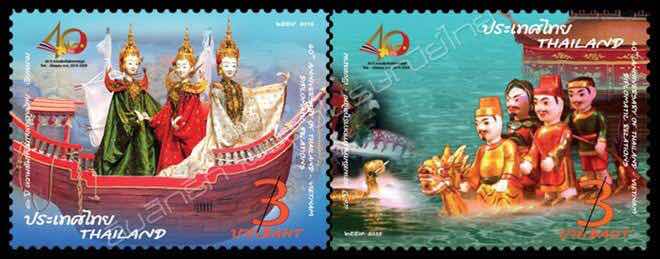
A cover from Vietnam 🇻🇳 with the joint issue stamps of Vietnam 🇻🇳 and Thailand 🇹🇭 


Designers : painters Nguyen Du from Vietnam and Pisit Prasitthanadoon from Thailand.
Date of issue : 05-08-2016

Vietnam and Thailand jointly issued a set of commemorative stamps in capitals of Hanoi and Bangkok on August 5, 2016 to celebrate the 40th anniversary of the two nations’ diplomatic ties (August 6, 1976).

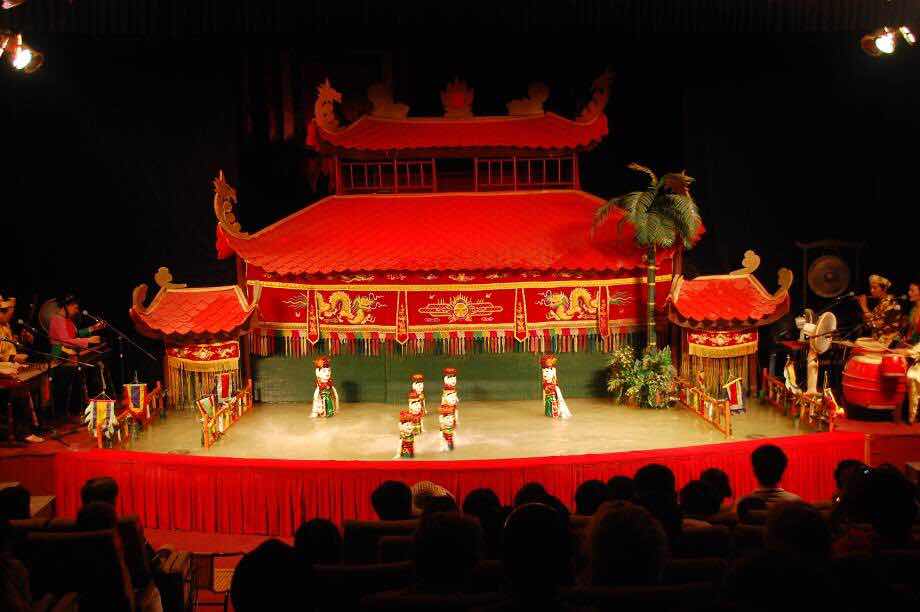
The stamp set features the traditional puppetry of Vietnam and Thailand. 

The first stamp introduces the legend of Hoan Kiem Lake where Le Loi returned his magic sword to the Golden Turle after his forces defeated the Ming Chinese army in 1428. Hoan Kiem Lake is a fresh water lake, measuring some 12 ha in the historical center of Hanoi, the capital city of Vietnam. According to the legend, in early 1428, Emperor Lê Lợi was boating on the lake when a Golden Turtle God (Kim Qui) surfaced and asked for his magic sword, Heaven's Will. Lợi concluded that Kim Qui had come to reclaim the sword that its master, a local God, the Dragon King (Long Vương) had given Lợi some time earlier, during his revolt against Ming China. Later, the Emperor gave the sword back to the turtle after he finished fighting off the Chinese. Emperor Lợi renamed the lake to commemorate this event, from its former name Luc Thuy meaning "Green Water". The Turtle Tower (Tháp Rùa) standing on a small island near the centre of lake is linked to the legend. 


The second features Thailand’s folk puppet play, Hun Krabrok, by King Bhumibol Adulyadej. Traditional Thai puppets or Hun krabok are one type of performing art in Thailand. It originated in the reign of King Rama V(Chulalongkorn) with its original form being influenced by Hainan puppetry (Chinese puppet theatre).

Hun Kra Bok is a half-bodied puppet with the important parts being as follows:

The puppet’s head – represents the different roles such as the hero, the heroine, the monkey, the demon, the joker, and the animal.

The puppet’s hand – The heroine has both hands in the Tang Wong Ram gesture, each hand is attached to a stick, called Mai Takiap, for controlling the hand gesture. While about the hero, the demon and the joker, their right hand is a clenched fist motion for holding a weapon, and in their left hand is in the Tang Wong Ram hand gesture.

The puppet’s body – Its body is made from bamboo or other material.

The puppet’s shoulders – Its shoulders are made from wood or other material.

The puppet’s clothes – Its costume is like a sack covering from its shoulders to its half-bodied length. Furthermore there is ornate embroidery work for each puppet, which will be different according to its role. 


Thanks Do Quoc Minh for the beautiful cover with such clear postmarks :) and for another cover too !


Thursday, May 9, 2019

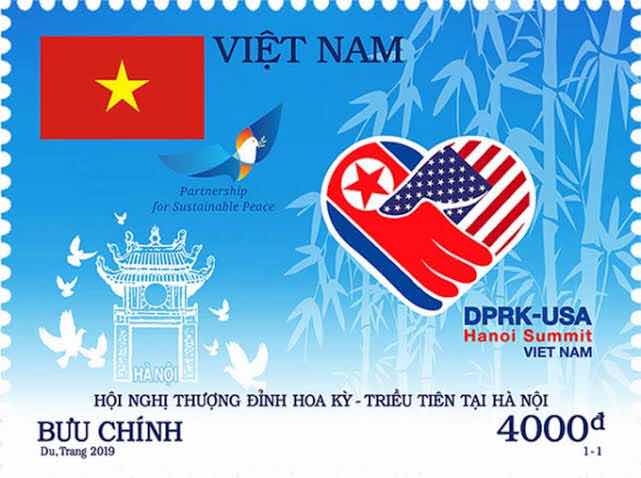
Hanoi summit


A registered cover from Vietnam with a landmark stamp :) 


Date of issue : 27-02-2019

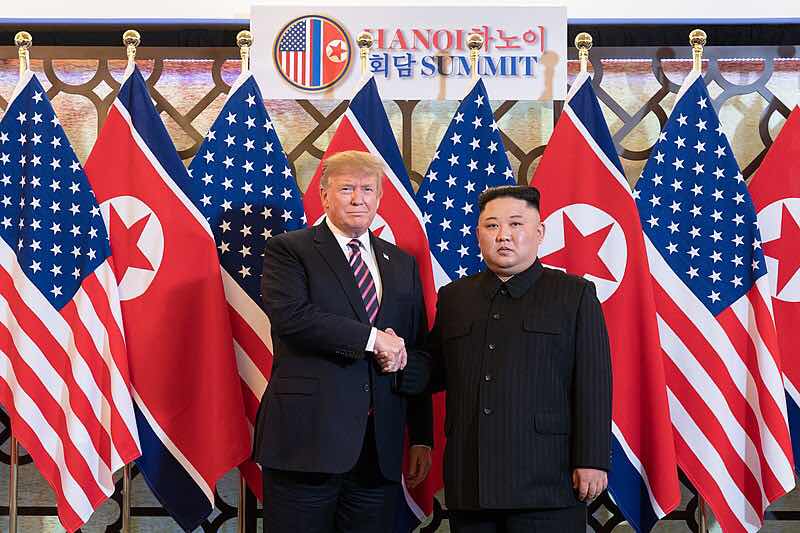
The 2019 North Korea–United States Hanoi Summit, commonly known as the Hanoi Summit, was a two-day summit meeting between North Korean Chairman Kim Jong-unand U.S. President Donald Trump, held at the Metropole Hotel in Hanoi, Vietnam, on February 27–28, 2019. This was the second meeting between the leaders of the DPRK and the United States, following the first meeting in June 2018 in Singapore. 


The White House confirmed the planned summit between North Korean WPK Chairman Kim Jong-un and U.S. President Donald Trump on September 11, 2018. U.S. Secretary of State - Mike Pompeo stated that the DPRK and the U.S. were "working diligently" to make sure the conditions were right for the summit.

Trump announced the host country, Vietnam, and the dates, February 27–28, during his second State of the Union Address on February 5, 2019 and later announced that the summit would be in Hanoi.

I hope the two leaders realise the importance of peace and work towards it ! 


Monday, February 4, 2019

Vietnam India joint relations


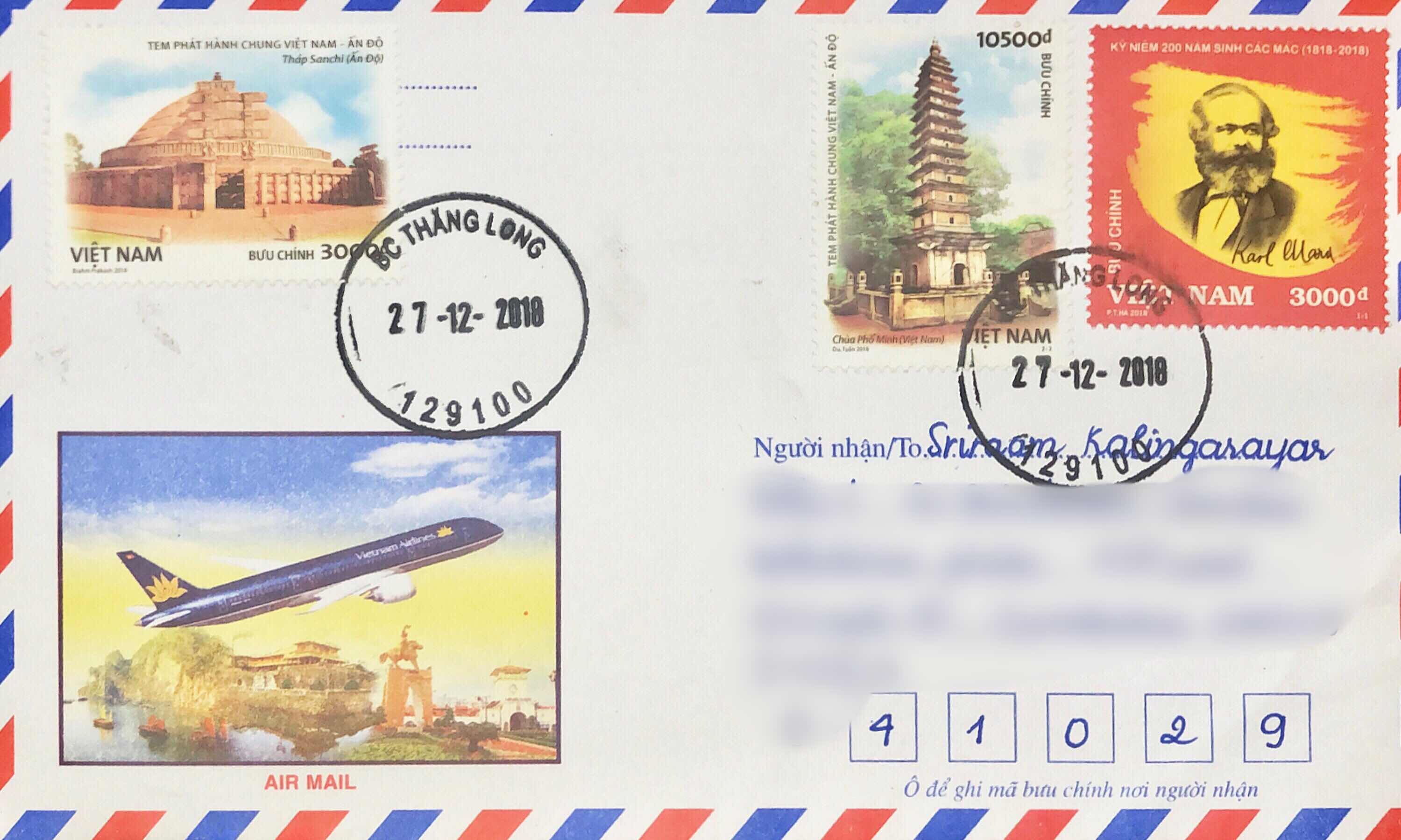
A cover from Vietnam with Karl Marx stamp and the India - Vietnam Joint Issue stamps 

The civilizational relationship between India and Viet Nam spans over 2000 years. Monks, traders and people from both countries have interacted over centuries. The intense cultural exchanges have enriched the cultural diversity of the region. India and Viet Nam enjoy good relations and have established bilateral cooperation mechanisms. The relations between the two countries are marked by strong trust, mutual understanding and convergence of views on various international issues and the regional security situation in Asia.

In recent times, political contacts have strengthened as reflected in several high-level visits by leaders from both sides. Trade and economic linkages continue to grow. Viet Nam is an important regional partner in South East Asia. India and Viet Nam closely cooperate in various regional forums such as ASEAN, East Asia Summit, Mekong Ganga Cooperation, Asia Europe Meeting (ASEM) besides UNand WTO.

India and Viet Nam have emphasized that enhancing bilateral economic engagement is a strategic objective. The bilateral trade is growing at a healthy pace.

In 2017, the two countries have celebrated the 45th Anniversary of the establishment of diplomatic relations and the 10th Anniversary of Strategic Partnership. The theme for the joint issue is “Ancient Architecture”, depicting “Sanchi Stupa” in the Indian stamp and “Pho Minh Pagoda” in the Viet Nam stamp. The Sanchi Stupa and the Pho Minh Pagoda are architectural landmarks of their respective countries and are tied by the common thread of Buddhism.
Sanchi Stupa:

  • The Great Stupa at Sanchi is one of the most important Buddhist monuments. Located at Sanchi town, Madhya Pradesh, India, this Stupa is the oldest stone structure in India that was built during the Mauryan period. Originally commissioned in the third century B.C. by Emperor Ashok, this huge hemispherical dome with a height of 54.0 ft consists of a central chamber where the relics of Lord Buddha are placed. Four ornamental gateways facing four directions and a balustrade surrounding the Stupa were later added in the first century B.C. Enlisted as a UNESCO World Heritage Site since 1989, it is counted among the best conserved ancient Stupas of central India.
  • The present hemispherical edifice is double in diameter of the original brick structure built by Ashoka, consisting of the relics of Lord Buddha. A chatra that is an umbrella like structure made of stone crowned the hemispherical brick structure that was surrounded by a wooden railing. A sandstone pillar, inscribed with Edict by Ashoka as also with ornate spiral Brahmi characters from the Gupta period resembling conch shells referred as ‘Shankhalipi’ or ‘shell-script’ by scholars, was erected in the site. While the lower portion of it is still grounded, the upper portions are kept under a canopy. During the Shungadynasty, expansion of the Stupa, nearly double its original size with a more flattened dome was undertaken using stone slabs that entirely covered the actual brick Stupa. Three superimposed umbrella-like structures were built to crown the dome. It symbolized the Wheel of Law or ‘dharma’. A high rounded drum that can be reached through a double staircase became the seat of the dome enabling one to circumambulate the sacred dome.
Pho Minh Pagoda:

  • Pho Minh Pagoda is located 4 km north of Nam Dinh City and 94 km south of Hanoi, the Capital city. The pagoda was originally built during the Ly Dynasty of Viet Nam and later expanded in 1262 during the Tran Dynasty. It was a place for high-ranking mandarins and the aristocracy of the Tran Royal Court to worship and lead their religious life.
  • The architecture and decorations of the pagoda are characteristics of the Tran Dynasty’s times: lotus flower pond, lotus-flower decorations at the foot of the pillars, the Tran-styled dragon sculptures, the stone candle holders. Specially, a 13 story-tower named Pho Minh Tower in the shape of a lotus, 19 meters high, was built just in front yard of the pagoda in 1305. The base and the tower’s first floor were constructed with flagstones and the upper floors were built with bricks. On top of the tower, there is a gourd-shaped decoration which is kind of talisman to catch the elite energy from the universe. The tower is believed to connect the Earth and the Universe. Pho Minh Pagoda is mostly visited by the Vietnamese Buddhist Pilgrims and tourists, especially in festival times.

Tuesday, January 29, 2019

Mountain ebony of Vietnam


A cover from Vietnam ! 


Bauhinia variegata is a species of flowering plant in the family Fabaceae. It is native to South Asia and Southeast Asia, from southern China, Burma, India, Nepal, Pakistan, and Sri Lanka. Common names include orchid tree, camel's foot tree, kachnar and mountain-ebony.


100th anniversary of the death of Jack London 

John Griffith London was an American novelist, journalist, and social activist. A pioneer in the world of commercial magazine fiction, he was one of the first writers to become a worldwide celebrity and earn a large fortune from writing. He was also an innovator in the genre that would later become known as science fiction.

His most famous works include The Call of the Wild and White Fang, both set in the Klondike Gold Rush, as well as the short stories "To Build a Fire", "An Odyssey of the North", and "Love of Life". He also wrote about the South Pacific in stories such as "The Pearls of Parlay" and "The Heathen", and of the San Francisco Bay area in The Sea Wolf. Many of his works have been translated into Vietnamese. 


Sunday, January 13, 2019

Nelson Mandela in Vietnam


A cover from Vietnam 

The stamps mark the birth centenary of Nelson Mandela in 2018 ! 

Nelson Mandela’s life has influenced almost all countries across the world ! The United Nations declared July 18 as the Nelson Mandela International Day in 2009. The Day is celebrated every year and it is in recognition of the 67 years that Nelson Mandela spent in serving humanity and fighting for freedom and justice.

The significance of the Nelson Mandela International Day is a call to inspire communities, organisations and individuals to change the conditions around them for the better and to render services to disadvantaged individuals and communities for 67 minutes.

It is not only a recognition of Mandela’s contribution to peace and freedom, but also a message to the world that it is the truth alone that will ultimately prevail and triumph.

I love this cover :) 


Friday, January 11, 2019

Marxism in Vietnam


A cover from Vietnam with stamps on Karl Marx and October Revolution 


The stamps mark the 200th birth anniversary of Karl Marx and 100th anniversary of October revolution of Russia ! 


Karl Marx was the founder of the theory of Communism and October Revolution was the first step in the spread of Communism across the world ! 

The northern part of Vietnam was part of Imperial China for over a millennium, from 111 BC to AD 939. An independent Vietnamese state was formed in 939, following a Vietnamese victory in the battle of Bạch Đằng River. Successive Vietnamese imperial dynasties flourished as the nation expanded geographically and politically into Southeast Asia, until the Indochina Peninsula was colonised by the French in the mid-19th century.
 Following a Japanese occupation in the 1940s, the Vietnamese fought French rule in the First Indochina War. On 2 September 1945, President Hồ Chí Minh declared Vietnam's independence from France under the new name of the Democratic Republic of Vietnam. In 1954, the Vietnamese declared victory in the battle of Điện Biên Phủ which took place between March and May 1954 and culminated in a major French defeat. Thereafter, Vietnam was divided politically into two rival states, North Vietnam (officially the Democratic Republic of Vietnam) and South Vietnam(officially the Republic of Vietnam).
 Conflict between the two sides intensified in what is known as the Vietnam War with heavy intervention by the United States on the side of South Vietnam from 1965 to 1973. The war ended with a North Vietnamese victory in 1975. Vietnam was then unified under a communist government but remained impoverished and politically isolated. 
In 1986, the Communist Party of Vietnam (CPV) initiated a series of economic and political reforms that began Vietnam's path toward integration into the world economy. By 2010, it had established diplomatic relationswith 178 countries. Since 2000, Vietnam's economic growth rate has been among the highest in the world, and in 2011, it had the highest Global Growth Generators Index among 11 major economies.
Vietnam and Laos are the two countries in the IndoChina peninsula with Communist Geovernments. 

Thanks Do Quoc Minh for the nice cover ! 

With this cover - I have collected all the stamps issued for bicentennial birth anniversary of Karl Marx - on covers - from all the 5 countries that issued in 2018 !