Showing posts with label # Malaysia. Show all posts

Sunday, December 8, 2019

Malaysian cuisine


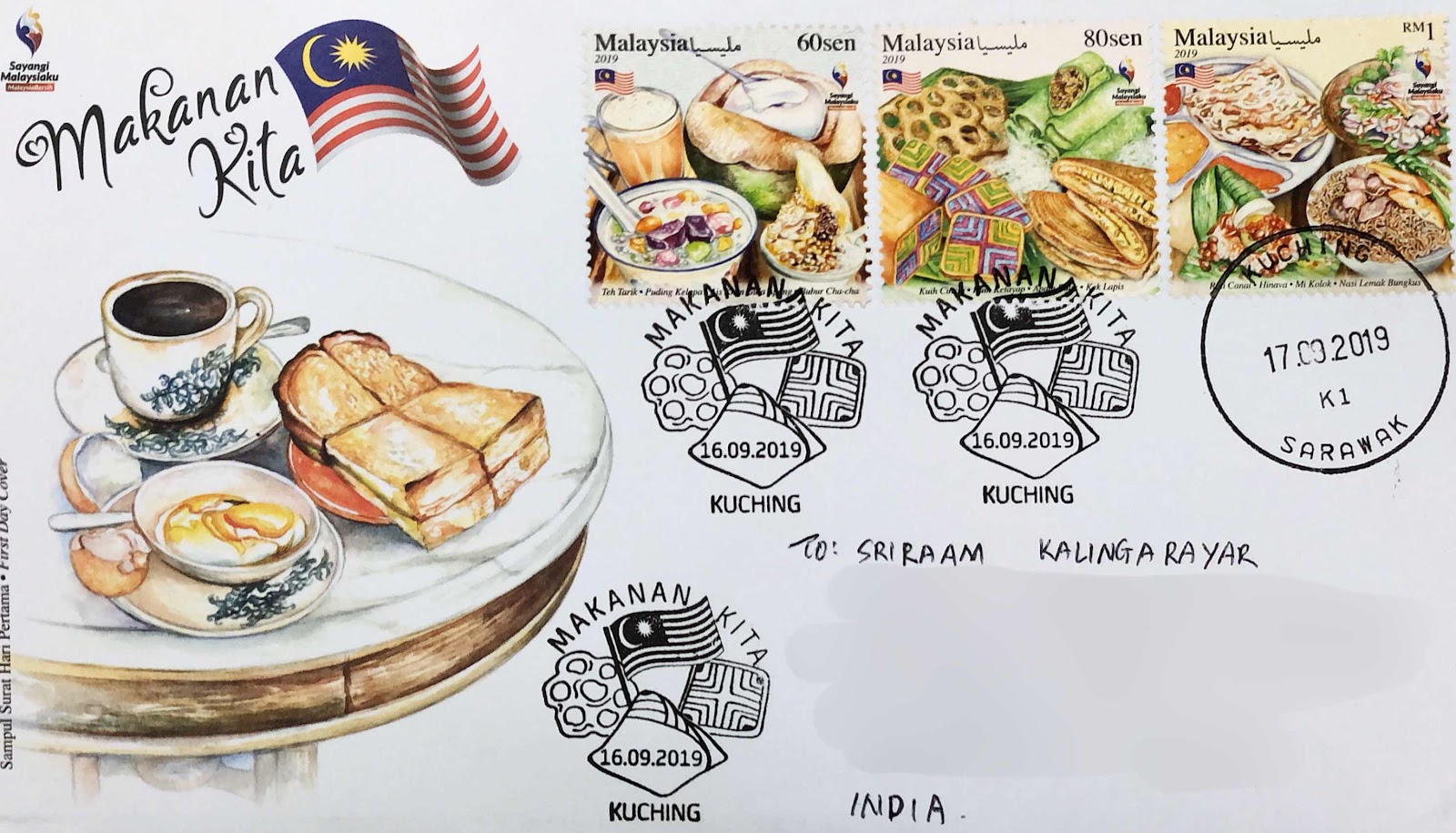
An FDC from Malaysia 🇲🇾  island state - Saravak 


Makanan Kita - Our Food 
Date of issue : 16-09-2019
Date of sale : 17-09-2019


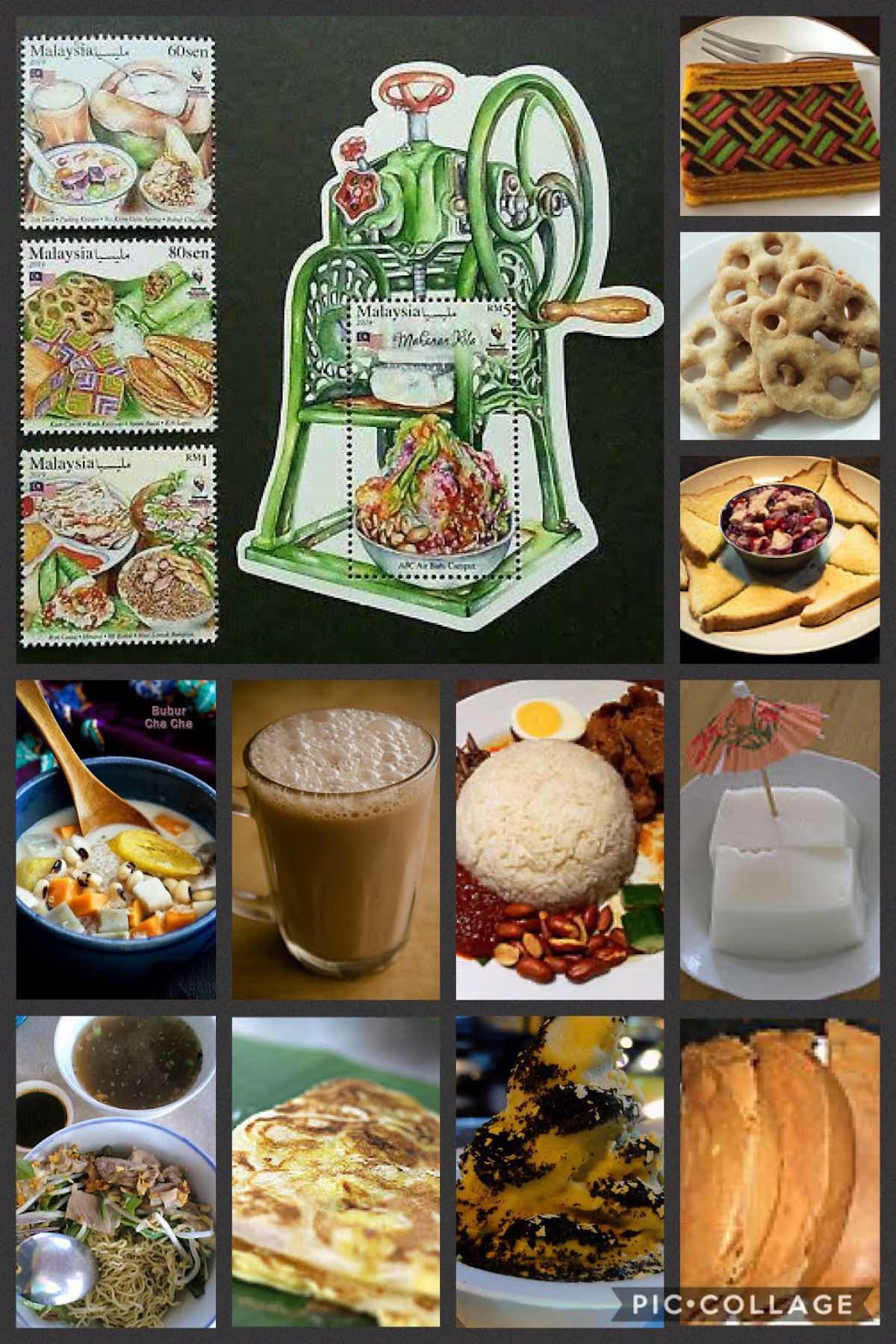
The stamps feature an array of local food delights from across the country, apam balik, nasi lemak, roti canai, mi kolok, hinava, teh tarik, bubur cha-cha, kuih cincin, kuih ketayap, kek lapis, puding kelapa, ais krim gula apong and others.
 
The odd shaped miniature sheet in this series features the nation’s favourite - ABC - air batu campur 

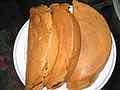
Apam balik- ( turnover pancake ) is a dessert that is very common in southeast provinces of China , Taiwan and in the roadside stalls of Brunei, Indonesia and Malaysia. 

The pancake's batter is made from a mixture of flour, eggs, sugar, baking soda, coconut milkand water. The batter is cooked upon a thick round iron frying pan in plenty of palm margarine to avoid it sticking to the pan. Then other ingredients are sprinkled as filling; the most common or traditional is crushed peanut granules with sugar and sweetcorn kernels (available from cans), but modern innovations such as chocolate sprinkles and cheddar cheese are also available. Then, the pancake is folded (hence the name: "turnover pancake") and cut into several pieces.
The pancake was an innovation by the General Tso army when they invaded this part of the country 


Nasi lemak is a Malay fragrant rice dish cooked in coconut milk and pandan leaf. It is commonly found in Malaysia, where it is considered the national dish

The name is derived from the cooking process whereby rice is soaked in coconut cream and then the mixture steamed. The rice is normally cooked with pandan leaves that gives it a distinctive flavour. Traditionally, nasi lemak is served with a hot spicy sauce (sambal), and usually includes various garnishes, including fresh cucumber slices, small fried anchovies (ikan bilis), roasted peanuts, and hard-boiled or fried egg.

Roti canai, is an Indian-influenced flatbread dish found in several countries in Southeast Asia. 
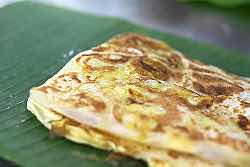
Roti canai is made from dough which is usually composed of fat (usually ghee), flour and water; some recipes also include sweetened condensed milk. The dough is repeatedly kneaded, flattened, oiled, and folded before proofing, creating layers. The dough ball is then flattened, spread out until paper thin (usually by "tossing" it on a flat surface), and gathered into a long rope-like mass. This "rope" is then wound into a knot or spiral and flattened, so that it consists of thin flakes of dough when cooked.


Kolo mee or mee kolo is a type of Sarawakian noodle dish, characteristically light and tossed in a transparent sauce.
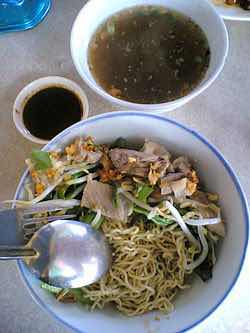
 

Kolo mee is a Sarawakian Chinese favourite, and is served any time of the day for breakfast, lunch, and supper.

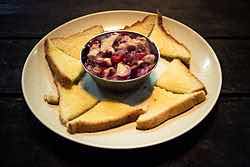
Hinava is a traditional native dish of the Kadazan-Dusun people in the state of Sabah. It is made from fish and mixed with lime juice, bird's eye chili, sliced shallots and grated ginger.


Teh tarik (literally "pulled tea") is a popular hot milk tea beverage most commonly found in restaurants, outdoor stalls and kopitiams within the Southeast Asian countries of Malaysia and Singapore. Its name is derived from the pouring process of "pulling" the drink during preparation. It is made from a strong brew of black tea blended with condensed milk. It is the national drink of Malaysia. 


Bubur cha cha, also spelled as bubur cha-cha, is a Malay dessert and breakfast dish in Malaysian cuisine and Singapore using pearled sago, sweet potatoes, yams, bananas, black-eyed peas, coconut milk, pandan leaves, sugar and salt. Grated coconut, coconut cream and water can be used as additional ingredients.  

The ingredients are cooked in coconut milk, and the dish can be served hot or cold. Bubur cha cha is also sold as a street food in some areas of the Malaysian state of Penang.

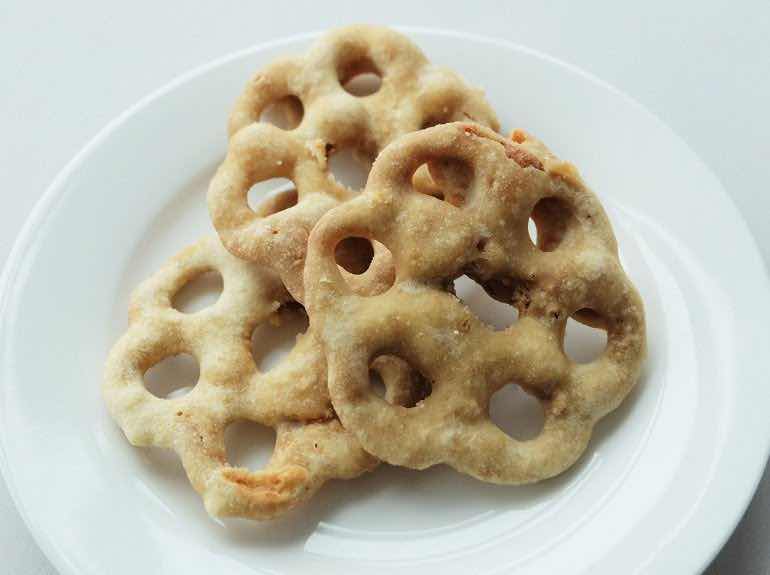
Cincin (which literally translates to 'ring cakes' in English) is a traditional kuih for the Bruneian Malay people in the states of Sabah, Malaysia as well in Brunei.
It is made from Red palm , sugar , rice flour and cooked in oil 


The Sarawak layer cake, known as kek lapis Sarawak (meaning "Sarawak layer cake") or kek lapis moden Sarawak in Malay, is a layered cake served in Sarawak, Malaysia on special occasions. They are often baked for religious or cultural celebrations such as Eid ul-Fitr, Christmas, Deepavali, birthdays and weddings. People in Malaysia practice an open house on festival day. A unique feature of Sarawak's open houses is the modern layered cakes.
In Malaysia, kek lapis Sarawak (Sarawak layer cake) has been a protected geographical indication since 2010.

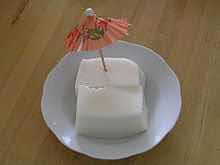
Puding Kelapa/ Coconut bar is a refrigerated dim sum dessert found in Hong Kong, Taiwan, Southern China and  in overseas Chinatowns. 

It is sweet and has a soft, gelatin-like texture but is white in color rather than translucent like gelatin. It is sometimes referred to as coconut pudding

Aiskrim Gula-apong - If Melaka is famous for its gula Melaka, Sarawak is known for its gula apong. The difference between the two is that gula Melaka is made out of coconut, while gula apong is made out of nipah palm, or apong as it is known is Sarawak, which is abundant in the state. 


Ais krim gula apong- is a vanilla ice cream topped with palm sugar syrup and crushed peanuts. 

Malaysia - truly Asia - a fusion of all Asian cuisines ! 


Sunday, February 24, 2019

Motorcycles of Malaysia


A cover from Malaysia 🇲🇾 


Malaysia issued a stamps series - a set of stamps and minisheets features Malaysia made motorcycles! 

The minisheet on the cover features MZ motorcycle , produced by MZ Motorrad Sdn Bhd with its production plant in Shah Alam, Selangor. The company was established in January 2002. 


The Malaysian automotive industry is an important and strategic part of  manufacturing sector. The overall automotive industry and related sectors employ around 710,000 people and contributes almost RM30 billion to Malaysia’s GDP.
There are 27 manufacturing and assembly plants in Malaysia producing passenger and commercial vehicles, composite body sports cars, as well as motorcycles and scooters.
Malaysia also has more than 600 automotive component manufacturers, producing a wide range of components, such as body panels, trim parts, powertrain parts, rubber parts and electrical and electronic parts.


Thanks Nurul for the cover ! 


Monday, January 7, 2019

Orchids of Malaysia


A first day cover of the State definitives - orchids issued on December 4 , 2018.
The six species featured are the : 


Bulbophyllum Orchid ( 5sen stamp)

Bulbophyllum is a genus of mostly epiphyticand lithophytic orchids in the familyOrchidaceae. It is the largest genus in the orchid family and one of the largest genera of flowering plants with more than 2,000 species, exceeded in number only by Astragalus. These orchids are found in diverse habitats throughout most of the warmer parts of the world including Africa, southern Asia, Latin America, the West Indies, and various islands in the Indian and Pacific Oceans.

Helmet Orchid (10 sen)

Corybas, commonly known as helmet orchids, is a genus of about 120 species of plants in the orchid family, Orchidaceae. Helmet orchids are small, perennial, deciduous herbs and are nearly always terrestrial. They have a single leaf at their base and a single flower on a short stalk, the flower dominated by its large dorsalsepal and labellum. Species of Corybas are found in Australia, New Zealand, New Guinea, Southeast Asia, the Himalayas, southern China, many Pacific islands and a few sub-Antarctic islands.


Vanilla Orchid (20 sen)

Vanilla, the vanilla orchids, forms a flowering plant genus of about 110 species in the orchid family (Orchidaceae). The most widely known member is the flat-leaved vanilla (V. planifolia), native to Mexico, from which commercial vanillaflavoring is derived. It is the only orchid widely used for industrial purposes in flavoring such products as foods, beverages and cosmetics, and is recognized as the most popular aroma and flavor.

Almost-Three Lobbed Phalus (30 sen)

Phaius, commonly known as swamp orchids is a genus of forty five species of flowering plants in the orchid family, Orchidaceae. They are evergreen, terrestrial herbs which form clumps with crowded, sometimes stem-like pseudobulbs, large, pleated leaves and relatively large, often colourful flowers. Species in this genus are found in the tropical parts of Africa, Asia, Southeast Asia, New Guinea, Australia, and various islands of the Pacific and Indian Oceans.

Large Leaf Dendrobium (40 sen) 


Dendronium is a genus of mostly epiphytic and lithophytic orchids in the family Orchidaceae. It is a very large genus, containing more than 1,800 species that are found in diverse habitats throughout much of south, east and southeast Asia, including China, Japan, India, the Philippines, Indonesia, Australia, New Guinea, Vietnam and many of the islands of the Pacific. Orchids in this genus have roots that creep over the surface of trees or rocks, rarely having their roots in soil. Up to six leaves develop in a tuft at the tip of a shoot and from one to a large number of flowers are arranged along an unbranched flowering stem.

Jewel Orchid (50 sen)


Lidisia is a genus of orchids that contains just one species, Ludisia discolor, commonly referred to as jewel orchid. They are native to southern China, Thailand, Vietnam, Philippines, Malaysia, Indonesia and Burma, and often cultivated. They are terrestrial orchids that in their natural setting would be found growing on the forest floor. They are known for their foliage, which is often velvety deep maroon with red veins that run parallel to the centre of the leaf.


The wild orchids stamp series was produced in two versions of the Miniature Sheets (MS) which are the perforated and imperforated version with 14 designs which features the head of states in Malaysia.


Thanks honeysha for this wonderful cover - I love orchids and the cover looks like a beautiful garden :) 


Postmen of Malaysia


A cover from Malaysia - an FDC of the stamp releases for World Post Day 2018 


Malaysia has been issuing stamps for the World Post Day - every year in October 9 . The stamp series features various aspects of Malaysia post. 

The 2018 stamp features postmen of Malaysia -  the set comprises two stamp designs: a vintage image of a postman delivering letters to rural folks while wearing the old Pos Malaysia uniform (60 sen); and a present day postman with the latest uniform (80 sen).

The Minature sheet is a combination of both the designs together - RM 3 

What I found interesting is that - the MS is an imperforate one ! 

Also - the cancellation is a beautiful one - showing the exchange of letters between various hands :) 


Thursday, December 13, 2018

Bridges of Malaysia


A cover from Melaka , Malaysia with the fourth series of stamps on Unique structures of Malaysia 2018 - Bridges. 


Sultan Abdul Jalal Shah Bridge (0.60 Sen ) 


The Sultan Abdul Jalil Shah Bridge is one of two bridges that cross the Perak River in Kuala Kangsar, Perak in Malaysia. The other bridge is the Iskandariah Bridge. The bridge connects the town of Kuala Kangsar with Sayong village, spanning 330 meters across the river. It was officially opened by the late Almarhum Sultan Azlan Shah of Perak in June 2002.

Tamparuli Bridge ( 0.60 Sen ) 


This suspension bridge is located at Tamparuli town, a small town 30 minutes away from Kota Kinabalu by car, and many travellers may pass through here while on their way to Mt. Kinabalu, and Poring Hot Spring. The local Kadazandusun tribe has been using suspension bridges for ages, crossing the many rivers generated by the Crocker Ranger. This long hanging bridge is immortalised in the song Jambatan Tamparuli, a popular Kadazandusun song, sung by the late local singer John Gaisah. Even though the Tamparuli Bridge is not the original one, as floods after floods had eventually damaged the old one. After a few reconstructions the present bridge is a new one, which was completed just a few years ago.

Seri Wawasan Bridge , Putrajaya ( 0.80 Sen ) 


The Seri Wawasan Bridge is one of the main bridges in the planned city Putrajaya, the new (2001) Malaysian federal territory and administrative centre. This futuristic asymmetric cable-stayed bridge with a forward-inclined pylon has a sailing ship appearance, accented at night with changeable color lighting. The bridge, also called Bridge No. 9, crosses Putrajaya Lake, an artificial lake made to provide natural cooling

Darul Hana Bridge (0.80 Sen ) 


The Darul Hana Bridge in Kuching is the only pedestrian bridge that connects the North and South of Kuching at the moment. with an ‘S-shape’ design, it is indeed unlikely that daily commuters wanting to save on time when crossing the river would opt to use the bridge, hence making the Darul Hana S-Bridge more of a tourist attraction than a bridge to cross the wide Sarawak River on a daily basis. The bridge, officially opened on 11 November 2017, is Kuching’s latest unique landmark. During the opening of the Darul Hana Bridge, the Sarawak Yang Dipertua Negeri Tun Abdul Taib Mahmud explained that the name ‘Darul Hana’ means a place of peace and tranquility, in Arabic. Kuching residents familiar with history noted that Kuching used to be called ‘Sarawak Darul Hana’ when it was under the rule of the Brunei Sultanate, with some saying that the name was used before James Brooke renamed the land to Kuching. 

The Darul Hana S-Bridge cost RM35 million, the S-shape structural design was inspired by the meandering rivers of Sarawak. The 336m darul Hana bridge measures 3.25m in width and loom 12 meters above the water. Supporting the Darul Hana Bridge is two cables that are 45 metres high from two 48-degree outward angled steel towers topped out with stylised hornbills, denoting the emblem of Sarawak. 


Four different bridges from four corners of Malaysia - two in the peninsula and two from the Borneo Islands !

Thanks Nurul for this beautiful cover ! 

Tuesday, July 31, 2018

Malaysia - truly Asia


The cover is full of Malaysian national symbols and the Borneo island. 

Borneo island is one of the largest island in the Malay archipelago. It is shared by three countries - Malaysia, Brunei and Indonesia. The Malaysian side has two districts. The stamp depicts the landscape of the island - Mount Kinabalu ( a world heritage site and the tallest mountain in the region ) - Sipadan island ( where a diving site is present ) corals in this area , Orangutans ( found maninly in these islands ) and Borneo bristlehead ( a bird endemic to this island ). The 60 Sen stamp is part of a set of stamps - Tourism Malaysia issued in 2018 June 

The Hibiscus is the national flower of Malaysia and the stamp was issued for the 50th anniversary of ASEAN countries in 2017. All the 10 countries issued stamps showing their national flower. Malaysia also issued an additional MS with hibiscus ( which I had got earlier ) 

The Malay tiger is the national animal of Malaysia and found in the Peninsular Malaysia. This stamp - issued in 2004 - is part of 4 stamps showing the “ wildlife ion Malaysian forests “ . The other three stamps show - the Asiatic elephant , Banteng ( wild cattle ) and Seladang ( Indian Bison ). 

The cover looks beautiful with all the national symbols of Malaysia , and would have been even nicer if the postmark had been clearer !