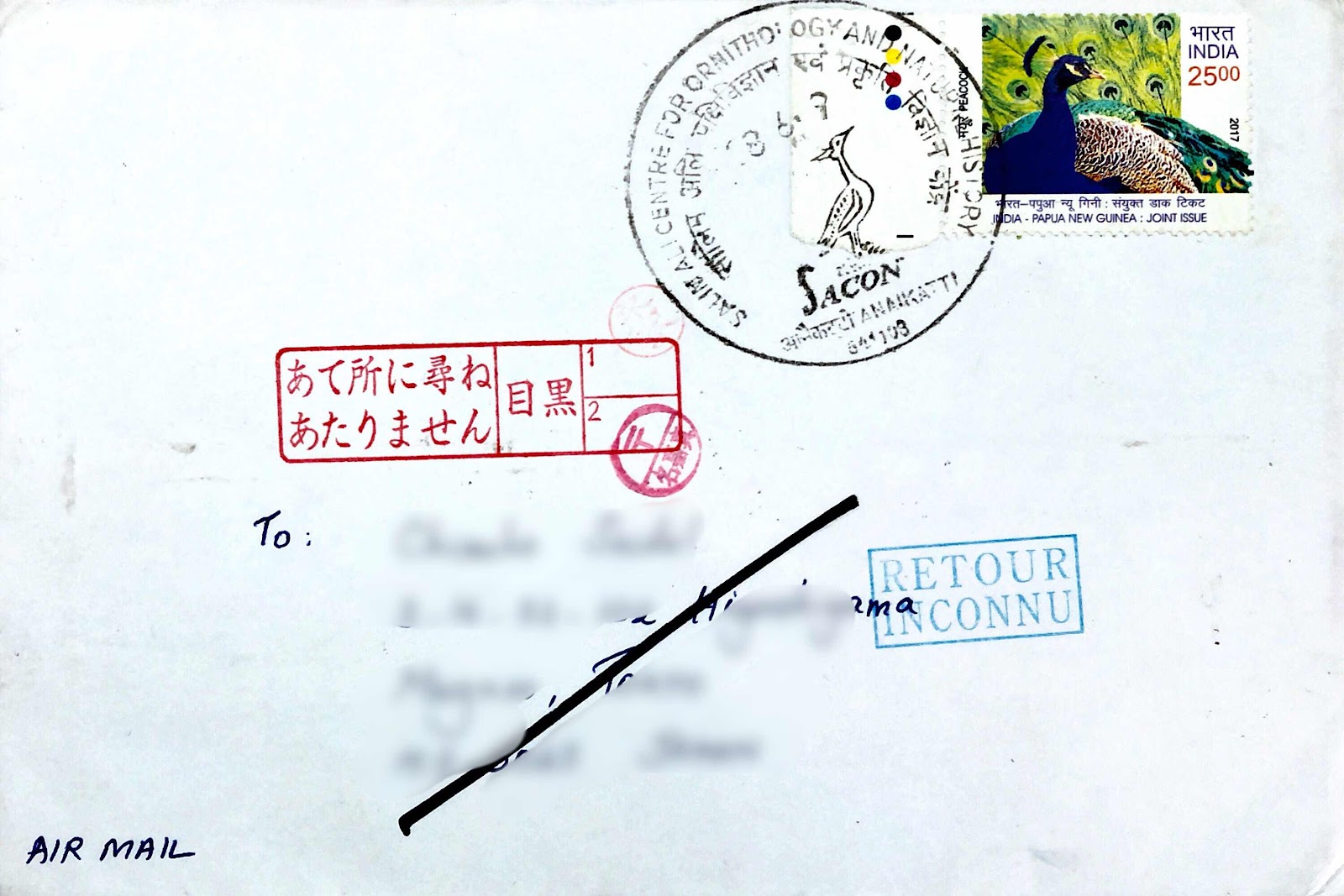
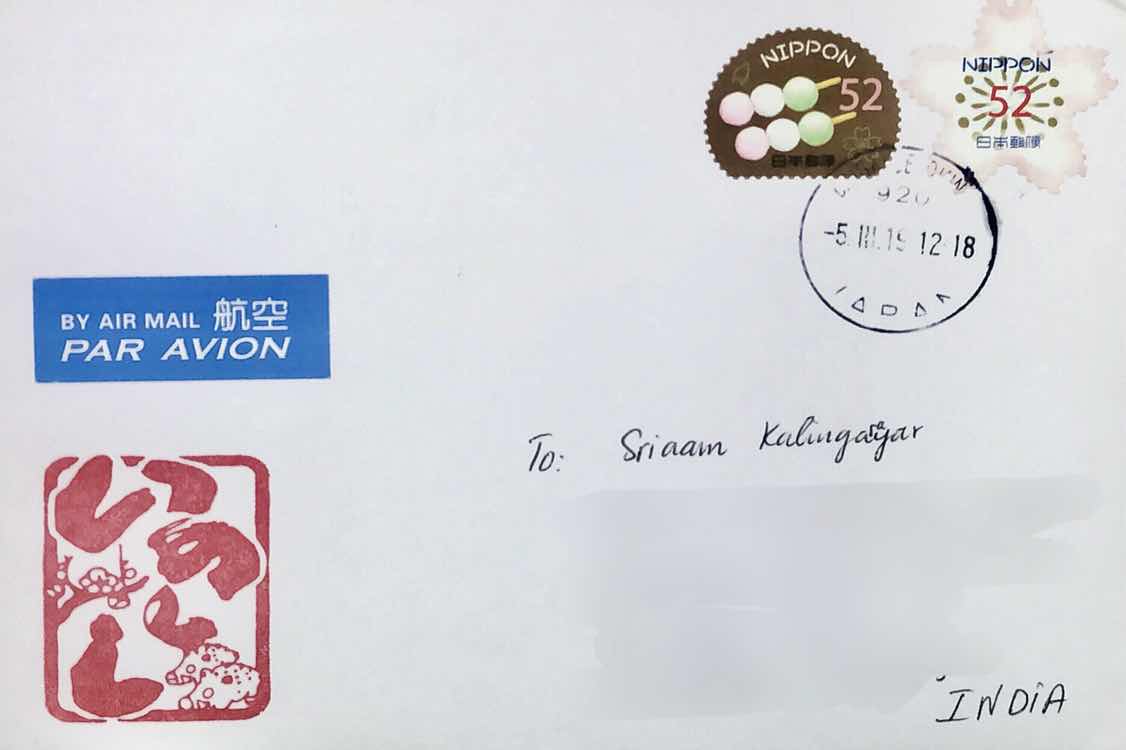
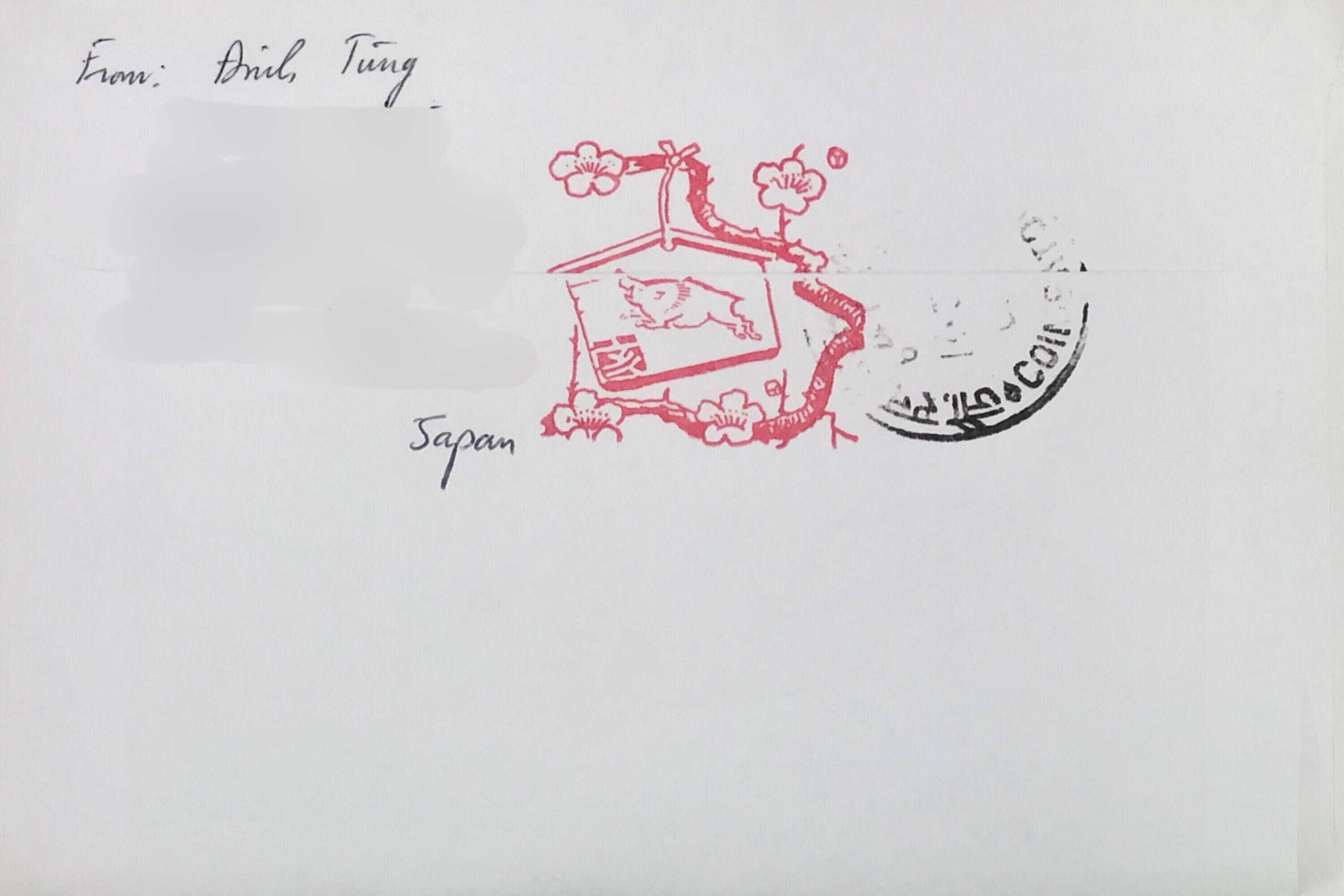
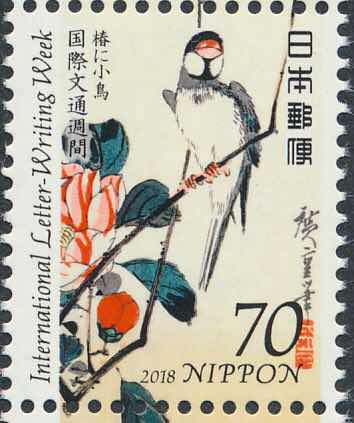
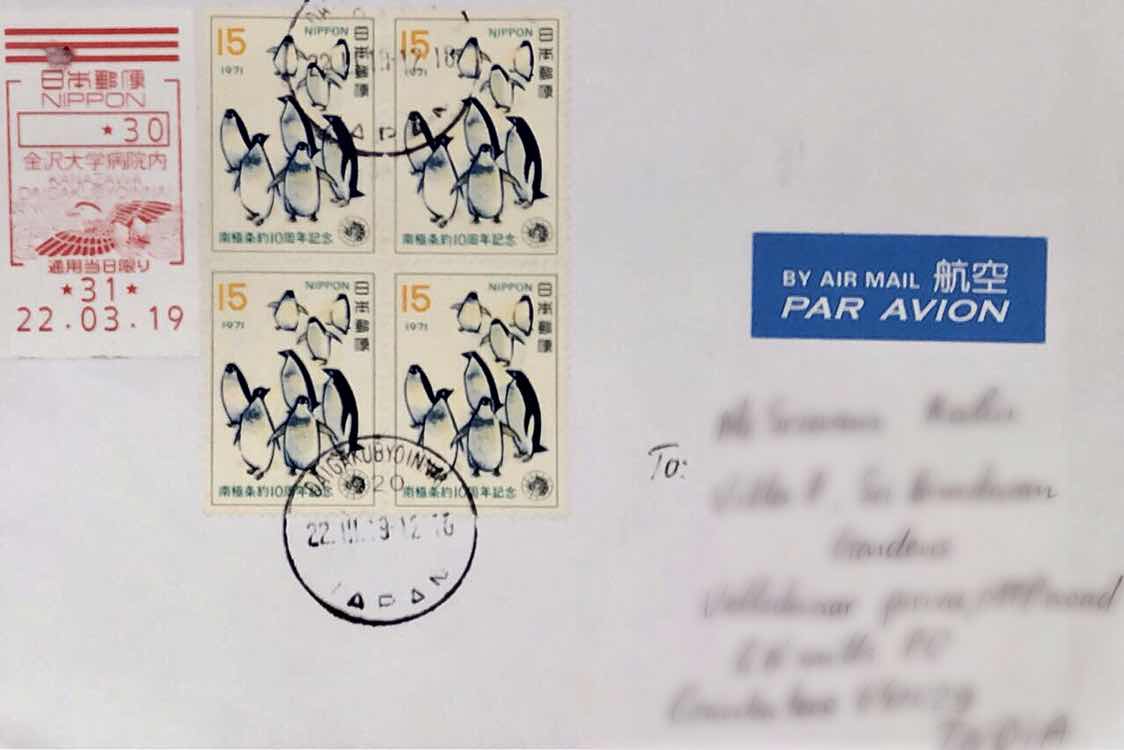
A cover with old stamps of Japan - showing various Japanese fables ! It has truly been a nice experience to search for these stories behind these stamps :) amazing Japanese folklore !
Urashima Tarō (浦島 太郎) is the protagonist of a Japanese fairy tale (otogi banashi), who in a typical modern version is a fisherman who is rewarded for rescuing a turtle, and carried on its back to the Dragon Palace (Ryūgū-jō) which lies beneath the sea. There he is entertained by the princess Otohime as reward. He spends what he believes to be 4 or 5 days, but upon his return to his home village, he finds himself 300 years in the future. When he opens the box (tamatebako) he was told never to open, he turns into an old man.
Year of issue - 1975
 Hanasaka Jiijii (花咲か爺), is a Japanese folk tale. Algernon Bertram Freeman collected it in Tales of Old Japan (1871), as "The Story of the Old Man Who Made Withered Trees to Blossom".
An old childless couple loved their dog. One day, it dug in the garden, and they found a box of gold pieces there. A neighbor thought the dog must be able to find treasure, and managed to borrow the dog. When it dug in his garden, there were only bones, and he killed it. He told the couple that the dog had just dropped dead. They grieved and buried it under the fig tree where they had found the treasure. One night, the dog's master dreamed that the dog told him to chop down the tree and make a mortar from it. He told his wife, who said they must do as the dog asked. When they did, the rice put into the mortar turned into gold. The neighbor borrowed it, but the rice turned to foul-smelling berries, and he and his wife smashed and burned the mortar.
That night, in a dream, the dog told his master to take the ashes and sprinkle them on certain cherry trees. When he did, the cherry trees came into bloom, and the daimyō (feudal landlord), passing by, marveled and gave him many gifts. The neighbor tried to do the same, but the ashes blew into the daimyō's eyes, so he threw him into prison; when he was let out, his village would not let him live there anymore, and he could not, with his wicked ways, find a new home.
Year of issue - 1973

Kaguya hime
Once upon a time, an old man was living on bamboo cutting. One day, he found a bamboo the bottom of which was glistening. He cut the bamboo and found a beautiful little girl in the hollow stem.The girl grew up quickly and was named "Kaguya-Hime" (The Glistening Princess).Her beauty was totally unparalleled.Enchanted, five princes vied one another and tried to marry her. The princess, coming from the moon, put difficult questions to them and said she would marry the one who solved the questions. None of them could do so.Kagaya-Hi me even turned down the. Emperor's proposal of marriage, the princess returned to the moon on the night of August 15 although her house was surrounded by soldiers.
Year of issue - 1974

Tsuru no Ongaeshi (The Grateful Crane/The Crane’s Return of Favor) is one of the most popular Japanese folktales.
Once upon a time somewhere in Japan there was a poor young man who once working on his farm. Suddenly, a white Japanese crane came down from the sky to the ground at his feet. The crane was injured by a bird hunter. The young man noticed that a sharp arrow pierced through one of its beautiful wings. He was sad and decided to take care of the crane.
Then he pulled out the arrow from the injured wing and cleaned the wound thereafter. By the kindness of the young guy the bird was soon able to fly again. Luckily the crane was sent to the sky by the young man and said “Please be careful and avoid bird hunters.” Listening to this the crane circled three times over his head and then flew away.
Darkness was about to arrive so the young man decided to get back to his house. A miracle happened when he just arrived at home. He saw a beautiful young lady was waiting for him that he never had seen before. The lady said “Welcome home, I am your wife” – hearing that the young guy indeed was surprised. Then he replied “I am a very poor guy, I can’t take care of you as my wife.” The lady answered “Don’t worry, I have plenty of rice and we could live together happily.” A miracle happened that the small sack of rice remained full always!
As days passed by, one day the wife asked her husband to build a weaving room. In fact, it was a favor! However, once her husband finished building the room the wife said “You promise me that you would never peek inside.” By knowing that her husband replied “Ok, I won’t” then she shut the room’s door up herself and after weaving seven days constantly she came out from the room holding the most beautiful cloth he had ever seen. She advised to her husband to sell it to the market at a high price. The next day the young man sold it to nearby town for many coins. Then he returned home happily.
After that again the wife returned to the weaving room to continue weaving. Seeing that her husband was very curious how actually his wife makes such a beautiful cloth so he had broken up the promise and peeked inside the room. Alas! He saw a beautiful crane was weaving a cloth instead of his wife, plucking out its own feathers and used as threads.
Then suddenly, the crane noticed that and said “I am the crane that you saved on the other day. I just wanted to repay you and that’s for what I became your wife, but now you have seen my actual form so I can’t stay here any longer.” After that, the crane handed the cloth and said “I leave you this to remember me by.” The crane then flew away from the sight of the young man and disappeared forever, the crane never returned to the young man again.
My advice to you is once we make promise to someone we must keep it.
Year of issue - 1974
Thanks Chisako for this wonderful cover ! Felt like reading story books in my school days :)